



Behauptungen und offizielle Dokumente rund um TRIPP: Was sieht das Abkommen eigentlich vor?
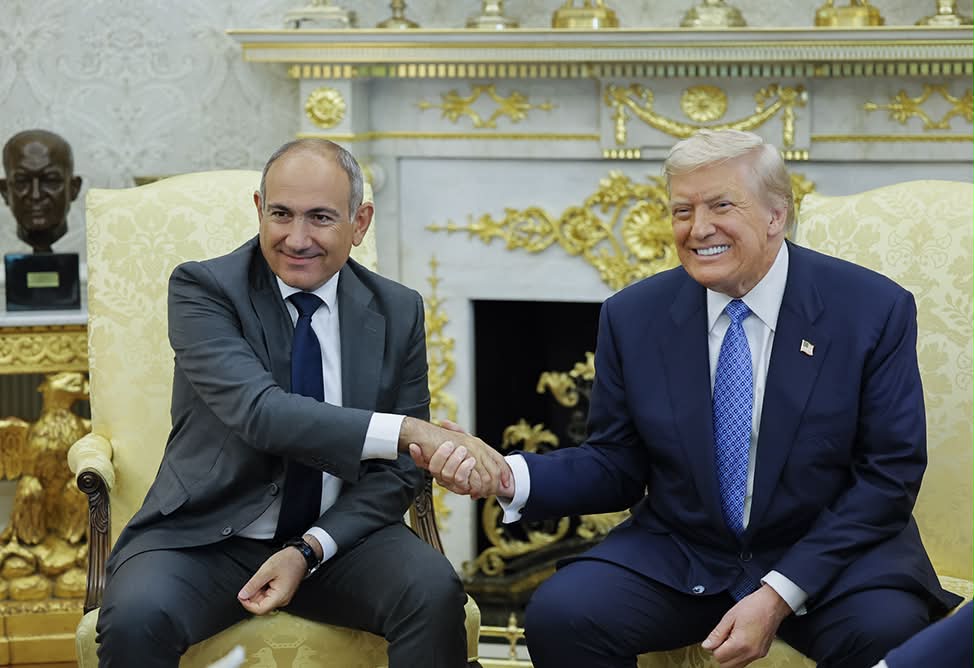
Teil I: Öffentliche Vorwürfe und Prüfung von Unterlagen
Einleitung
Nachdem die Republik Armenien im Jahr 2026 der TRIPP-Initiative (Transport, Transit and Regional Infrastructure Partnership Program) beigetreten war, begannen in der Öffentlichkeit und in der Politik lebhafte Diskussionen über den Inhalt des Abkommens. Besondere Aufmerksamkeit galt dabei der Frage, welche Befugnisse Armenien in den Bereichen Streckenmanagement, Grenzkontrolle und Zolldienste behalten würde.
Politiker, Analysten und viele Nutzer sozialer Medien haben deutlich voneinander abweichende Einschätzungen geäußert. In einer Reihe von Veröffentlichungen und Interviews wurde behauptet, dass Armenien infolge des Abkommens die Kontrolle über die Route verlieren werde, dass Grenz- und Zollaufgaben an ausländische Stellen übertragen würden und dass die Souveränität des Landes in diesem Bereich eingeschränkt werde.
Gleichzeitig veröffentlichten das armenische Außenministerium und das US-Außenministerium offizielle Dokumente und Erläuterungen, in denen der rechtliche Inhalt des Abkommens und die Verpflichtungen der Vertragsparteien dargelegt wurden.
Diese Situation führte zu einem Informationsklima, in dem die Öffentlichkeit mit widersprüchlichen Behauptungen konfrontiert war. Daher ist es notwendig, Methoden der Faktenprüfung anzuwenden, um öffentlich verbreitete Behauptungen und veröffentlichte amtliche Dokumente miteinander zu vergleichen.
Was sind die zentralen Anschuldigungen?
Eine Untersuchung des Informationsfeldes rund um die TRIPP-Initiative zeigt, dass folgende Behauptungen am häufigsten verbreitet wurden:
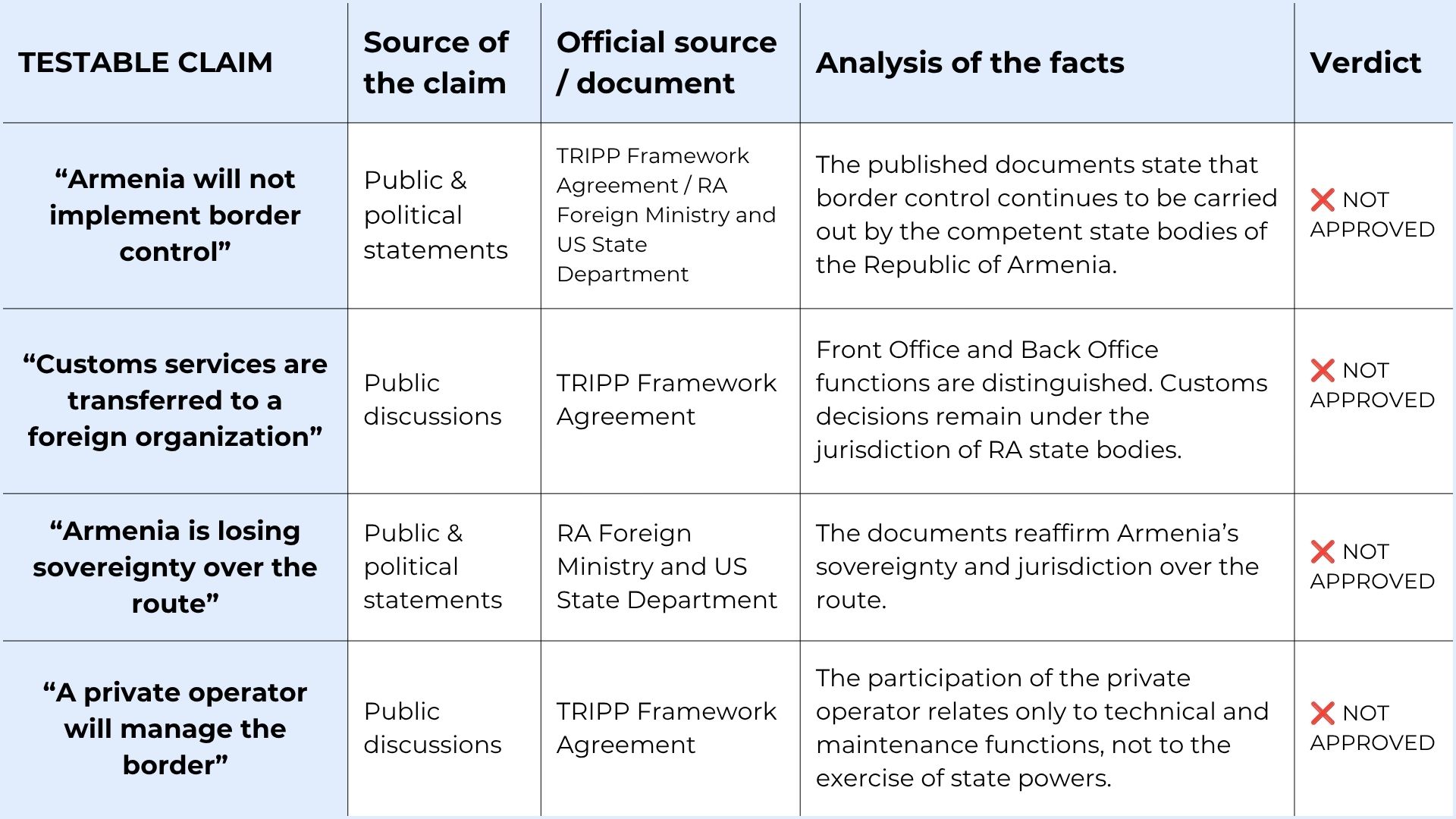
- Armenien wird keine Grenzkontrollen durchführen.
- Die Zollabfertigung wird von ausländischen Organisationen übernommen.
- Die Strecke wird faktisch außerhalb der Zuständigkeit Armeniens liegen.
- Die armenischen Behörden haben zugestimmt, einen Teil ihrer staatlichen Souveränität abzutreten.
- Entscheidungen an den Grenzkontrollstellen werden nicht von den staatlichen Stellen der Republik Armenien, sondern von externen Stellen getroffen.
Diese Behauptungen wurden in den sozialen Medien, in den Medien und in politischen Stellungnahmen vielfach verbreitet, oft ohne auf den vollständigen Wortlaut des Abkommens Bezug zu nehmen oder dessen relevante Bestimmungen darzulegen.
Aus Sicht der Faktenprüfung ist es in solchen Situationen notwendig, nicht die Urheber der Aussagen zu bewerten, sondern zu prüfen, ob diese Behauptungen durch offizielle Dokumente gestützt werden.

Methodik
Jede Behauptung in diesem Artikel wird nach folgendem Grundsatz geprüft:
- Es wird die in der Öffentlichkeit weit verbreitete Behauptung dargelegt.
- Derzeit werden amtliche Dokumente geprüft.
- Der Wortlaut der Dokumente wird verglichen.
- Es wird entschieden, ob die Behauptung bestätigt, teilweise bestätigt oder nicht bestätigt wird.
Dieser Ansatz entspricht den internationalen Best-Practice-Standards der Faktenprüfung und ermöglicht es dem Leser, selbst zu erkennen, was in offiziellen Dokumenten steht und welche Schlussfolgerungen daraus gezogen werden können.
Diese Methode ist wichtig, da in der öffentlichen Debatte oft Fakten mit Interpretationen vermischt werden. Eine Aussage wie „Armenien verliert seine Souveränität“ ist eine politische Aussage, sofern dies nicht ausdrücklich im Abkommen selbst steht. Im Gegensatz dazu ist eine Aussage wie „Die Grenzkontrolle wird an eine ausländische Stelle übertragen“ eine sachliche Behauptung, die anhand des Abkommenstextes überprüft werden kann.
1. Die in der Öffentlichkeit weit verbreitete Behauptung:
Gemäß dem Abkommen wird die Republik Armenien keine Grenz- und Zollkontrollen durchführen. Diese Aufgaben werden an ausländische Organisationen oder Vertreter anderer Staaten übertragen.
2. Quellenmaterial
Bei der Erstellung dieses Artikels wurden die folgenden offiziellen und öffentlichen Quellen herangezogen:
- Offizielle Informationen zur TRIPP-Initiative, veröffentlicht vom Außenministerium der Republik Armenien.
- Vom US-Außenministerium veröffentlichte Erklärungen und Klarstellungen.
- Der veröffentlichte Wortlaut der TRIPP-Rahmenvereinbarung.
- Offizielle Fragen und Antworten sowie erläuternde Unterlagen zur Umsetzung des Abkommens.
Der Artikel räumt diesen Quellen Vorrang ein, da sie den offiziellen Inhalt des Abkommens wiedergeben. Politische Aussagen wie „Armenien verliert die Kontrolle“ werden als zu überprüfende Behauptungen betrachtet und nicht als Faktenquellen.
Das Hauptprinzip der Methodik zur Faktenprüfung besteht darin, dass nur jene Behauptungen einer Überprüfung unterzogen werden, die mit Fakten, offiziellen Dokumenten oder zuverlässigen Quellen abgeglichen werden können.
3. Vergleich der Formulierungen in den Dokumenten
In verschiedenen Veröffentlichungen und Stellungnahmen wurden folgende Formulierungen verwendet:
„Armenien wird den Korridor nicht kontrollieren.“
„Ausländer werden die Grenze kontrollieren.“
„Der Zolldienst wird an ein privates Unternehmen übertragen.“
„Armenien gibt seine Souveränität auf.“
Um diese Behauptungen im Rahmen einer Faktenprüfung zu überprüfen, müssen nicht die Kommentare, sondern die veröffentlichten offiziellen Dokumente selbst untersucht werden.
Was steht in den offiziellen Dokumenten?
Eine der wichtigsten Bestimmungen des TRIPP-Rahmendokuments betrifft die Wahrung der Souveränität der Republik Armenien.
In den Dokumenten heißt es eindeutig:
- Die Souveränität über das Hoheitsgebiet der Republik Armenien bleibt unverändert,
- die Hoheitsgewalt über die Grenzen Armeniens wird an keine andere Instanz übertragen,
- die armenische Gesetzgebung gilt weiterhin auf der gesamten Strecke,
- alle staatlichen Befugnisse in den Bereichen Grenzschutz, Zoll, Migration und Sicherheit werden weiterhin von den zuständigen Behörden der Republik Armenien ausgeübt.
Diese Formulierungen sind wichtig, da sie genau die Themen betreffen, um die sich die meisten Behauptungen drehten.
Die Frage nach „Front Office / Back Office“
Ein Großteil der Verwirrung rührt vom „Front Office / Back Office“-Modell her. In der öffentlichen Verwaltung trennt diese Unterscheidung technische Dienstleistungsfunktionen von hoheitlichen Entscheidungsbefugnissen.
Das Front Office
- bezieht sich auf den Teil der Dienstleistungserbringung, des Empfangs oder der Verwaltung, der in direktem Kontakt mit den Dienstleistungsnutzern steht.
- Dazu können Empfang, Dokumentenbearbeitung, Informationsdienste, Warteschlangenmanagement oder digitale Unterstützung gehören.
Das Back Office
- bezieht sich auf staatliche Funktionen, die nicht als hoheitliche Befugnisse an eine private Organisation delegiert werden können.
- Dazu können Grenzentscheidungen, Zollentscheidungen, Vollstreckungsmaßnahmen und Sicherheitskontrollen gehören.
In der TRIPP-Debatte wurde die Präsenz eines privaten Betreibers manchmal so dargestellt, als bedeute sie die Übertragung staatlicher Befugnisse. Das geht aus den Dokumenten jedoch nicht hervor.
Bei der Organisation einer öffentlichen Dienstleistung ist es möglich, einige technische Wartungsaufgaben an eine private Organisation zu delegieren, ohne staatliche Befugnisse zu übertragen.
Solche Modelle werden in vielen Ländern an Flughäfen, in Häfen, an Zollterminals und in Logistikzentren angewendet. In diesen Fällen organisiert ein privates Unternehmen die technische Seite des Prozesses, während rechtliche Entscheidungen weiterhin ausschließlich von staatlichen Stellen getroffen werden.
Daher bedeutet die Einbindung eines privaten Betreibers an sich nicht, dass der Staat seine Grenz- oder Zollbefugnisse aufgibt. Diese Schlussfolgerung sollte nicht auf Annahmen beruhen, sondern auf den klaren Bestimmungen des Dokuments.
Mit anderen Worten: Selbst wenn bestimmte technische Wartungsleistungen von einem privaten Betreiber erbracht werden, werden hoheitliche Entscheidungen weiterhin ausschließlich von staatlichen Stellen der Republik Armenien getroffen. Der Betreiber mag zwar die technische Seite des Vorgangs unterstützen, doch die rechtlichen Befugnisse verbleiben beim Staat.
TRIPP – Fact Checking Comparison Chart
Zwischenfazit
Auf der Grundlage der untersuchten offiziellen Dokumente lässt sich feststellen, dass die im TRIPP-Rahmenabkommen veröffentlichten Bestimmungen keine Formulierungen enthalten, wonach die Republik Armenien auf ihre Hoheitsrechte in den Bereichen Grenzschutz, Zoll oder Sicherheit verzichtet. Im Gegenteil: In den Dokumenten wird betont, dass diese Aufgaben weiterhin von den zuständigen staatlichen Stellen Armeniens wahrgenommen werden, während sich die Beteiligung des privaten Betreibers auf bestimmte Funktionen der Dienstleistungsorganisation und der technischen Instandhaltung beschränkt.
Mechanismen der Desinformation: Wie irreführende Behauptungen entstehen
Die Diskussionen rund um die TRIPP-Initiative haben gezeigt, dass Desinformation im modernen Informationsumfeld oft nicht ausschließlich durch falsche Informationen verbreitet wird. In vielen Fällen werden Kombinationen aus realen Fakten, unvollständigen Informationen und Interpretationen verwendet, die eine von der Realität abweichende Wahrnehmung erzeugen können.
Moderne Methoden der Informationsbeeinflussung basieren oft nicht auf offensichtlichen Fälschungen, sondern auf der selektiven Darstellung von Fakten, der Veränderung des Kontexts oder der Verwirrung von Begriffen. Aus diesem Grund wirken solche Botschaften manchmal überzeugender, da sie auf echten Dokumenten oder realen Ereignissen beruhen, aus denen jedoch Schlussfolgerungen gezogen werden, die sich nicht aus diesen Fakten ergeben.
Mechanismus 1. Begriffsverwirrung
Eine häufige Verzerrung in der TRIPP-Debatte ist die Vermischung zweier unterschiedlicher Rechtsbegriffe: die Erbringung technischer oder administrativer Dienstleistungen und die Ausübung staatlicher Hoheitsgewalt.
In einigen Berichten wurde die Beteiligung eines privaten Betreibers so dargestellt, als bedeute sie automatisch eine Übertragung hoheitlicher Befugnisse.
Rechtlich gesehen sind dies jedoch nicht dasselbe. Ein privater Betreiber kann organisatorische, technische oder unterstützende Funktionen wahrnehmen, ohne dass ihm die Befugnis zur hoheitlichen Entscheidungsfindung übertragen wird. Im Gegensatz dazu bleiben Grenzkontrollen, Zollentscheidungen, Strafverfolgungsmaßnahmen und der Schutz der nationalen Sicherheit Aufgaben des Staates.
Wenn diese Begriffe miteinander vermischt werden, könnte die Öffentlichkeit zu der Annahme verleitet werden, dass jede private Beteiligung zwangsläufig einen Souveränitätsverlust bedeutet.
Mechanismus 2: Darstellung außerhalb des Kontexts
Eine der gängigsten Methoden zur Verbreitung von Desinformation besteht darin, einzelne Teile von Dokumenten herauszugreifen, ohne den vollständigen Kontext darzustellen.
Wird beispielsweise nur der Teil veröffentlicht, in dem von der Beteiligung eines privaten Betreibers die Rede ist, während die Bestimmung desselben Dokuments, die die Zuständigkeit der Republik Armenien für die Grenz- und Zollkontrolle festschreibt, nicht präsentiert wird, erhält der Leser ein unvollständiges Bild.
Eine solche selektive Darstellung kann den Eindruck erwecken, dass das Dokument das eine festlegt, während andere Bestimmungen das Gegenteil nahelegen. Daher ist es ein wichtiger Grundsatz der Faktenprüfung, das Dokument als Ganzes zu betrachten und nicht nur einzelne Sätze.
Mechanismus 3: Angstbasierte Kommunikation
In öffentlichen Diskussionen werden häufig Formulierungen verwendet, die in erster Linie darauf abzielen, eine starke emotionale Reaktion hervorzurufen, wie zum Beispiel:
- „Wir verlieren unsere Souveränität“,
- „Wir geben die Grenze ab“,
- „Ausländer werden Armenien regieren.“
Solche Formulierungen können einen starken Einfluss auf die Gesellschaft haben, da sie sensible Themen wie Staatssicherheit, territoriale Integrität und nationale Identität betreffen.
Aus journalistischer und wissenschaftlicher Sicht können solche Äußerungen jedoch keine Analyse des Inhalts von Rechtsdokumenten ersetzen. Bevor Schlussfolgerungen gezogen werden, muss geklärt werden, ob diese Formulierungen aus offiziellen Dokumenten stammen oder die politische bzw. publizistische Einschätzung der Autoren widerspiegeln.
Mechanismus 4. Darstellung von Schlussfolgerungen als Fakten
Ein weiteres häufiges Muster im Informationsumfeld ist die Darstellung von Interpretationen, als handele es sich um feststehende Tatsachen. So ist beispielsweise die Aussage „Armenien verliert die Kontrolle“ an sich keine rechtliche Tatsache, sondern eine Schlussfolgerung, die durch Belege in den entsprechenden Dokumenten untermauert werden muss.
Enthält die Vereinbarung keine Bestimmung, die auf eine solche Kontrollübertragung hindeutet, sollte eine derartige Formulierung als Einschätzung oder Meinung verstanden werden und nicht als nachgewiesene Tatsache. Der Zweck der Faktenprüfung besteht gerade darin, den Wortlaut des Dokuments von der daraus abgeleiteten Interpretation zu trennen.
Mechanismus 5: Unbestätigte oder unklare Angabe der Quelle
Häufig werden in Informationsmeldungen Formulierungen wie die folgenden verwendet:
- „Jeder weiß“,
- „Experten sagen“,
- „laut internationalen Quellen“,
- „laut vertraulichen Informationen“.
Solche Formulierungen lassen keine Überprüfung der Informationsquelle und keine Beurteilung ihrer Zuverlässigkeit zu.
Eines der Grundprinzipien der Medienkompetenz lautet, dass jede wichtige Behauptung mit einer klaren, überprüfbaren und zugänglichen Quelle untermauert sein sollte. Fehlt die Quelle oder wird sie äußerst vage angegeben, ist bei der Information Vorsicht geboten.
Fazit
Die informativen Diskussionen rund um die TRIPP-Initiative zeigen, wie wichtig eine Kultur der Faktenprüfung im modernen Informationsumfeld ist. Wenn im öffentlichen Raum widersprüchliche Behauptungen kursieren, lassen sich die zuverlässigsten Antworten nicht in emotionalen oder politischen Äußerungen finden, sondern durch eine gründliche Prüfung offizieller Dokumente.
Die im Rahmen dieses Artikels durchgeführte Faktenprüfung basiert auf veröffentlichten offiziellen Quellen und deren vergleichender Analyse. Die Untersuchung zeigt, dass eine Reihe öffentlicher Behauptungen durch den Inhalt der veröffentlichten Dokumente nicht gestützt wird. Gleichzeitig ist dieser Fall eine wichtige Erinnerung daran, dass es im Informationsumfeld notwendig ist, zwischen Fakten, Interpretationen und Meinungen zu unterscheiden. Nur dieser Ansatz trägt dazu bei, das öffentliche Bewusstsein zu schärfen und Vertrauen in Informationen aufzubauen.
Das Material wurde im Rahmen des Programms zur Überwachung von Desinformationsströmen erstellt.
Website der Partnerorganisation ISRH Armenia: ishrarmenia.am/
Das Projekt wird mit finanzieller Unterstützung des Auswärtigen Amtes der Bundesrepublik Deutschland durchgeführt.
#CivilSocietyCooperation #ishrarmenia #ishrfactcheck








Leave A Comment