



Posts regularly appear on social networks that present information about the biography, family, or origin of political figures as fact without any reliable source.
 From one photo to hundreds of thousands of views: how the claim “Pashinyan’s mother is Azerbaijani” spread
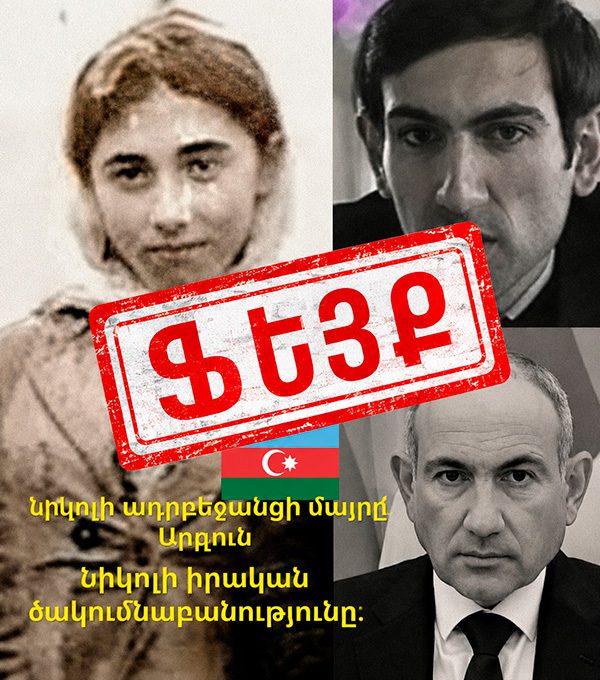
One such example is the widespread claim that Nikol Pashinyan’s mother was Azerbaijani. This story is interesting not only because the data presented in the claim is questionable, but also because it shows how a single photo can be used as “evidence” and an unverified story can reach hundreds of thousands of users in a short time.
How the story began:
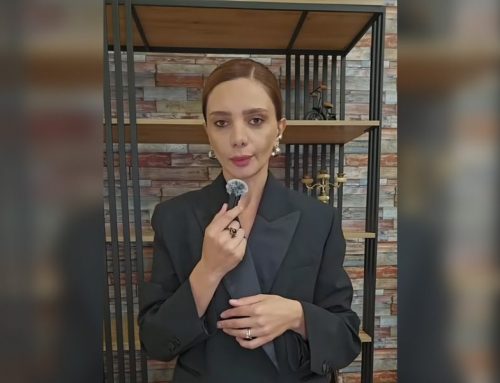
Posts circulating on social networks claimed that Nikol Pashinyan’s mother was Azerbaijani, named “Arzu Ayvaz kizi Mustafayeva,” was born in 1962 in Shamkhor, and died in the early 1990s. Attached to the claim was a photo of a woman who was presented as Pashinyan’s mother.
At first glance, the photo may seem like proof of the claim. However, the main question of journalistic verification here is: who is the woman in the photo and where was the photo taken?
Now let’s find out what the official biography shows:
In the archived biography on Pashinyan’s former official website, he himself provided information about his parents. According to this data, his mother was Svetlana Nikoli Pashinyan (Hovhannisyan), born on January 1, 1946. Pashinyan wrote that she died on May 4, 1987, from brain cancer.
This data does not correspond to the story circulating on social networks, which indicated a birth date of 1962 and a death in the early 1990s. In other words, even without examining the photo, there is a significant contradiction between the biographical data presented in the claim and the official biography.
And who is in the photo?
The most important part of the article is the tracing of the photo itself. During a fact-checking exercise, CivilNetCheck found the original source of the photo. It appeared in the archive of Azerbaijani ethnographer Atiga Izmaylova, where it is presented as a photo taken in the Lerik region of Azerbaijan in 1958.
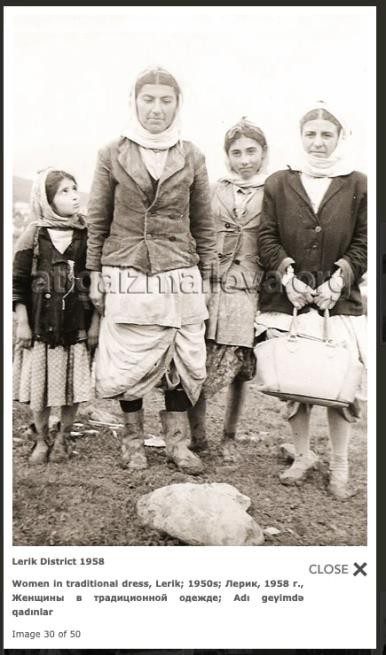
Photo: from Atiga Izmaylova’s website
In other words, the image shared on social media is not a photo of Pashinyan’s mother, but a photo taken from another source, which was later presented in a completely different context.
This is one of the classic mechanisms for spreading disinformation: the real photo is not falsified, but its context is changed. The photo is real, but a false identity and story are attributed to it.
Now let’s find out how false information becomes a spreading narrative:
This case is also unique in terms of the volume of dissemination. CivilNetCheck notes that one of the publications, which was distributed on March 18, collected about 2,300 reactions, 266 comments, 1,100 shares and more than 636 thousand views. Another publication, published on April 28, collected thousands of reactions and shares.
These numbers show that for disinformation to spread, it is not necessary for the material to be published in a large media outlet. Through social networks, it can reach a much larger audience.
In this case, it is also important to distinguish between viewing and trust. 636 thousand views does not mean that so many people believed the claim. However, a large spread increases the likelihood that the information will appear in the news feed of new users and be reproduced on other pages.
And where is the manipulation here?
At least three manipulative mechanisms can be distinguished in this story:
1. **The false contextualization of a real photo:** The photo is real, but it is presented as a photo of another person.
2. **The addition of false biographical details:** The date of birth, place of birth, name and time of death are presented in such a way that the story seems as specific and reliable as possible.
3. **The speculation about the family and origin of a political figure:** Such claims are usually not intended to convey only biographical information. They can affect public attitudes towards a political figure, especially in an environment where the topics of national identity and relations with Azerbaijan are sensitive.
Why do people believe such materials?
Disinformation is not always completely fabricated material. Sometimes it is based on a real photo, a real name, or a real historical place, and then these real elements are combined with false information. Because of this, the material may seem more convincing at first glance.
This case is also a good example of why in journalistic work it is necessary to check not only what is depicted in the photo, but also who is depicted, when it was photographed, where it was first published and in what context it was created.
Fact-checking as a journalistic tool
This story shows that fact-checking is a separate stage of journalistic work, not just a process of putting a “right” or “wrong” label at the end.
A journalist can start with a simple question: “who is in this photo” and go to the original source. Then it is necessary to compare different sources: official biographies, archived pages, the original source of the photo, the date of publication and traces of distribution. In this case, it is this method that allows us to see that the story circulating on social networks is built on a manipulative combination of a photo and biographical data.
One photo, but a big impact
The story of the claim “Pashinyan’s mother is Azerbaijani” shows that modern disinformation does not require the creation of a complex fake video or a completely fabricated document. Sometimes it is enough to take a real photo, change its story, add a few specific numbers and names and spread it on social networks.
That is why in the fight against disinformation it is important not only to ask ourselves: “Is this information true?”, but also: “Who first published it, what source is it based on, how was it spread, and for what purpose is it presented in this way?”
This case shows that the path of a single photo can be much longer than it seems at first glance, from the “Mythical Archive” to thousands of views and shares on Facebook.
—
Journalist: Sargis Asatryan
#CivilSocietyCooperation #ishrarmenia #ishrfactcheck

The project is implemented with the financial support of the Federal Ministry for Foreign Affairs of the Federal Republic of Germany.
ISHR Armenia is solely responsible for the content of the materials.

Leave A Comment