




The events at Penitentiary No. 3 in Leova in May 2026 served as one of the most alarming indicators of the state of the prison system in the Republic of Moldova.
Moldova’s prison system: signs of a systemic crisis and risks of human rights violations
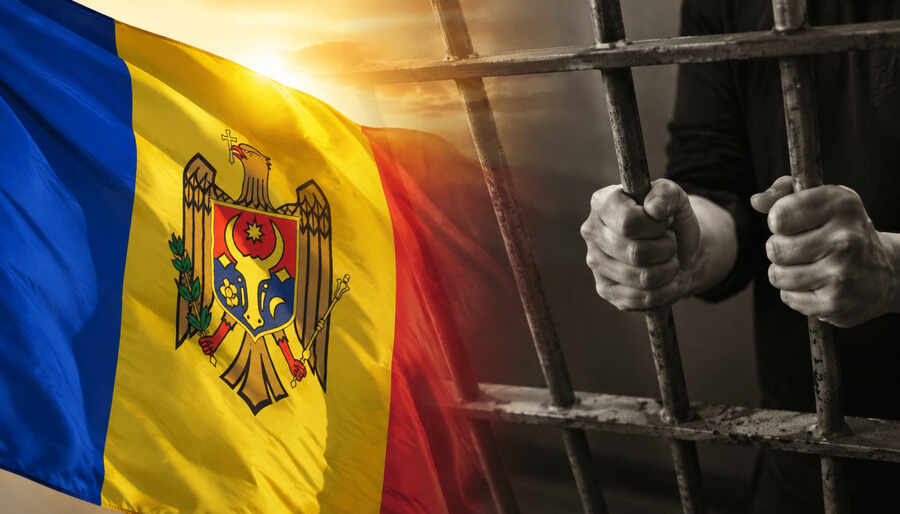 Reports of hunger strikes, acts of self-harm, mass protests by prisoners and allegations of ill-treatment by the prison administration and special forces point not to isolated incidents, but to a potential systemic crisis.
The situation in Leova is unfolding against a backdrop of a general deterioration in prison conditions across the country, a rising prison population, chronic overcrowding, staff shortages and ongoing violence within the prison system.
At the same time, international bodies, including the Council of Europe and the Committee for the Prevention of Torture (CPT), have been warning Moldova for several years about serious problems: an informal criminal hierarchy within prisons, overcrowding, degrading conditions of detention and a lack of effective oversight.
Timeline of events
On 11 May 2026, at Penitentiary No. 3 in the town of Leova, officers from the National Administration of Penitentiary Institutions (ANP) and special forces carried out extensive searches and measures to ‘tighten security’. The authorities officially stated that the aim of the operation was to seize prohibited items and suppress ‘acts of insubordination’ by a group of prisoners.
However, just a few days later, the prisoners’ relatives, the media and the prisoners themselves began to report serious violations.
According to a Moldovan media:
- more than 200 prisoners have gone on hunger strike;
- some of the prisoners have inflicted self-harm;
- prisoners reported being beaten during searches;
- there were reports of batons and tear gas being used;
- special measures were introduced restricting visits, parcels and communications;
- Relatives claimed that the scale of the conflict had been concealed.
One of the inmates told journalists that the protesters are demanding the resignation of the prison management, accusing them of abuse of power, corruption schemes within the prison, and inflated prices in the prison shop.
The National Prison Service initially denied reports of mass unrest and self-harm, but was later forced to confirm:
- the fact that a military operation took place;
- whether a hunger strike is taking place;
- the introduction of special measures;
- launch of an internal investigation.
The director of the facility later admitted that at least two inmates had sewn their mouths shut in protest.
Why is the situation cause for concern?
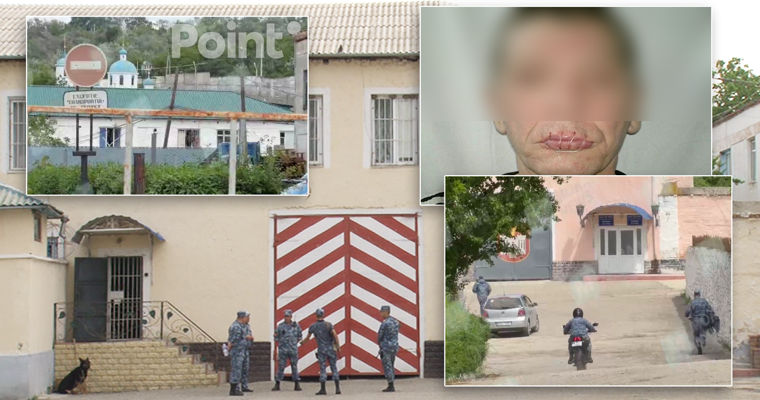
The events in Leova reveal several typical signs of a crisis in the prison system:
1. Prisoners’ distrust of official mechanisms for the protection of rights
Rather than turning to internal appeal procedures, the protesters appealed to the media and the public. This indicates an extremely low level of trust in the management of these institutions and in the state’s response mechanisms.
2. High levels of tension and violence
Even the authorities have acknowledged the existence of ‘mass acts of civil disobedience’. Combined with reports of hunger strikes and self-harm, this points to a critical level of tension within the institution.
3. Restrictions on contact with the outside world
The introduction of special measures restricting visits and the delivery of items significantly increases the risk of human rights violations being concealed.
4. Lack of transparency in the government’s actions
The authorities’ initial official statements contradicted the accounts given by relatives, journalists and some subsequent confirmations from the authorities themselves. This pattern of response—denial, downplaying of the issue, followed by partial acknowledgement—is often observed in prison systems with low levels of transparency.
2. The rise in the prison population and prison overcrowding
According to data from the Moldovan Ombudsman, Cezlav Panico, there were around 6,300 people in Moldovan prisons at the start of 2026, which is approximately 8% more than a year earlier.
The rise in the prison population is occurring against a backdrop of an already existing problem of overcrowding in prisons.
According to the Council of Europe’s SPACE I 2025 statistics:
- Moldova ranks third in Europe in terms of the number of prisoners per 100,000 inhabitants;
- the figure stood at around 245 prisoners per 100,000 inhabitants;
- Only Turkey and Azerbaijan recorded higher figures;
- At the start of 2025, there were approximately 5,844 prisoners in Moldovan prisons.
By way of comparison, the European median is around 110 prisoners per 100,000 people.
Consequently, the incarceration rate in Moldova is more than double the European average.
Overcrowding as a factor in system degradation
Although Moldova is not formally among the countries with the highest official overcrowding rates in terms of bed capacity, international reports indicate that:
- a chronic lack of space;
- poor condition of the premises;
- uneven distribution of prisoners;
- extremely poor standards of accommodation in a number of institutions.
In its 2025 report, the Council of Europe’s Committee for the Prevention of Torture (CPT) noted:
- severe overcrowding in some facilities;
- the poor condition of prisons;
- staff shortages;
- the persistence of an informal criminal hierarchy;
- an atmosphere of intimidation and violence among prisoners.
The CPT expressed particular concern regarding the category of so-called ‘degraded’ or ‘untouchable’ prisoners—individuals at the bottom of the prison caste system.
According to the CPT, their conditions of detention and the treatment they receive may constitute a continuing violation of Article 3 of the European Convention on Human Rights, which prohibits torture and inhuman treatment.
3. Systemic violence and the prison hierarchy
One of the key problems facing the Moldovan prison system remains the existence of an informal criminal hierarchy.
The Council of Europe explicitly states that the authorities have effectively lost control of the situation within a number of institutions, and that de facto control has been handed over to criminal leaders.
The CPT notes:
- constant violence among prisoners;
- threats and intimidation;
- pressure from criminal groups;
- humiliation and discrimination within the prison subculture.
International observers also attribute the persistence of this system to:
- staff shortages;
- the lack of an effective classification system for prisoners;
- by accommodating large numbers of people in communal areas;
- weak institutional oversight.
This means that violence in Moldovan prisons is not sporadic but systemic.
4. Self-harm and psychological crisis
Public defender Czesław Paniko has publicly stated that violence and physical abuse among prisoners have become ‘a common occurrence’.
This is an extremely worrying sign.
Widespread self-harm in prisons usually indicates:
- in the midst of a deep psychological crisis;
- a lack of trust in the administration;
- the impossibility of obtaining protection through legal means;
- using one’s own body as the sole means of protest.
The events in Leova, where it was reported that prisoners had cut open their stomachs and sewn their mouths shut, fit this pattern perfectly.
Such forms of protest are typical of systems where prisoners believe that their voices cannot be heard in any other way.
5. Infrastructure crisis: the failure of the new prison construction project and the issue surrounding Penitentiary No. 13
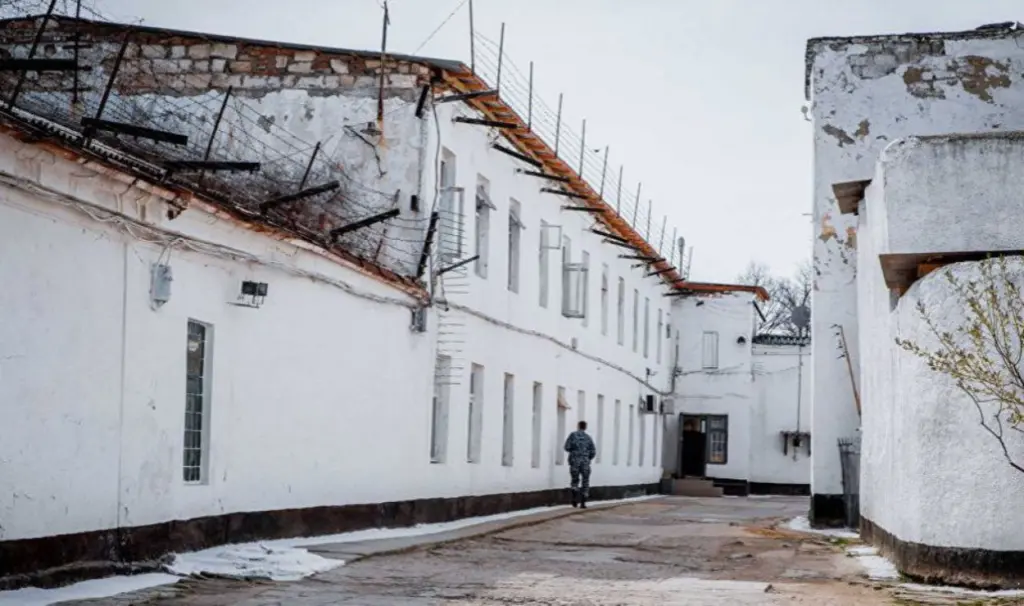 Prison No. 13 in Chișinău remains one of the most telling symbols of the crisis in the Moldovan prison system.
It is this institution that has, for many years, been cited in reports by the European Court of Human Rights, the Council of Europe’s Committee for the Prevention of Torture (CPT) and Moldovan human rights organisations as an example of detention conditions that fall short of European standards.
According to the European Court of Human Rights, the following issues have been repeatedly noted in relation to Penitentiary No. 13:
- overcrowding in cells;
- unsanitary conditions;
- poor ventilation;
- insufficient access to natural light;
- the presence of parasites and rodents;
- poor diet.
The European Court of Human Rights has repeatedly ruled that such conditions constitute a violation of Article 3 of the European Convention on Human Rights, which prohibits inhuman and degrading treatment.
According to estimates by Moldovan human rights activists from Promo-LEX, the occupancy rate at Penitentiary No. 13 was, at times, almost double the international standard. In some cells, prisoners were forced to take turns sleeping due to a lack of space.
The problem is exacerbated by the fact that the facility was built back in the mid-20th century and is, in fact, ill-suited to the modern requirements of detention.
The long-running failure of the new prison project

The Moldovan authorities have been attempting to replace Penitentiary No. 13 for over a decade.
The project to build a new remand centre in Chișinău was launched back in 2011 with the support of the Council of Europe Development Bank. It was originally planned that the new prison would be operational by 2018. However, the deadlines have been repeatedly postponed.
In 2025, the authorities once again announced the launch of the project in collaboration with UNOPS and stated that the new prison would meet European standards and be able to replace Penitentiary No. 13.
The cost of the project is estimated at over 70 million euros.
Nevertheless, as early as 2026, the Ministry of Justice acknowledged yet another delay: completion of the construction had been postponed until at least 2028–2029.
Thus, for more than ten years, Moldova has been unable to deliver one of its key infrastructure projects in the justice sector.
The situation surrounding Penitentiary No. 13 shows that the problems within the Moldovan prison system are not temporary but chronic.
Despite:
- the Council of Europe’s long-standing recommendations;
- numerous judgments of the European Court of Human Rights;
- international financing;
- political statements on reforms;
The state has still not managed to ensure basic standards of prisoner care.
For international human rights organisations, this may indicate:
- the state’s weak institutional capacity;
- chronic underfunding;
- the lack of political priority given to the issue;• a systemic failure to fulfil international human rights obligations.
The very fact that Penitentiary No. 13 has existed for so many years has become a serious reputational problem for Moldova in the context of European integration and a constant source of complaints to the European Court of Human Rights.
6. The state’s response: between reform and denial
In recent years, the Moldovan authorities have declared their intention to reform the prison system.
In 2025, an agreement was signed with UNOPS for the construction of a new prison facility in Chișinău, costing over €70 million.
The project is presented as part of the process of bringing the system into line with European standards. However, international organisations emphasise that infrastructure projects alone do not solve the key problems.
The CPT notes that many recommendations have remained unfulfilled for years:
- there is no prisoner classification system;
- the criminal hierarchy has not been dismantled;
- the problem of violence remains unresolved;
- there remains a shortage of staff;
- There is no comprehensive strategy to prevent abuse.
The state’s response to crises is a particular cause for concern.
In the case of Leova, the authorities initially denied the seriousness of the situation, despite numerous accounts, reports from relatives and circumstantial evidence.
Such a response may indicate:
- lack of transparency;
- fear of reputational damage;
- the lack of independent monitoring;
- weaknesses in accountability mechanisms.
7. Risks to human rights
Based on the available data, several key risks can be identified.
Risk of abuse
Reports of the use of force, batons and tear gas require an independent investigation.
The risk of concealing breaches
Restrictions on visits and parcels during a crisis can be used to isolate prisoners and limit their access to information.
The risk of further radicalisation and violence
As long as overcrowding and the criminal hierarchy persist, the likelihood of further protests and outbreaks of violence remains high.
The risk of systematic breaches of Article 3 of the ECHR
The CPT’s findings already point to evidence of inhuman and degrading treatment.
The events at Penitentiary No. 3 in Leova cannot be regarded as a local incident.
They were a manifestation of a deeper problem:
- overcrowding in the prison system;
- a high level of violence;
- crisis of confidence;
- weaknesses in state oversight;
- lack of transparency;
- chronic failure to comply with international recommendations.
Moldova is currently facing the risk of an institutional crisis within its prison system.
The combination of the following factors is particularly worrying:
- a rapid increase in the prison population;
- one of the highest incarceration rates in Europe;
- the prevalence of self-harm;
- the existence of a criminal hierarchy;
- reports of abuse;
- a lack of independent oversight.
Without far-reaching reform of the system—including reducing incarceration rates, strengthening independent monitoring, tackling prison subculture and ensuring transparency—the risk of further crises and human rights violations will only increase.
9. Recommendations for international human rights organisations
Urgent measures
- To secure independent international monitoring of events in Leova.
- Call for the publication of the results of the ANP’s internal investigation.
- Ensure that the ombudsman, lawyers and international observers have access to prisoners.
- Conduct a medical and psychological assessment of the hunger strikers and those who have self-harmed.
Medium-term measures
- Develop a programme to reduce the prison population.
- Expand the use of alternative sanctions.
- Strengthen independent oversight of prisons.
- Создать механизмы предотвращения насилия и влияния криминальной иерархии.
- Улучшить подготовку персонала.
Long-term reforms
- Bring the conditions of detention into line with Council of Europe standards.
- Introduce a comprehensive prisoner classification system.
- Establish an effective system to protect applicants within the prisonм.
- To improve the transparency of the prison system.
Sources used
- Statements by the National Administration of Penitentiary Institutions of Moldova.
- SPACE I 2025 — Council of Europe statistics.
- Report by the European Committee for the Prevention of Torture (CPT) on Moldova.
- Public statements by People’s Advocate Czesław Paniko.
- Materials Moldova1, TV8, Nokta, Point.md, Promo-LEX and other sources.
Leave A Comment