Media literacy seminar in the Harich community
 As part of the regional educational component of the “Monitoring Disinformation Flows” project, the “International Human Rights Society” NGO held a media literacy seminar at the Harich Art Center. Residents of Harich and neighboring communities participated in the meeting.>
The goal of the seminar was to help participants navigate diverse information flows, recognize fake and manipulative content, and become familiar with available fact-checking tools. During the meeting, special attention was paid to false narratives circulating in the Armenian media domain, their methods of construction, and their impact on public perceptions.
The Harich meeting was distinguished by active discussions. The more mature age of the participants provided an opportunity to consider the topics also from the perspective of their life experience, information habits, and everyday concerns. Questions and responses turned the seminar into a dialogue, during which theoretical explanations were connected to situations familiar to the participants.
How to recognize information manipulation
The first part of the seminar was led by Bela Shikaryan, President of the International Human Rights Society NGO. She presented the peculiarities of the media environment, the types of false and misleading information, as well as the main approaches to protecting against information manipulation.
The focus of the discussion was on how information can influence people’s perceptions and decisions, even when the publication does not contain an outright lie. Selective presentation of a single fact, omission of important details, an emotional headline, or a one-sided interpretation of an event can create a picture that differs from reality.
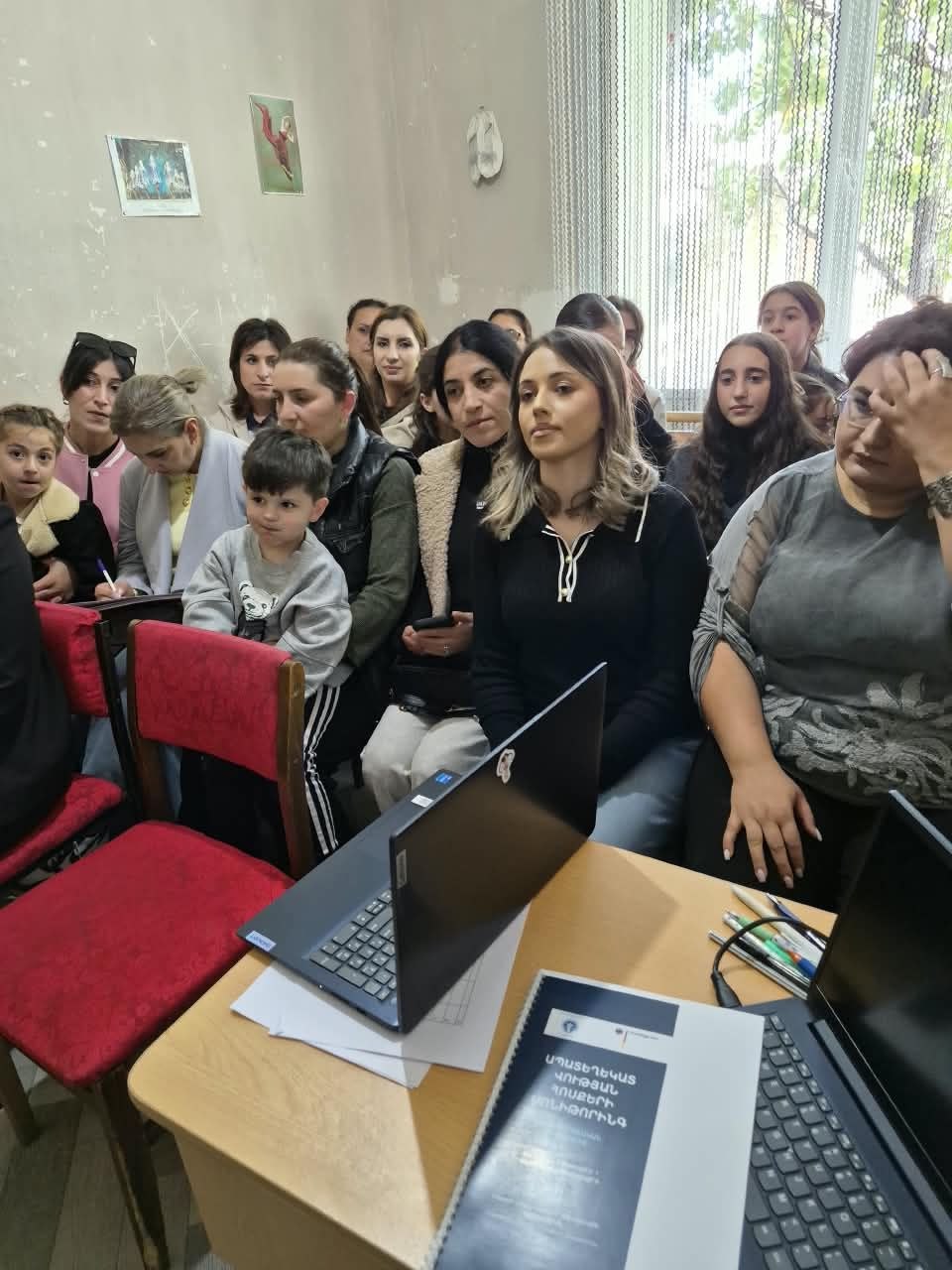
One of the important components of the seminar, the “Practical Tools for Fact-Checking,” was led by the project coordinator, expert Ani Sukiasyan . She presented how to use available online tools to verify suspicious information, find the original sources of publications, and identify misleading uses of photos. The practical explanations helped participants understand how to apply these verification steps in everyday life and become more responsible disseminators of information.
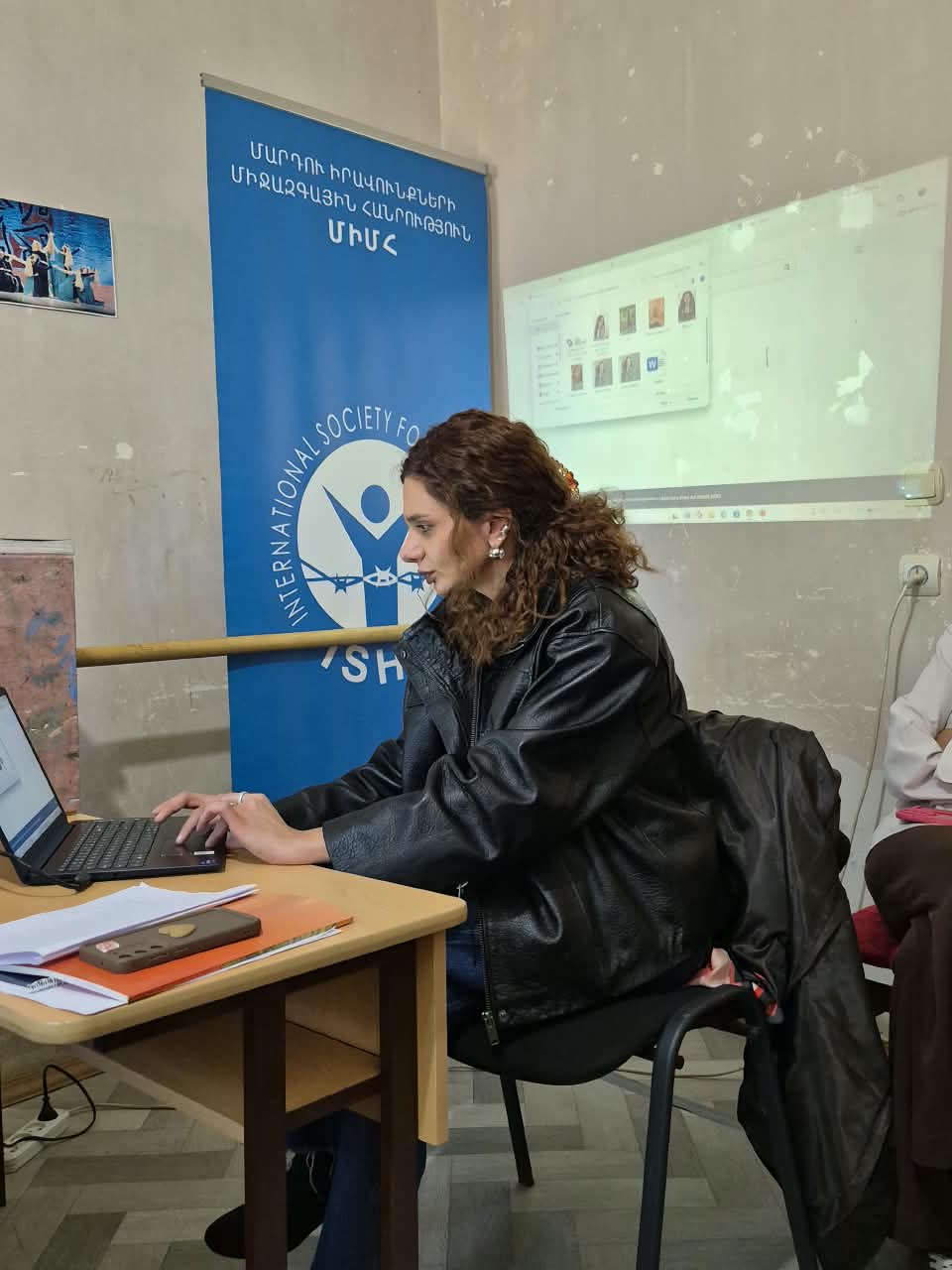
The importance of source and context was emphasized. When evaluating information, it is necessary to find out who published it, what the claim is based on, when the material was created, and whether the title matches the content. The same photo or video can take on different meanings depending on the description that accompanies it.
The ability to distinguish between fact, opinion, and conjecture was also emphasized. The author’s confident tone or frequent repetition of a claim does not make it a proven fact.
False statements in the Armenian media sphere at the center of discussion
During the meeting, the false and manipulative statements circulating in the Armenian information environment were discussed. Attention was paid to the mechanisms through which an unsubstantiated claim can gradually be perceived as reliable information, thanks to multiple repetitions, dissemination on different pages, and emotional comments.
One of the important areas of discussion was building trust in information. A message sent by an acquaintance, a publication from a page with many followers, or advice presented in the name of a specialist may seem trustworthy. However, in each case, it is necessary to verify the actual claim and its basis.
The role of emotions was also touched upon. Fear, anger, a sense of injustice, or compassion can prompt a quick reaction without checking information. Manipulative content often takes advantage of this very rush, pushing the audience to spread, make harsh judgments, or take certain actions.
At the same time, it was emphasized that critical thinking does not mean rejecting everything or distrusting any source. It involves asking questions, seeking evidence, and being willing to reconsider one’s own opinions when new, verified data emerges.
Active participation and exchange of experience
The seminar was held in an interactive format. Participants asked questions to the speakers, responded to the examples presented, and discussed different approaches to understanding information.
Working with a more mature audience also provided an opportunity to reflect on information habits that have been formed over the years. Trust in various sources is often linked to personal experience, family and community ties. Therefore, developing media literacy skills requires understandable explanations and communication that takes into account people’s experiences.
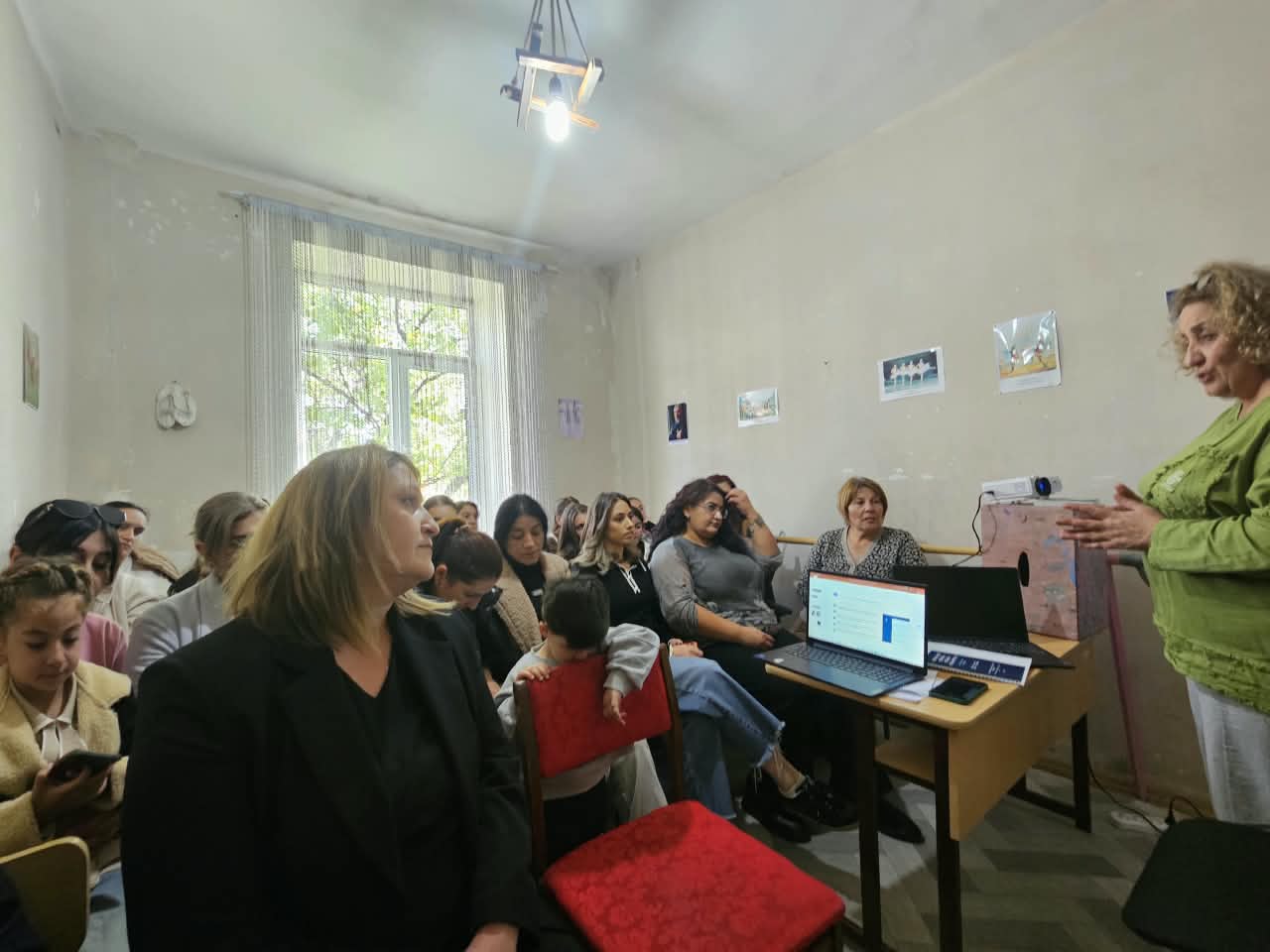
During the discussions, it was important to provide an environment where participants could freely express doubts and ask questions without fear of making mistakes. Encountering false information or spreading it at some point can happen to anyone. What matters is what steps we take after suspicions arise or an error is discovered.
Available fact-checking tools
The practical part of the seminar was led by project coordinator and subject matter expert Ani Sukiasyan. She presented the steps of information verification and the possibilities of using available online tools.
Image search, source discovery, and cross-posting were discussed. The presented approaches allow us to examine whether a photo has been previously published, what event it related to, and to what extent its current description corresponds to the original context.
Useful tools for fact-checking include Google Lens and TinEye to find other posts with the same or similar images, Google Maps and, where available, Street View to compare location details. Search engines, official websites, and open data sources can also help verify claims made in posts.
It was emphasized that it is important to correctly interpret the results of the tools. One search is not always enough to draw a conclusion, and not finding information about an image does not yet prove its authenticity. It is necessary to compare sources, pay attention to dates, and distinguish between what has been confirmed and what questions remain open.
Responsible information behavior in the family and community
During the meeting, it was emphasized that media literacy is important for people of all ages. Information shared in family and community interactions can influence people’s moods, relationships, and daily decisions.
A few simple steps before sharing information can prevent further circulation of misleading content: read the entire article, check the source and date, seek independent confirmation, and don’t rush to respond to the headline alone.
Correcting misinformation that has already been shared is also part of a responsible approach. If a post turns out to be false or misleading, it is important to inform the people to whom it was shared.
Thank you for your participation and cooperation.
We would like to thank the Harich Art Center for hosting and hosting the meeting, as well as the local organizers for their cooperation and involvement of the participants.
We would like to express our special thanks to the residents of Harich and the surrounding communities for their active participation, willingness to ask questions, and open discussion. Their involvement made the meeting an opportunity for mutual learning and experience sharing.
Through regional seminars of the “Monitoring Disinformation Flows” program, we continue to support the development of media literacy among people of different ages, encouraging a culture of verifying information, making informed judgments, and distributing it responsibly.
Ani Sukiasyan
The material was prepared within the framework of the Disinformation Flows Monitoring Project.

#CivilSocietyCooperation #ishrarmenia #ishrfactcheck
The project is implemented with the financial support of the Federal Foreign Office of the Federal Republic of Germany.