



Chronicle of disinformation and manipulation in Armenia August–October 7, 2026

How does a real state program turn into a promise to distribute money to everyone, a conference statement into a political accusation, and a real speech into a fabricated quote? Studies and educational materials published by the International Human Rights Community – Armenia organization since August provide an opportunity to follow these mechanisms.
This chronicle compiles selected investigations and analyses published on our website, presenting popular claims, their verification results, and the methods of deception. It also includes previously circulated stories that were investigated during the specified period.
August 16: Support of up to 2 million drams – to whom and under what conditions
A post circulating on social media claimed that the government was preparing to provide up to 2 million drams to citizens over the age of 63. The photo of the Prime Minister and the wording about financial support could have created expectations of a universal payment.
The project we studied, however, was about targeted support for economic and business initiatives of citizens aged 63–72. It envisaged the submission of applications, evaluation, and conditions for the use of funds. The project did not envisage automatic payment or pension replacement for every senior citizen.
This is an example of removing essential terms from real information. Possible support of up to 2 million drams was presented in such a way that its purpose and the scope of beneficiaries remained invisible.
August 17: From “free inspection” to expensive offer
Our article on health ads describes the sequence of manipulative sales pitches: offering a free consultation, creating anxiety about a health problem, and urging an urgent purchase.
One study participant reported spending nearly 200,000 drams after receiving such a recommendation without the expected results. This evidence does not prove that the recommended remedy caused the deterioration of health, but it does highlight the problem of financial expense and late seeking professional help.
This publication is not a medical opinion on any specific product. It draws attention to situations where fear, the promise of a “miracle cure,” and haste replace verifiable information.
August 20: Anti-European stories around various fears
Our analysis combines three previously popular narratives, presenting the European direction as a threat to religious identity, demographic security, or economic stability.
Among them was the claim that Armenia had secretly agreed to accept 250,000 migrants. An investigation by Lead Stories International revealed that the video presenting this story, despite the logo used, was not produced by the Armenian Mirror-Spectator newspaper.
The combination of selected cases shows how the same political process can be represented through different concerns. However, it does not in itself prove that each story was created for a specific audience.
Our analysis and verification of Lead Stories .
August 26: The technological project in the history of military threat
The video, which was circulated in July, was presented as an Iranian military threat. In the accompanying notes, the Firebird artificial intelligence data center being built near Hrazdan was attributed with the function of providing targeting data for US military operations.
According to our research published in August, no evidence was found in open sources to support this military function. Nor was the official Iranian origin of the video confirmed.
Thus, the existence of a real technological project was given an unconfirmed military significance. Here, the result of the verification must be formulated precisely: the claims are not confirmed by researched public sources.
August 30: From the invitation to the conference to a political accusation
The news spread on August 12th reported that YSU was organizing a conference dedicated to the history of Azerbaijan.
According to the announcement we studied, the organizer was the American Research Institute for the South Caucasus (ARISC), and the topic covered the history, politics, culture, and society of the South Caucasus, including Armenia, Azerbaijan, and Georgia. An invitation to participate was published on the YSU website.
The deception was built on two changes: the university issuing the statement was presented as the organizer, and the regional topic was narrowed down to one country. The political commentary that followed must be distinguished from verifiable facts.
September 17: Creating sources that appear trustworthy from fake news
Our publication addresses the program to create information websites similar to Wikipedia, which was described in leaked documents from the Russian Social Design Agency.
According to a Bloomberg investigation in June, the intention was to also reach search engines and search engines with content related to Armenia. The investigation identified a number of sites, but the intended purpose should not be equated with the already established impact: the actual impact on the responses of major search engines is not presented in our publication as a confirmed result.
This case reveals an additional danger: not only the individual news item, but also the source that people and digital systems later use can be manipulated.
Our publication and reprint of Bloomberg’s investigation .
September 21: A fabricated speech attributed to Pashinyan
In early September, a quote attributed to Pashinyan about the Kazakh president and referendums was spread on social networks.
According to our publication, the response to the actual briefing on September 3 was changed and supplemented with phrases that were not in the original. In the relevant part, the Prime Minister did not mention Kazakhstan or Tokayev.
In this example, a real person, photograph, and political event were used to give the appearance of credibility to a new, invented statement. Sharing the same text on different accounts is not an endorsement of the original source.
September 23: Distortion of history about the rights of former prisoners
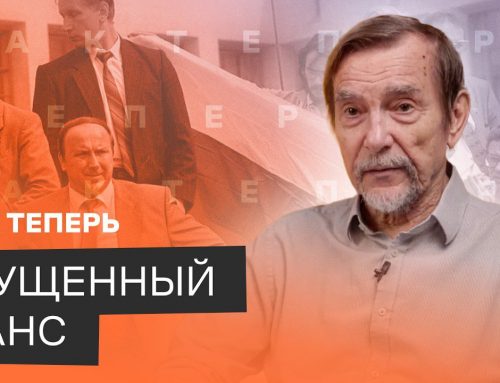
A video released on September 20 claimed that four former Armenian prisoners of war had refused to file a complaint against Azerbaijan with the ECHR.
According to our research, Lapshin’s statement referred to the refusal of three individuals, and he had no information about the further steps of the fourth, Gevorg Sujyan. Sujyan had publicly announced on September 19 that his application had been submitted and accepted.
At the same time, Lapshin’s claim that he refused the applications on the advice of an influential person was not supported by public evidence. Therefore, it was necessary to separate his statement, Sujyan’s public information, and the added or modified content of the video.
October 5: What you see is not proof of authenticity
The last part of the chronicle is educational. Our video “Deepfake: When You Can’t Trust Even Your Eyes” explains how a created or altered image and voice can mimic a real person.
This is not a verification of an individual incident, but a practical reminder to verify the original publisher, search for the full video, and compare it with official sources. The mere absence of visible technical flaws does not confirm the authenticity of the video.
General overview of the chronicle
By combining selected publications, misleading content is often built on a real basis. The state project exists, but its terms are omitted. The conference announcement is real, but the organizer and topic are changed. The official spoke, but different words are attributed to him.
Therefore, the main question of fact-checking is not just “is it true or false?” It is also necessary to clarify what has been changed, what condition has been omitted, and where fact has been replaced by assumption. This distinction allows us to protect public debate while preserving the right to criticism and the demand for verifiable information.
ISHR Armenia Team
The material was prepared within the framework of the Disinformation Flows Monitoring Project

#CivilSocietyCooperation #ishrarmenia #ishrfactcheck
The project is implemented with the financial support of the Federal Foreign Office of the Federal Republic of Germany.


Leave A Comment