




The Armenian branch of the International Society for Human Rights (ISHR) continues to implement the “Monitoring Disinformation Flows” program, which aims to develop a culture of fact-checking, increase the level of media literacy, and contribute to the fight against disinformation in Armenia.
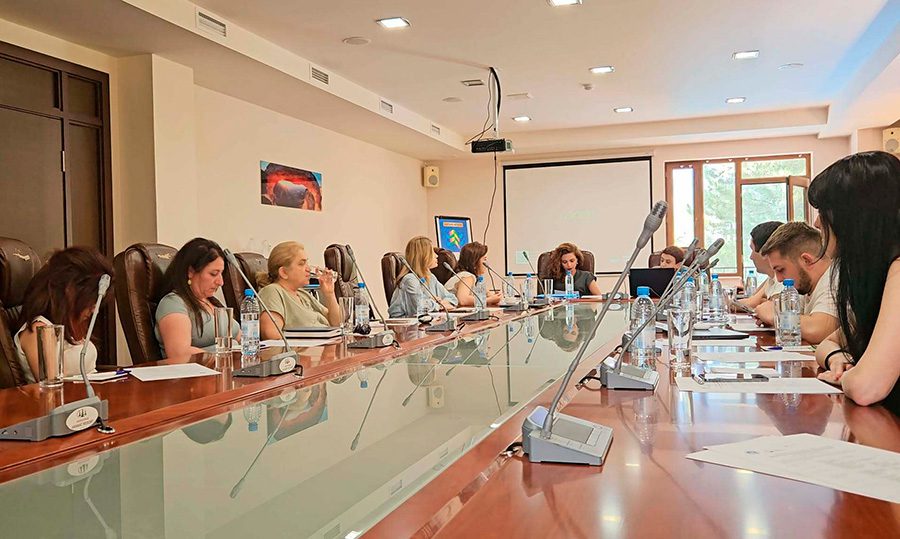
The first meeting of the participants had already taken place within the framework of the program, during which the goals of the program, the working format, the content of the upcoming four-month mentoring phase, and the tasks of the participants were presented.
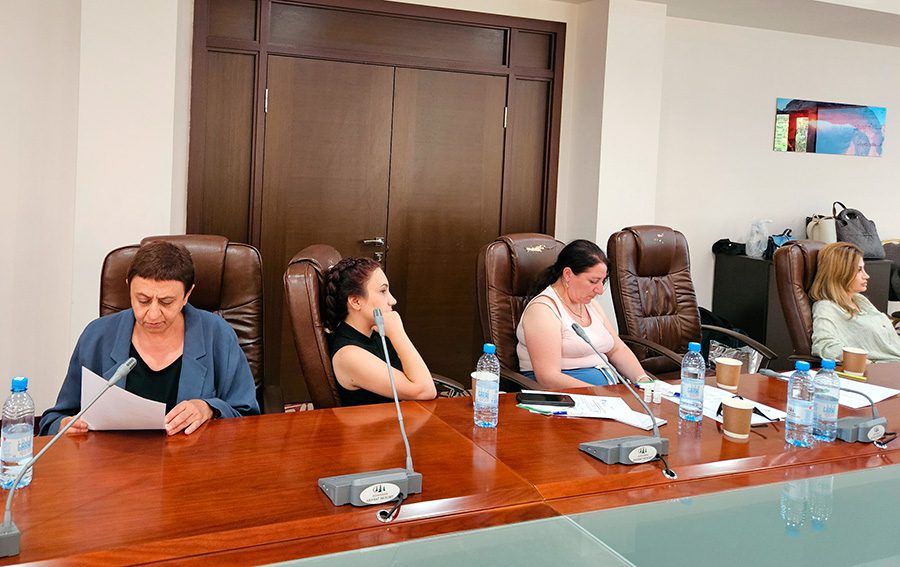
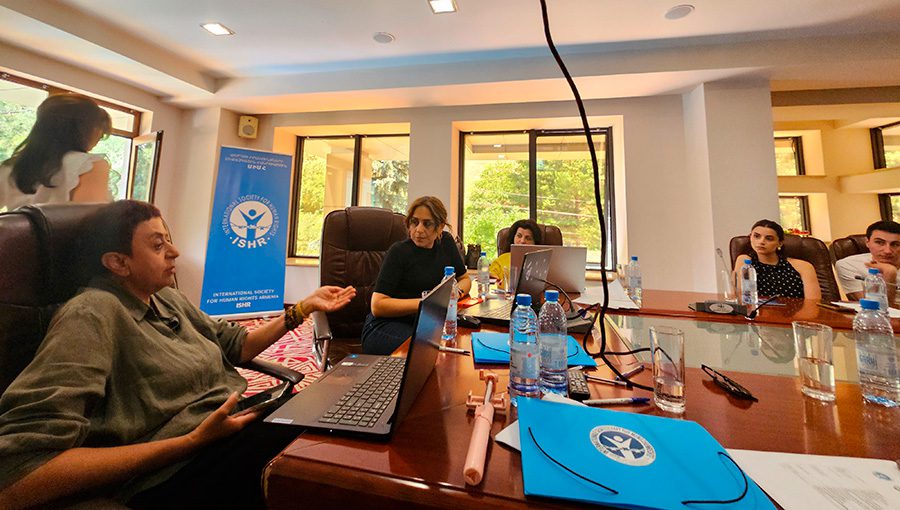
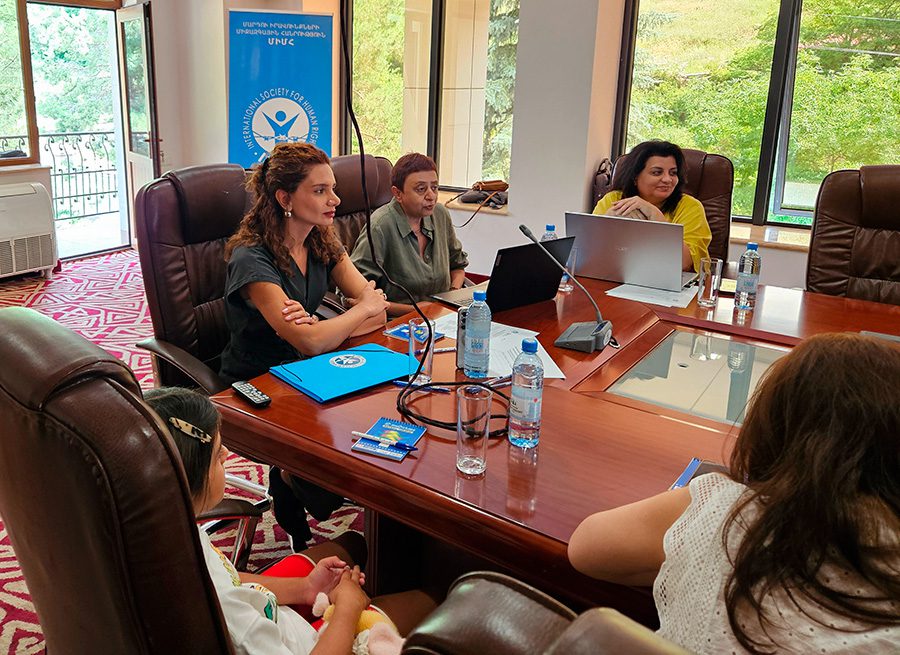
The next important stage of the project was an intensive outreach workshop , which brought together journalists, editors, researchers, and active citizens to deepen their knowledge and practical skills in the field of fact-checking.
The workshop was organized in one of the resort areas of Kotayk region. This location was not chosen by chance: the outing format allowed the participants to break away from the everyday work environment and fully focus on learning, practical tasks, professional discussions and exchange of experience.
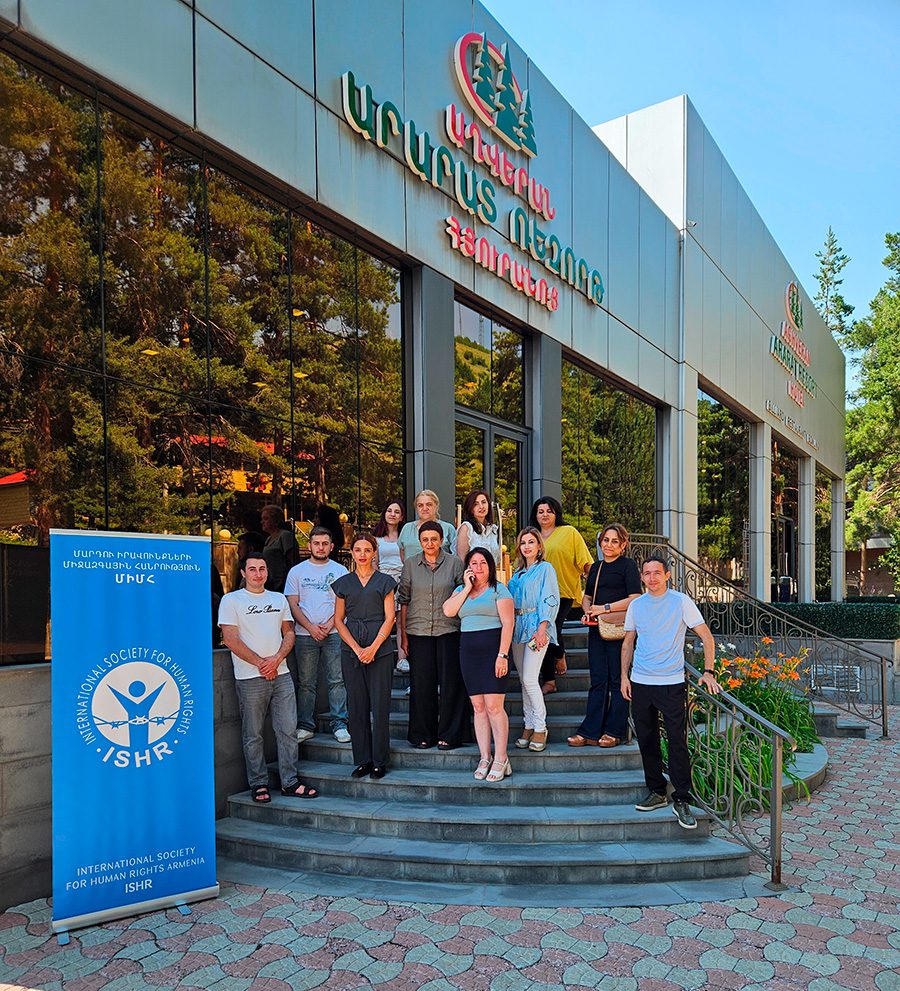
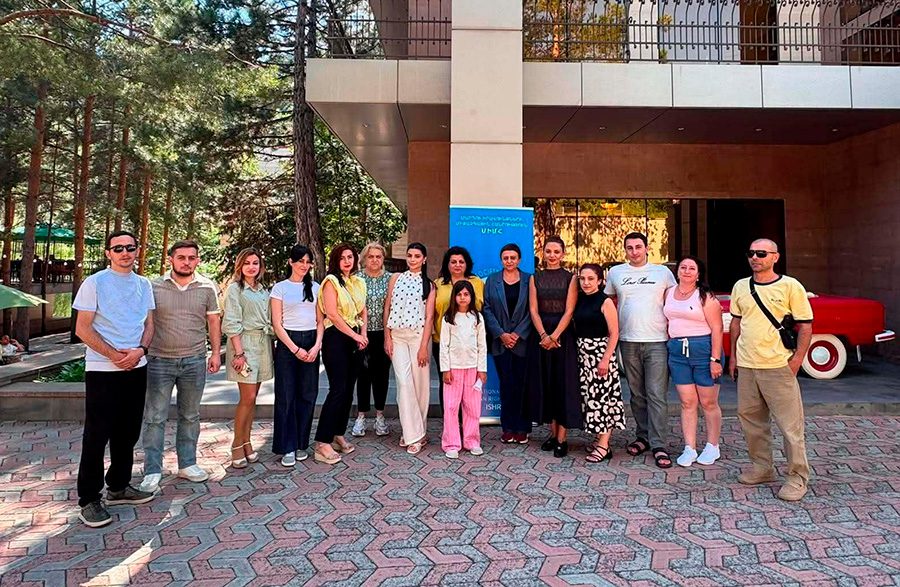
Such an environment contributed not only to the effective assimilation of knowledge, but also to the formation of team cooperation, mutual trust and new professional connections.
This provided an opportunity to form a diverse professional group, where journalists, editors, and researchers not only learned from each other, but also jointly developed practical approaches to fact-checking.
Modern information challenges with experts
The information space has undergone significant changes in recent years. The rapid development of artificial intelligence, social media algorithms, and the unprecedented speed of information dissemination have created new challenges for both journalists and society as a whole.
It is in this context that the workshop focused on important issues such as:
- How to distinguish fact from manipulation,
- How to detect fake photos and videos,
- How to find the source of information,
- How to recognize systematic disinformation campaigns,
- and what tools can a modern fact-check journalist work with?
The discussions were based on both international experience and real examples from the Armenian information environment.
From theory to practical work
One of the important components of the program was the training on the topic “Information Environment and Disinformation Mechanisms” , during which the participants studied the main mechanisms of disinformation dissemination, types of information manipulation, the influence of social networks on the formation of public opinion, as well as the role of information in hybrid warfare.
Particular attention was paid to fact-checking tools and methods . Through practical exercises, participants were introduced to modern tools for open source intelligence (OSINT), photo and video verification, metadata analysis, geolocation, source search, and information validation.
One of the most active parts of the workshop was the practical work “From Monitoring to Fact-Checking .” Based on real examples, participants learned how to turn suspicious information appearing on social networks or in the media into a full-fledged fact-check investigation: from identifying the claim to collecting evidence, combining different sources, and preparing a reasoned conclusion.
Practical simulations and experience sharing
A practical simulation was also conducted during the program, in which participants were divided into groups and worked on realistic information cases.
They analyzed manipulated photos, deepfake videos, fake statistics, and widely shared posts on social media, applying the tools and methods studied during the course.
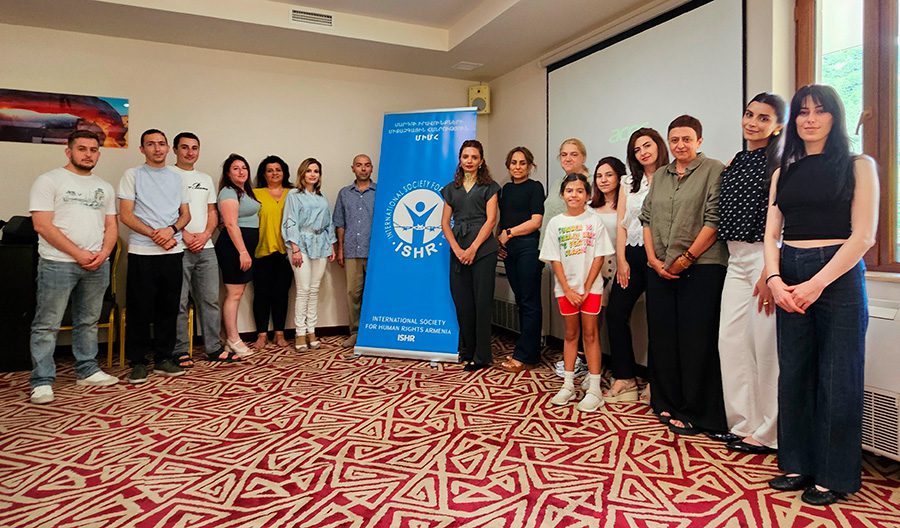
The simulations not only provided an opportunity to practically reinforce the knowledge gained, but also contributed to the development of teamwork, analytical thinking, and quick decision-making skills.
The experience of local media , modern challenges of information security, and the responsibility of journalists in the conditions of hybrid wars were also topics of separate discussion . The participants analyzed real cases, discussed the problems facing the Armenian media, and shared their professional experience.
Experts who shared their knowledge
The courses were conducted by experienced professionals in the field:
Bela Shikaryan , President of the Armenian Section of the International Society for Human Rights (ISHR), journalist,
Hasmik Hambardzumyan , (FIP) Editor-in-Chief,
Anahit Khachatryan , editor, journalist.
The experts presented not only theoretical knowledge, but also numerous examples from their professional experience, engaging the participants in active discussions and practical exercises.
Over the next four months, participants will work with the direct support of mentors, select claims circulating in the public domain, conduct fact-checking, and publish their own fact-check materials.
The goal of the program is not only to develop the professional capabilities of individual participants, but also to form a collaborative professional community that will contribute to the fight against disinformation, the development of fact-based journalism, and the spread of media literacy in Armenia.
The IHRC would like to thank all participants, lecturers, and partners for their active participation, high-level professional discussions, and willingness to cooperate.
Ani Sukiasyan ISHR Armenia Program Coordinator
The project is implemented with the financial support of the Federal Ministry for Foreign Affairs of the Federal Republic of Germany.
#CivilSocietyCooperation #ishrarmenia #ishrfactcheck

Leave A Comment