



The IAC ISHR is finalising a practical guide on monitoring the right to a fair trial

In a context where trust in the justice system depends directly on the quality of judicial proceedings, professional tools for assessing the extent to which the judicial system meets the standards of a fair trial take on particular significance. In modern democratic states, independent monitoring of court hearings is viewed not as external control, but as an important mechanism for institutional development, increasing transparency and strengthening public trust in the judiciary.
As part of this work, the IAC ISHR is finalising a practical guide on monitoring the right to a fair trial. The publication is intended to serve as a modern methodological framework for the professional observation of court proceedings, the training of new specialists, and the further implementation of international standards in the field of justice.
IAC ISHR as a platform for professional consolidation
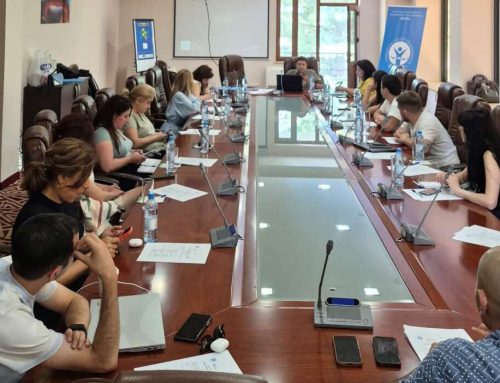
The work on the handbook served as an example of mature professional collaboration within the legal community towards a shared goal: strengthening standards of fair trial and fostering a culture of justice.
During the preparation of the document, suggestions and expert comments from the following representatives were taken into account:
- the Office of the Ukrainian Parliament Commissioner for Human Rights,
- Supreme Court,
- The National Bar Association of Ukraine,
- The Law Institute of the Vadym Hetman Kyiv National Economic University,
- Boris Grinchenko Kyiv Metropolitan University,
- Taras Shevchenko National University of Kyiv,
- “The Legal Gazette”.
This form of cooperation highlights an important trend: a modern professional ecosystem is taking shape in Ukraine, in which state institutions, the academic community, the legal profession, the media and civil society are able to work together to develop standards for the quality of justice.
From years of experience to modern methodology
The methodological framework is based on international approaches to court monitoring, in particular the work of the OSCE, as well as the long-standing practical experience of the International Society for Human Rights (ISHR) and IAC ISHR.
Since 2017, IAC ISHR experts have prepared over 700 monitoring reports on court hearings across various categories of cases. This has enabled the creation of one of the most comprehensive independent analytical databases in the field of court monitoring in Ukraine, the identification of typical procedural issues, and the development of practical solutions. The guide integrates international standards of fair trial, national procedural legislation, the case law of the European Court of Human Rights (ECHR), modern approaches to court monitoring, and practical algorithms for recording and analysing procedural violations. This is not a theoretical concept, but the result of a thorough synthesis of many years of practical experience.
The guide devotes particular attention to ensuring a proper understanding of the nature of court monitoring as a professional and impartial mechanism for assessing procedural safeguards. The monitoring of court hearings does not constitute interference in the administration of justice; it does not involve assessing a person’s guilt, reviewing the evidence on its merits, or predicting the outcome of a specific proceeding. Its purpose is to provide a professional analysis of the extent to which the court proceedings comply with the standards of a fair trial, the principles of due process, and human rights guarantees.
This analysis focuses on:
- access to legal aid;
- equality of the parties and the adversarial nature of the proceedings;
- reasonable timeframes for consideration;
- the openness of court proceedings;
- adequate justification of decisions;
- the effective exercise of the right to defence;
- no signs of bias.
It is precisely this approach that is in line with current international practices regarding the institutional strengthening of the judiciary, where independent professional monitoring is regarded as a tool for improving the quality of justice, strengthening public trust and identifying systemic problems at an early stage.
The cycle of change: from observation to reform
The guide is based on the understanding of monitoring as a cyclical process of improvement, encompassing data collection, analytical processing of information, the preparation of recommendations, advocacy for necessary changes, and the re-evaluation of results. This approach enables a shift from merely recording individual procedural incidents to developing systemic solutions in the justice sector, based on facts, professional analysis and international standards.
The preparation of this guide has served as an example of the legal community’s mature professional consolidation around the standards of a fair trial: the capacity for self-organisation, professional partnership and collaborative efforts to improve the quality of justice. Its practical value lies in the creation of a unified professional toolkit for various participants in the legal system: for lawyers, a resource for strengthening procedural argumentation and the more effective application of ECHR standards; for judges, an additional tool for professional reflection, transparency and the strengthening of public trust; for academics and students — a structured methodological basis for researching the functioning of the justice system; and for the state — a source of objective empirical data for the timely identification of systemic problems and the improvement of legal policy.
Investing in the next generation of professionals
The approach underpinning this guide is already being used in the work of the IAC ISHR monitoring mission, as well as in the training of law students, young professionals and practitioners in the field of human rights.
Thus, this is not merely a matter of drafting a document, but of establishing a modern centre for the professional monitoring of the right to a fair trial in Ukraine — an environment that brings together practice, analysis, international standards and the training of a new generation of legal professionals.
Coming soon
Once the editorial process has been completed, the practical guide will be officially launched and made available for professional use, educational programmes and future monitoring initiatives. IAC ISHR invites representatives of the legal community, academia, the human rights sector and institutions of the justice system to collaborate on the further development of contemporary standards for monitoring the right to a fair trial.
A strong judicial system is shaped not only by laws and institutions. It is also shaped by a professional culture, openness to professional dialogue, and a shared responsibility for the quality of justice.
Source: https://pravo.ua




Leave A Comment