



Cubans as cannon fodder
Not only North Koreans and Africans, but also thousands of Cubans are fighting for money on Russia’s side in Ukraine
BY MICHAEL LEH

Cuban exile Carolina Barrero. Photo: Michael Leh
Russia has additionally recruited thousands of mercenaries from Cuba to fight against the Ukrainians. This is detailed in the report “Cubans on the Front Lines in Ukraine” by Cuban art historian and human rights activist Carolina Barrero, published by the Friedrich Naumann Foundation, which is affiliated with the FDP. Born in Havana in 1986, Barrero was involved in the 2021 protests against Cuba’s totalitarian regime as a member of the “27N” artists’ and intellectuals’ movement. As she told the “Tagespost” in Berlin at a press conference at the Naumann Foundation, she was interrogated more than twenty times. She was severely harassed, imprisoned, and placed under house arrest. The Cuban state security service then drove her into exile. She now lives in Madrid and founded the organization “Ciudadania y Libertad” (“Citizenship and Freedom”) to promote civil rights in Cuba. In 2024, she was awarded the Sakharov Prize by the European Parliament.
Lured with a monthly salary of $2,000
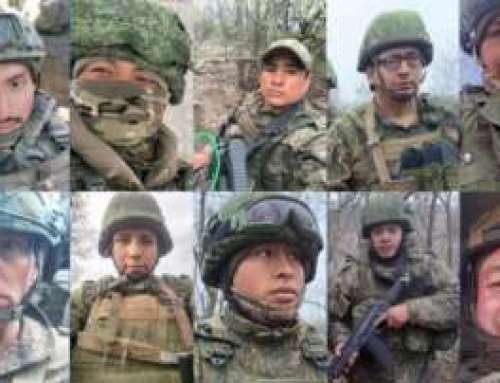
According to Barrero’s report, the Ukrainian secret service has officially confirmed that at least 1,076 Cuban citizens are fighting for Russia, with 96 considered dead or missing. However, this figure only includes cases that have been confirmed by complete documentation such as names, passports, and signed contracts. According to intelligence estimates, the actual number is between 5,000 and 25,000 fighters. This would make the Cubans the second largest contingent of foreign soldiers on the Russian side after the North Koreans.
As reported this fall by the Florida-based newspaper Miami Herald, Andriy Yusov, spokesman for the Main Directorate of Intelligence of the Ukrainian Ministry of Defense, said: “Our reliable intelligence currently indicates that at least 20,000 Cubans have already filled out the necessary documents and been recruited to fight for Russia.”
Cubans as cannon fodder on the front lines
As Carolina Barrero writes, 60 percent of the Cubans were lured with false promises of jobs in the construction industry. Forty percent are deliberately deployed military and intelligence personnel. While Cuba is in the midst of a severe economic crisis and many of those recruited there live in poverty, Russia offers them monthly salaries equivalent to $2,000. In contrast, the average Cuban wage is equivalent to about $17. Cubans do not need a visa to enter Russia and can take direct flights to Moscow from Cuba’s major airports. Once in Russia, they have to sign contracts in Russian that they hardly understand. They receive barely two weeks of military training and are sent to the front lines. The mortality rate there is devastating. Their average life expectancy at the front is only 140 to 150 days.
State-sponsored human trafficking
The Cuban government officially denies any involvement in recruiting its own citizens for military service in Russia. However, it is not credible that in a country where state control over population movements is strict and even permission to move from one province to another can require months of bureaucracy, thousands of men of military age could easily take international flights.

The stylized portrait of Stalinist Che Guevara adorns the Cuban Ministry of the Interior in Havana. Photo: Michael Leh
Among others, Colonel Mónica Milián Gómez, military attaché at the Cuban embassy in Moscow, has been identified as one of the coordinators of the recruitment network. TIME Magazine had already documented in a study published in September 2023 that advertisements for Russian military service appeared in Facebook groups for Cuban expatriates in Moscow.
In its 2025 report on human trafficking, the US State Department officially classified the recruitment of Cubans for Russia’s war in Ukraine as a form of state-sponsored human trafficking. Barrero names several Cubans in her report and describes their fate in Russia.
“SIGINT” espionage listening station in Cuba
The former (now replaced) head of the Ukrainian Presidential Office, Andriy Yermak, wrote on the X platform on October 29: “Today, the UN voted on Cuba’s annual resolution against the US embargo. Ukraine voted against it this year. Our reasons are serious: the Cuban government has become a strategic tool of Russia and is actively supporting its war of aggression against a sovereign European nation.” Thousands of Cuban soldiers are reportedly fighting against Ukraine as part of the Russian invasion forces, gaining combat experience in the process. Havana is increasingly involved in military and intelligence activities that threaten international security. There are also media reports that Russia has reactivated its former large “SIGINT” (“signals intelligence”) listening station in Lourdes near Havana, and that China is also involved.
This article by IGFM board member Michael Leh appeared on December 11, 2025, in the Catholic weekly newspaper “Die Tagespost.” We are publishing it here with the kind permission of the author.
Leave A Comment