



Correctional Colony No. 19 in Volgograd Oblast, where four colony employees and four convicts were killed in a hostage situation on August 23, had the whole set of problems of the penal system.
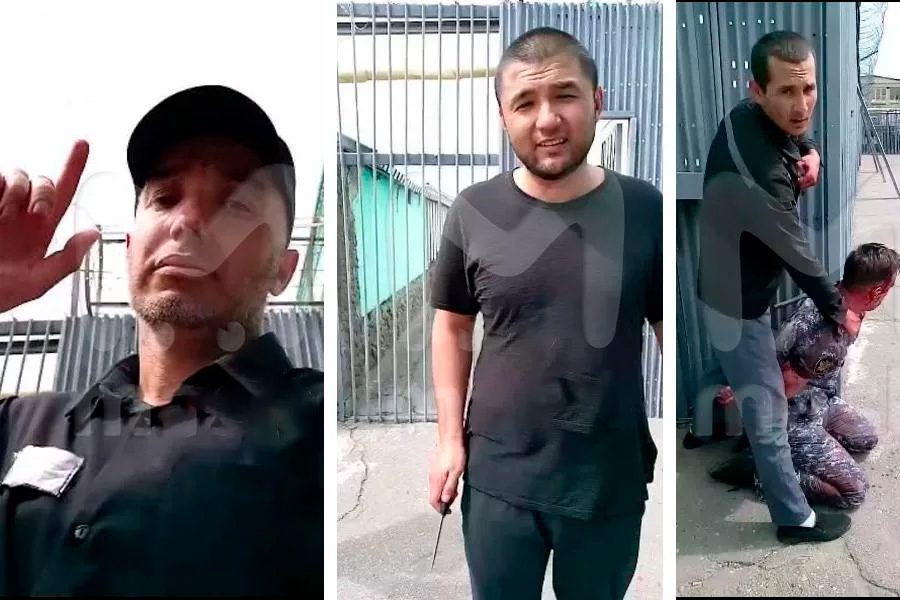 Convicts were abused here, and they slit their wrists; superiors were caught taking bribes; recruitment for the PMC “Wagner” and the regular army was conducted here – every fourth person died.
Lattice under the stairs
The high-security penal colony No. 19 in Surovikino is two hours by car from Volgograd. It accommodates 1,200 people; according to the latest published data, about a thousand convicts were actually held there.
A creative team, a KVN team, songs about Stalingrad and “very decent” saiki in the bread shop – that’s how the publication “Bloknot Volgograd” cheerfully told about IK-19 a year ago, in July 2023.
In fact, over the past 10 years, prisoners have at least three times massively protested against beatings and inhumane conditions in the colony.
In 2014, 15 inmates in penal colony 19 opened their veins in protest.
A year later, in 2015, 10 to 15 people opened their veins, and other prisoners went on hunger strike because of systematic beatings. The message about this they were able to record on video and post on YouTube. “An act of physical violence was applied to us, they started beating us,” a man said in the minute-long video. – We are threatened that we will be killed, beaten if we don’t go out to eat.”
At that time, human rights activists recorded more than 50 complaints of abuse by two employees of the colony, horrible living conditions (in particular, in one of the detachments there were four toilets for 90 prisoners, one of which did not work), rotten potatoes in the canteen, as well as torture, reported Caucasian Knot*.
In the same summer of 2015, Sergei Chebaturkin, a 25-year-old inmate of IK-19, committed suicide in the medical correctional facility. According to his mother, the young man committed suicide in order not to return to the colony, where he was beaten and extorted money “to repair the barracks.
The press service of the Penitentiary Department of the Federal Penitentiary Service said at the time that some of the information was not confirmed, and the rest “will be eliminated”. “There was such a place with bars, now there are no bars,” they said.
However, the following year, 2016, 11 prisoners’ veins were opened again, after UFSIN officers beat up several people in the punitive isolation cells (SHIZO) and the cell-type facility (CCF). An interlocutor of “Mediazona ”* reported at the time that a total of 450 convicts were on hunger strike (official bodies denied this). According to the source, in response, the colony staff threatened to introduce OMON and “lose the protesters without a trace”.
Since 2021, prisoner Nikita Kotlyarov has repeatedly reported torture conditions. A 26-year-old man with serious illnesses, including tuberculosis, which he contracted in detention, was repeatedly placed in a CCP, which “did not meet the norms of space per inmate, with furniture […] in a state of disrepair, no ventilation, the stench from the toilet, such that it cuts the eyes and makes it difficult to breathe,” wrote in a complaint in 2023 human rights activists who helped Kotlyarov.
“It is difficult to access the toilet, and to use it you have to climb under the bunk and crawl,” the complaint, quoted by Kavkazsky Uzel, also said.
In 2022, Kotlyarov cut his left forearm – according to his lawyer, the man had to do so to gain access to a doctor. In response, the colony filed a lawsuit to recover material damage from Kotlyarov for treatment after self-mutilation. The court rejected the suit of the colony.
High-security deputy chiefs
In April 2024, a court in Volgograd Region gave seven years to Grigory Belenkov, former deputy head of colony No. 19. He was accused of exceeding his official powers and taking a bribe.
At the same time, the episodes themselves occurred back in 2019, and the size of the bribe amounted to 320 thousand rubles. Belenkov was found guilty of receiving this money from four convicts in exchange for a record of encouragement in their personal documents (this affects parole) and for mitigation of the conditions of serving the sentence.
Belenkov pleaded guilty to part of the episodes, in addition to seven years in prison, he was fined 1 million rubles. It is unknown whether he appealed the verdict or not.
In 2021, another deputy head of IK-19 Nikolai Borisevich was detained. As reported then in the press service of the Main Department of the Interior Ministry of Volgograd region, Borisevich for 1.5 years received from 10 thousand to 17 thousand rubles a month from his subordinate, a junior inspector. The latter paid this money for Borisevich to conceal his absence from work, while the junior inspector continued to receive his full salary.
The verdict in this case has not yet been passed.
In the photos and video from IK-19 that appeared on August 23, the rioters were armed with knives, and one of them was wearing a vest with a suicide belt (it is still impossible to determine whether it was real or a fake). It is not excluded that all these items also got to the territory of the colony as a result of corruption. “Everything is passing through. Corruption is terrible, and in this zone too. For money, they will bring anything, even an elephant in a wrapper.” – says Olga Romanova, head and creator of the Sitting Russia Foundation*.
Religious factor
“Our prison system, a large organization, has found a new enemy. This new enemy is called Muslims,” these are the words of Alexei Navalny, who died in the colony, said in January 2024 (quoted by Mediazona).
Navalny then filed lawsuits in the Supreme Court – he claimed that the prison system was trying to fight the practice of studying and spreading Islam by constantly introducing new restrictions for this very category of believers.
“Representatives of the FSIN for some reason find a huge threat in the fact that people study Islam. […] That is, these are Muslims who, studying Islam, they, well, supposedly, will deny any other rules, they will unite on the principle of studying Islam and thus will oppose themselves to the administration and dictate some kind of their own rules. This construction is absolutely fictitious, artificial, non-existent,” Navalny said, pointing to numerous restrictions in prison rules aimed exclusively at Muslims: for example, it is possible to have an Orthodox cross, but not a rosary; religious books and prayer rugs are regularly confiscated from Muslims in colonies. But this is only a small part of the pressure to which people are subjected.
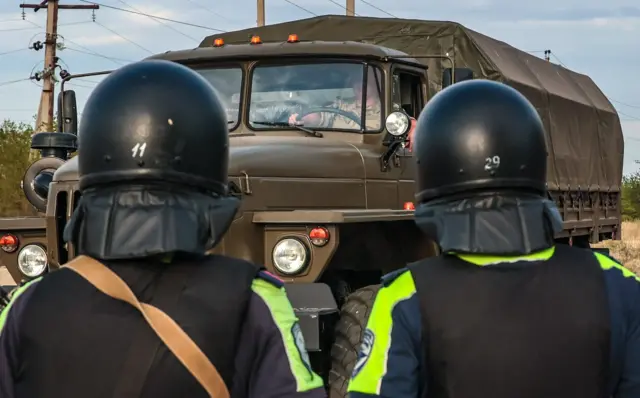
Foto,TASS
In 2021, Ekaterina Sokiryanskaya, director of the Center for Conflict Analysis and Prevention, wrote in a large-scale report on the situation of Muslims in Russian prisons: “They are more likely than others to be beaten and tortured, their right to freedom of religion is often violated, and it is more difficult for them to obtain parole.
Sokiryanskaya suggested that this attitude toward Muslims can be explained by national and religious intolerance, but an additional factor is that the FSIN system employs a large number of combatants from the North Caucasus.
After the flourishing of the “Islamic State” (recognized as a terrorist organization in Russia and other countries of the world), which recruited more than three thousand Russians into its ranks, the FSIN strengthened control over Muslim prisoners. But, unlike the people who rioted in IK-19, the real supporters of IS do not sit together with the bulk of prisoners and have no connection with them.
“Blacks” and Jamaatniks
The problem of radicalism continues to exist in prisons not only in Russia but also abroad, although the measures taken by the authorities against all Muslims are not considered effective by experts.
“It is obvious that the confined space, criminal subculture, complex system of relationships, prison violence, frustration and embitterment of prisoners make some of them more open to radical ideologies,” writes Ekaterina Sokiryanskaya.
Olga Romanova emphasizes that recently, after the terrorist attack in Crocus City Hall, the situation of Muslims in Russian colonies has only worsened.
Surprisingly, even FSIN expert Maxim Yavorsky acknowledged in his 2016 paper that “systematic torture and humiliation of convicts in detention facilities” is the main factor of radicalization in prisons both in Russia and abroad.
In one of the videos, the prisoners who took hostages in IK-19 call themselves supporters of the “Islamic State”. Not much is known about their religiosity: “Agency ”* noted that one of them, 28-year-old Nazirchon Toshov, participated in a rally in support of the Rohingya Muslims of Myanmar in 2017. And about the other captor, 23-year-old Navruzi Rustamchon, a relative said that before his imprisonment, he “was fond of religion, watched videos on YouTube with different preachers”.
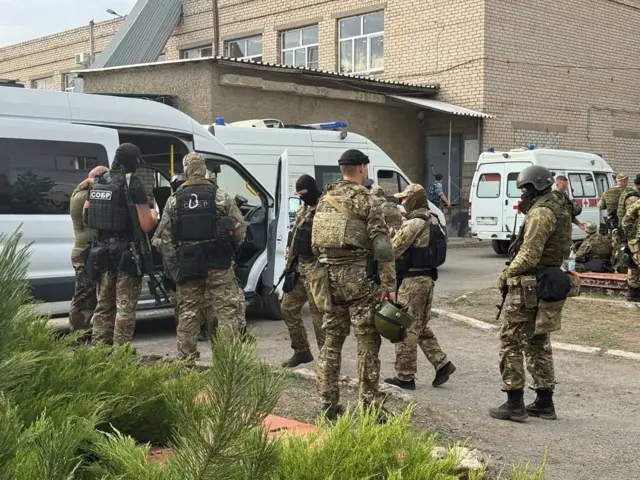
Foto,Rosgvardia/Telegram
The Mash publication claims that the prisoners who took hostages met and radicalized already in the colony.
Vera Mironova, a researcher at Harvard University and an expert on radical movements, concludes that the organizers of the riot were mostly imprisoned under “narcotics” articles and that they had nothing to do with the Islamic State from the beginning.
“Given their articles, in the zone they initially found themselves at the very bottom of the thieves’ hierarchy, and this position will not please anyone. Therefore, as a result of confrontations with other prisoners, they probably joined the jamaat,” says Mironova.
A Jamaat is an association of Muslims in prison. Some prisoners assure that Jamaats have nothing to do with radicalism and are created only for observing the norms of Islam and reciting prayers. But experts are sure that in most cases this is not true.
“To join a jamaat, you need to support IS, among other things. – Mironova continues. – But the fact that they took hostages is in no way a consequence of verbal support for the Islamic State.” The riot is the result of a confrontation with the prison authorities. Prisons where the Jamaat is strong are very hard. All their lives there have been “blacks” [“black” prisons are prisons where criminal structures or “thieves” establish order – BBC], who coexisted well with the authorities. And the Jamaatniki are beginning to rock everything and everyone. Experienced thieves (not always thieves themselves) know how to press the authorities effectively and with little loss to improve their situation. And the guys on drugs may not even realize what they are doing and what will come out of it.
Recruitment for the front
Volgograd IK-19 is a colony where first PMC “Wagner” and then the Ministry of Defense actively recruited prisoners for war.
Thanks to the BBC’s “Wagner archive”, it is known that the main wave of recruitment for PMCs took place here in October 2022. According to relatives of the convicts, the first batch signed contracts on October 4.
October 30, the first known to the BBC prisoner from this colony died. Having studied the data of the badges of the dead “Wagnerites” BBC and Mediazone found that 250 people went to war from IK-19. 87 of them died.
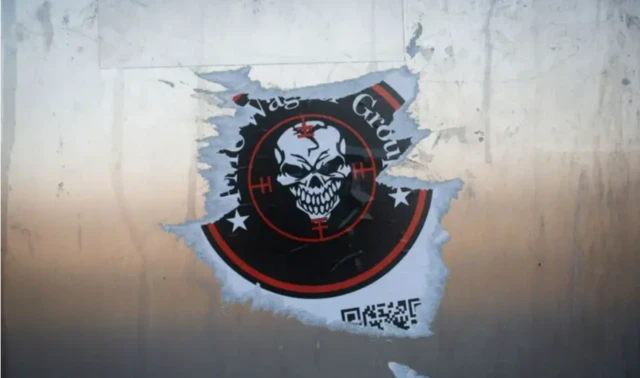
Foto,Getty Images
These data include only those prisoners who signed a contract with PMC “Wagner”. The BBC knows from the relatives of the convicts that recruitment to the front in the colony continued in 2023 by the Ministry of Defense.
Olga Romanova, the creator of the foundation “Rus Sitting”, referring to the testimonies of prisoners of IK-19, adds: “There are just a lot of dead there. The biggest recruitment was in the heat of the moment – in April 2023”.
Then the situation on the front was quite tense for Russia. On the one hand, units of the PMC “Wagner” stormed Bakhmut. Defense Ministry units provided Prigozhin’s group with support from the flanks to secure and accelerate their advance. At the same time, the Russian military tried to take the most favorable positions in Zaporizhzhya region, preparing to repel a large-scale counteroffensive of Ukraine, which was planned for early summer 2023.
The BBC found that against this backdrop, IK-19 conducted at least three waves of recruitment: in February, April, May and June 2023. During each of them at least several dozen people were sent to the front.
It is not known whether pressure was applied to IK-19 prisoners in this regard. Many want to go to war willingly, hoping to get their criminal record expunged and be free sooner. But relatives of other prisoners say that “in the colonies now they have created such conditions that one can run away to the end of the world, even to war.
This is not only about direct pressure, but also about the actual conditions of detention in the colony. The BBC knows of cases when prisoners were taken to war without explanation. In one case, a prisoner in the colony was told to “get out with your things”. He learned that he was going to war only in the “Stolypin’s carriage” on the train.
It is known that IK-19 also contained convicted citizens of Ukraine, who were serving their sentences in Kherson region and were taken away by the Russian military, leaving the city in November 2022. They lived separately from the others in the penal colony-19. According to Olga Romanova, there are about 100 of them in the colony; she also said that there are two or three more civilian prisoners convicted by a Russian court.
Source: bbc.com


Leave A Comment