




From deepfakes to fear-mongering: What types of disinformation are European countries facing during elections?
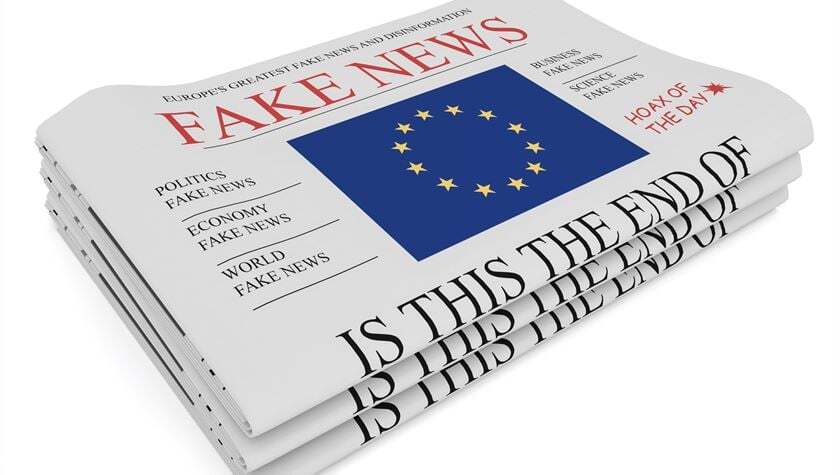 Electoral processes in Europe are increasingly turning not only into political competition, but also into large-scale information warfare. Social media algorithms, “dormant” user accounts, artificial intelligence, and the fears accumulated in society allow even a single real incident to turn into a political crisis.
During a seminar held in Yerevan, experts from the Polish organization “praktycy.eu” told Armenian journalists about the types of disinformation encountered in European countries, especially during elections, and their experience in combating them. According to media expert Jarosław Sliżewski , “each of us lives in our own Internet,” where falsehood is often more attractive than the truth, as it satisfies people’s emotional needs. Sliżewski, Polish expert Pawel Nowacki , Romanian expert Rezvan Petri and other specialists identify 5 main mechanisms of influence used in European elections.
- Fake programs and “black PR”
- Germany: A coordinated campaign was carried out against the Green Party during the parliamentary elections. More than 270 car exhaust pipes were filled with construction foam and “Be Greener” stickers were pasted on them to direct drivers’ anger at the party. At the same time, fake documents were distributed claiming that the Greens were planning to ban private cars in shifts.
- Slovakia: Presidential candidate Ivan Korčok was falsely accused of planning to send Slovak soldiers to Ukraine (although the president has no such authority). Young voters were also offered free trips to Brussels to get them out of the country on election day, in an attempt to keep them away from the vote.
- Technological manipulations and deepfakes
- Germany: A deepfake video of a woman destroying Alternative for Germany (AfD) ballot papers was widely circulated. In addition, Russian networks created fake websites imitating Der Spiegel and Die Welt with articles about Germany’s economic “failures.”
- The hotel page, which was not available for booking due to technical difficulties on Cyprus.com , was presented as “proof” that it had been purchased by Volodymyr Zelensky.
- The AI challenge: Expert Jaroslav Slizhevsky notes that due to the development of artificial intelligence, detecting fakes has become dramatically more difficult: if previously AI-generated images were easy to recognize with obvious errors (for example, six-fingered hands), now such signs have almost disappeared, and there is no single clear sign to spot a fake.
- Manipulation of real facts
Poland: In September 2025, in the hours after 21 Russian drones entered Polish airspace, dormant accounts and anti-vaccination pages left over from the COVID-19 era activated the hashtag #tonienaszawojna (“this is not our war”). According to Paweł Nowacki , “The goal was to shift responsibility away from Russia, to undermine trust in the Polish state and its relations with Ukraine.” He emphasizes that Poland is just one testing ground in a broader cognitive campaign being waged against NATO and the EU’s eastern flank.
- Czech Republic: The real fact that Interior Minister Vit Rakushan received a Romanian state award turned into a conspiracy theory that it was a “reward” for canceling elections in the Czech Republic.
- Exploiting fear and crises
Moldova: Absurd rumors were circulating against President Maia Sandu (for example, about “trading children” or “banning rose tea”). The goal was not to convince everyone, but to create information chaos.
- Bulgaria: During the 2024 forest fires, a narrative was spread: “Bulgaria is burning while NATO is sleeping,” using a real natural disaster as a means of anti-alignment propaganda.
- Fear as a weapon: Expert Yaroslav Slizhevsky calls fear the real “queen” of disinformation. According to him, disinformation is always intentionally emotional, and deceiving people is quite easy, while convincing them that they have been deceived is a real art.
- Artificial public opinion and algorithms
Romania: Expert Rezvan Petri says TikTok algorithms were used to boost the campaign of presidential candidate Călin Georgescu, in coordination with Telegram channels and hundreds of micro-influencers. Petri notes: “Online radicalization occurs when the environment is ready: inequality, corruption, and discontent make people more likely to accept radical theses.”
- Czech Republic: “Automated disinformation” was used in the 2025 elections: artificial intelligence wrote thousands of unique comments on news websites, creating the illusion of “mass support” for extremist views.
Journalists’ challenges and countermeasures
Experts Yaroslav Slizhevsky , Pavel Nowatsky , and Rezvan Petri urge the media not to succumb to algorithmic pressure: “Don’t try to be the first, try to be the most accurate.” To counter disinformation, the experts suggest:
- Pre-banking (Prevention): Explain manipulation techniques in advance with short (about 90 seconds) videos, which increases the ability to recognize fraud by 1.5–2 times.
- Debunking and the “Truth Sandwich”: According to the method proposed by Slijevsky, a refutation should be constructed as follows: first present the fact, then explain the mechanism of the lie (without repeating the lie in the headline or lead), and finally emphasize the truth again .
- “The Socratic Method”: When rational arguments fail, resort to self-analysis by asking the reader: “What convinced you to believe this information?” or “What source might have made you change your mind?”
European experience shows that election security depends not only on state institutions, but also on society’s ability to critically perceive information and journalistic principles.
Marine Kharatyan
The material was prepared within the framework of the Disinformation Flows Monitoring Project

#CivilSocietyCooperation #ishrarmenia #ishrfactcheck
The project is implemented with the financial support of the Federal Foreign Office of the Federal Republic of Germany.
Leave A Comment