
The unconfirmed news about Meghri: who started the information chain, how did it spread, and what changed after the NSS denial
On October 9, 2026, information was spread in the Armenian media that three people had been spotted in the village of Kuris, Meghri community, Syunik region, whose residents allegedly considered them to be Azerbaijanis. It was also reported that search operations were being carried out in the village and surrounding areas, and that Russian border guards were allegedly also participating in the search with drones.
The news was spread by a number of media outlets, sparking public interest in border security. However, the same day, the National Security Service of Armenia announced that the information was untrue and that
It was classified as disinformation.
The key question in this story is not why there was an official denial. It is also important to find out from which source the information originated, what evidence it was based on, and whether the reproducing media had sufficiently verified the original information.
First stage: 24News publishes the information
Originally published by 24News: 12:46, October 9
According to the chronology of available publications, 24News published the article titled “Three alleged Azerbaijanis have been searched for by drones near Meghri since night” at 12:46.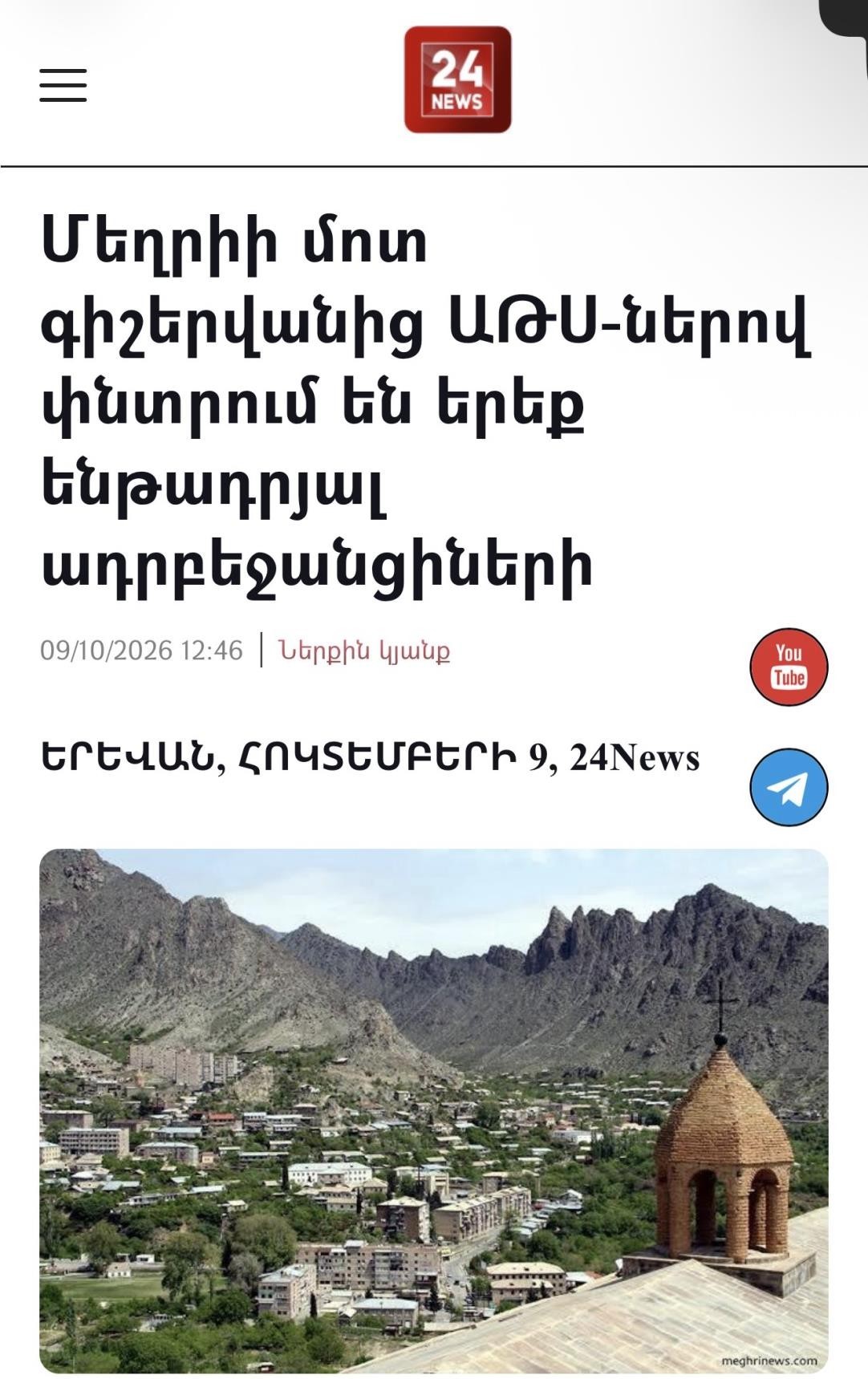
The publication stated that residents of the village of Kuris saw three people in civilian clothes at night, whom, according to eyewitnesses,
It was assumed that they could have been Azerbaijanis. The media outlet also wrote that after talking to the individuals, they left, and search operations were launched in the village and surrounding areas.
24News cited one of the villagers as a source, who also told about the alleged actions of Russian border guards and their drones.
about participation.
The publication also included responses from the mayor of Kuris settlement, Davit Ohanjanyan, and other local officials. According to the media outlet, the mayor did not provide specific information about the incident, saying: “It happened at night, contact law enforcement.”
However, at this stage, several unresolved questions remained:
- Who was the original eyewitness on whose information the report was based?
- Had anyone seen any identification or other evidence of the individuals?
- Which official body approved the search operations?
- Was the participation of Russian border guards and drones confirmed?
The published material does not provide clear answers to all of these questions.
This does not mean that the original information was intentionally false, but it does show what additional checks were necessary in such a sensitive subject.
Stage two: the news is reproduced by other media outlets
Panorama.am publication: 12:52
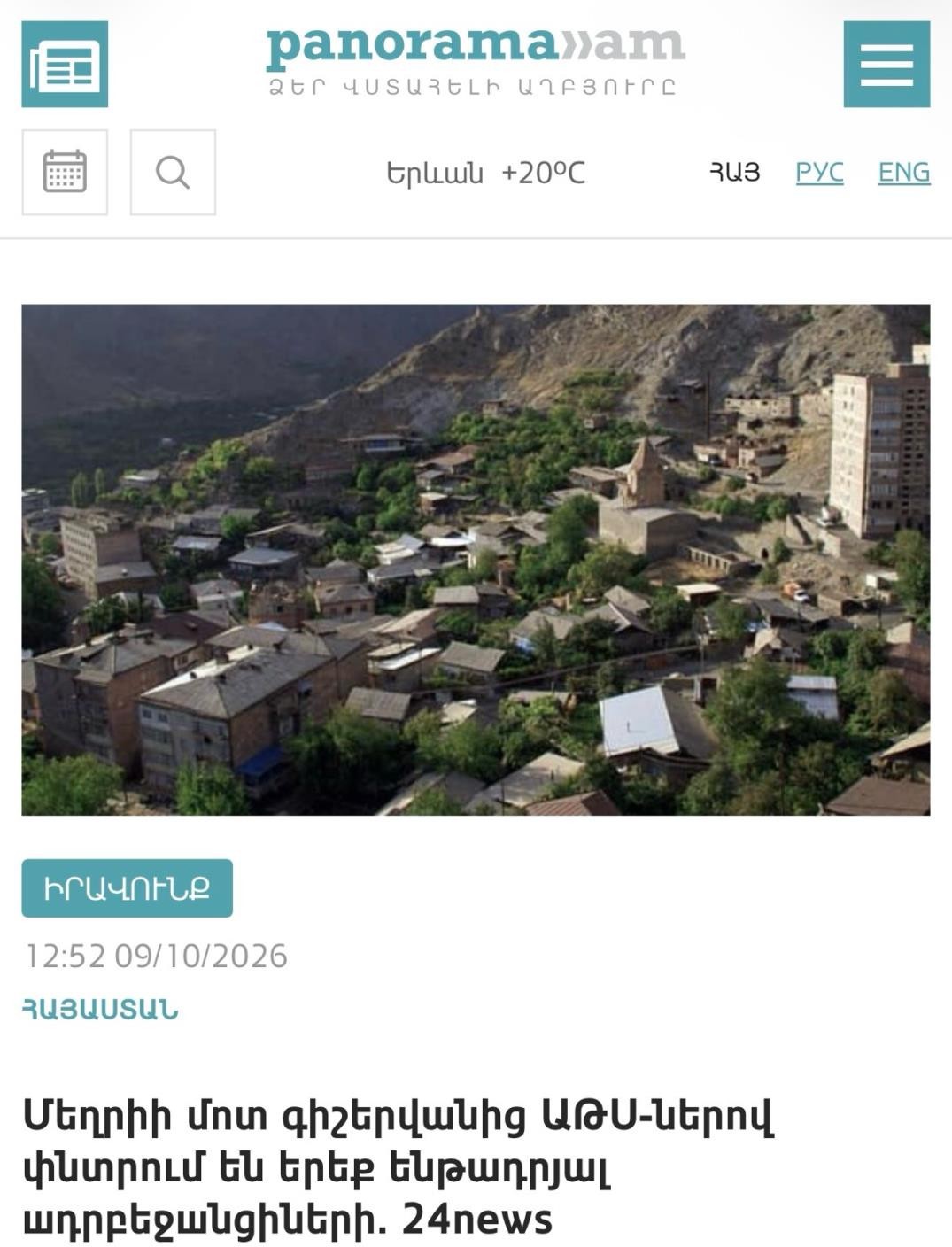
Just a few minutes after the initial publication, Panorama.am published the same information, citing 24News.
So, at least in the case of this publication, the original source was not the result of its own independent investigation: the material reproduced an already published message.
Published by Pastinfo: 12:51
Almost at the same time, Pastinfo published an article titled “NSS does not deny information about the possible infiltration of three Azerbaijanis in Meghri and the search for them.”
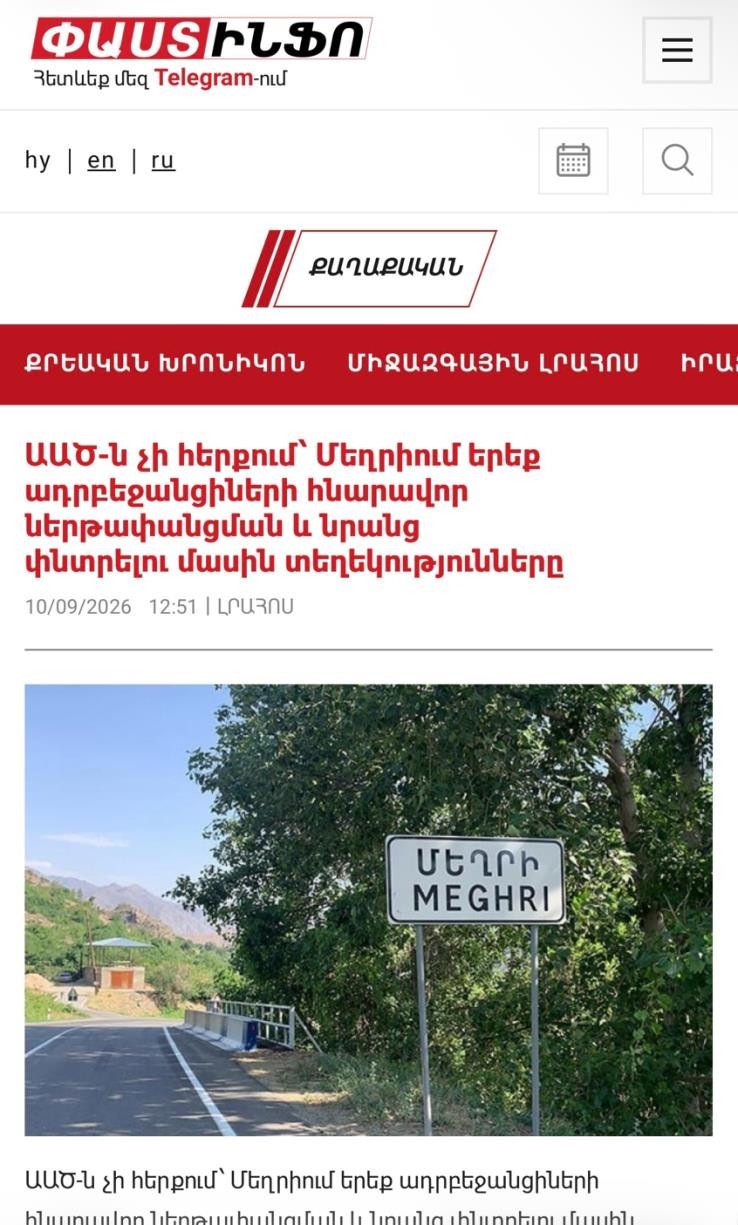
The article stated that the NSS neither confirmed nor denied the information, suggesting sending a written request.
It is important to distinguish between two circumstances here. First, the fact that an official body does not confirm the information at a given time is not the same as confirming it. Second, the wording “does not deny” may create the impression in the reader that the information is likely true, while the response presented in the publication did not provide grounds for such a conclusion.
For this reason, the choice of headline is a separate subject of journalistic scrutiny.
NEWS.am publication: 13:23
NEWS.am, in turn, disseminated 24News’ information, referring to the original publication and noting that the NSS had not confirmed or denied the report at that time.
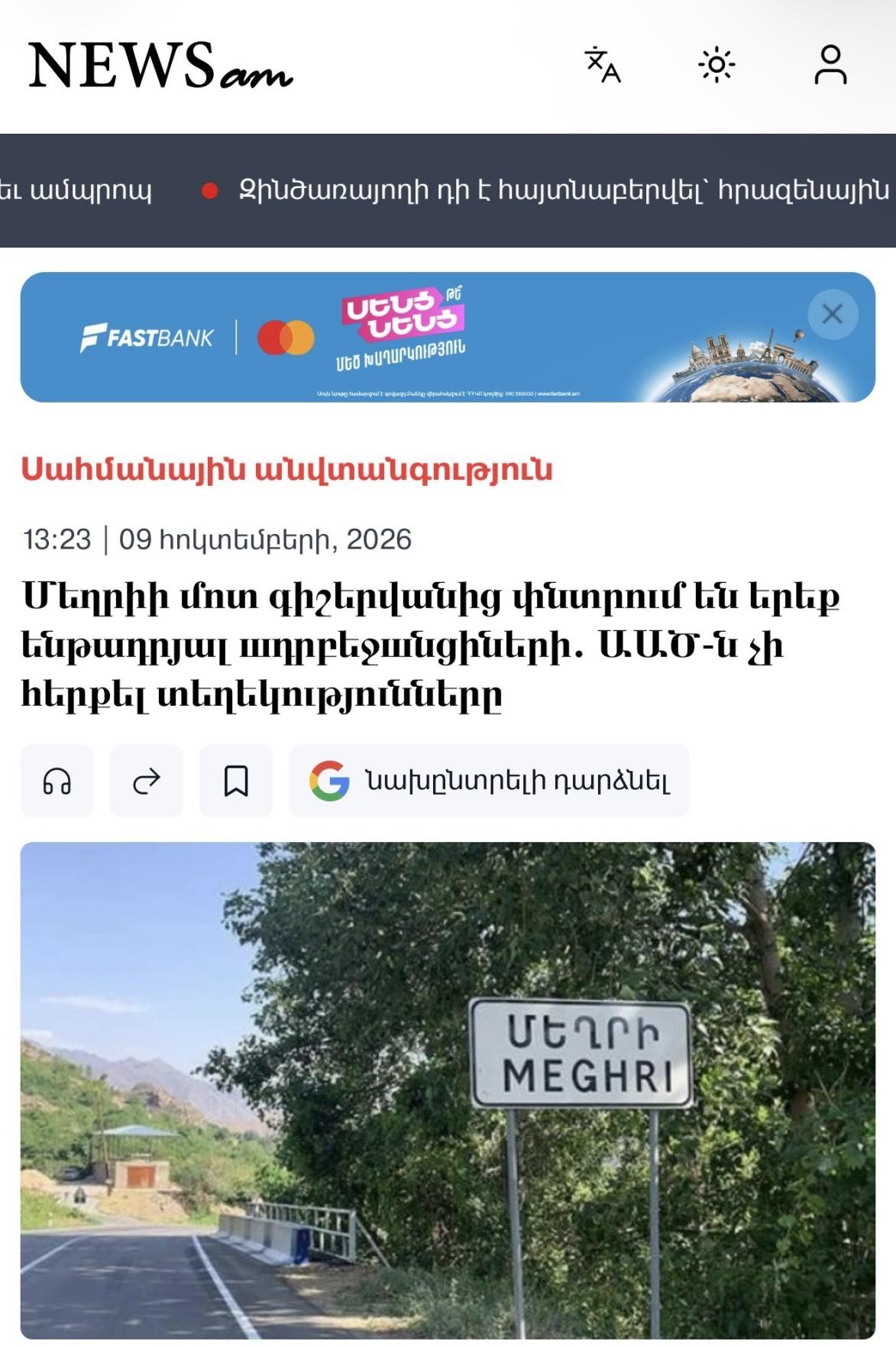
Thus, the same information chain is observed in at least three media publications: the initial message, its reproduction, and the presentation of the official body’s first response.
However, the existence of these publications does not in itself prove that all media outlets did not use sources other than the same source. To determine this, it is necessary to compare their editorial notes, queries, and possible updates.
Third stage: The NSS denies the information
Published by Pastinfo: 13:26
On October 9, at 1:26 PM, Pastinfo published a new article, stating that the National Security Service had already qualified the information as untrue.
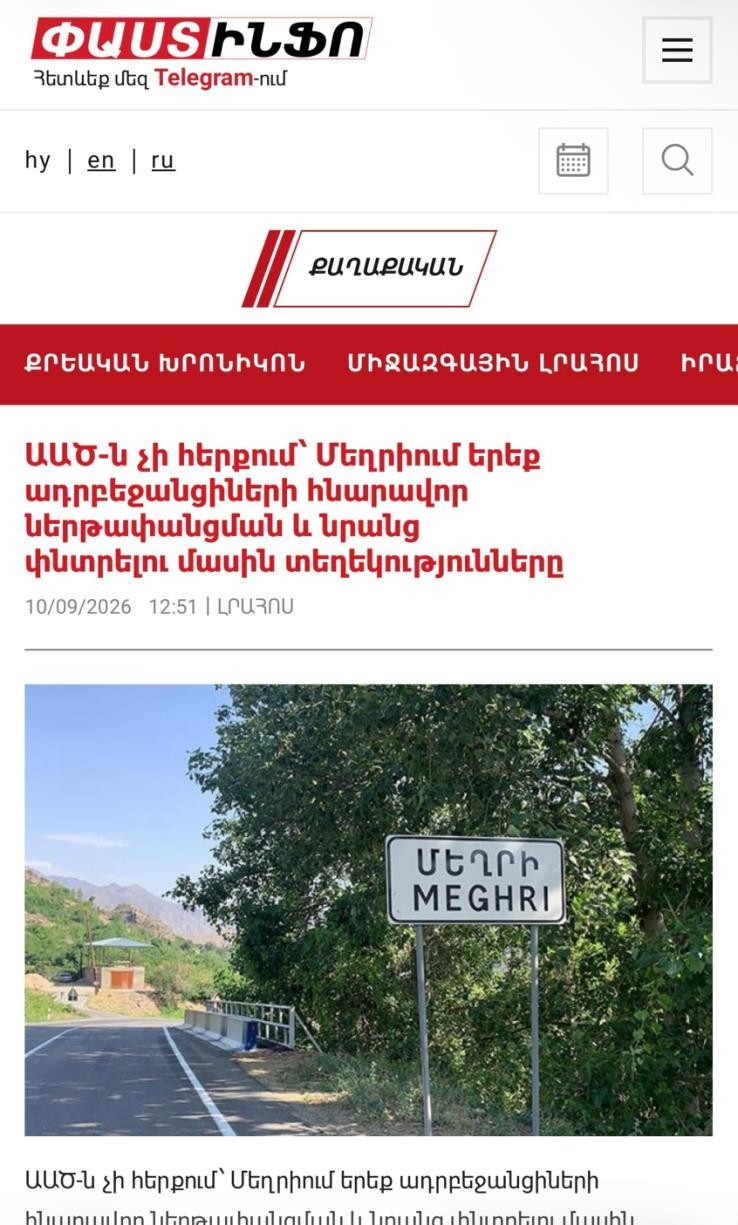
NEWS.am publication: 13:38
At 1:38 PM, NEWS.am published the NSS’s response, using the phrase “It’s a lie, there is no such case” in the headline.
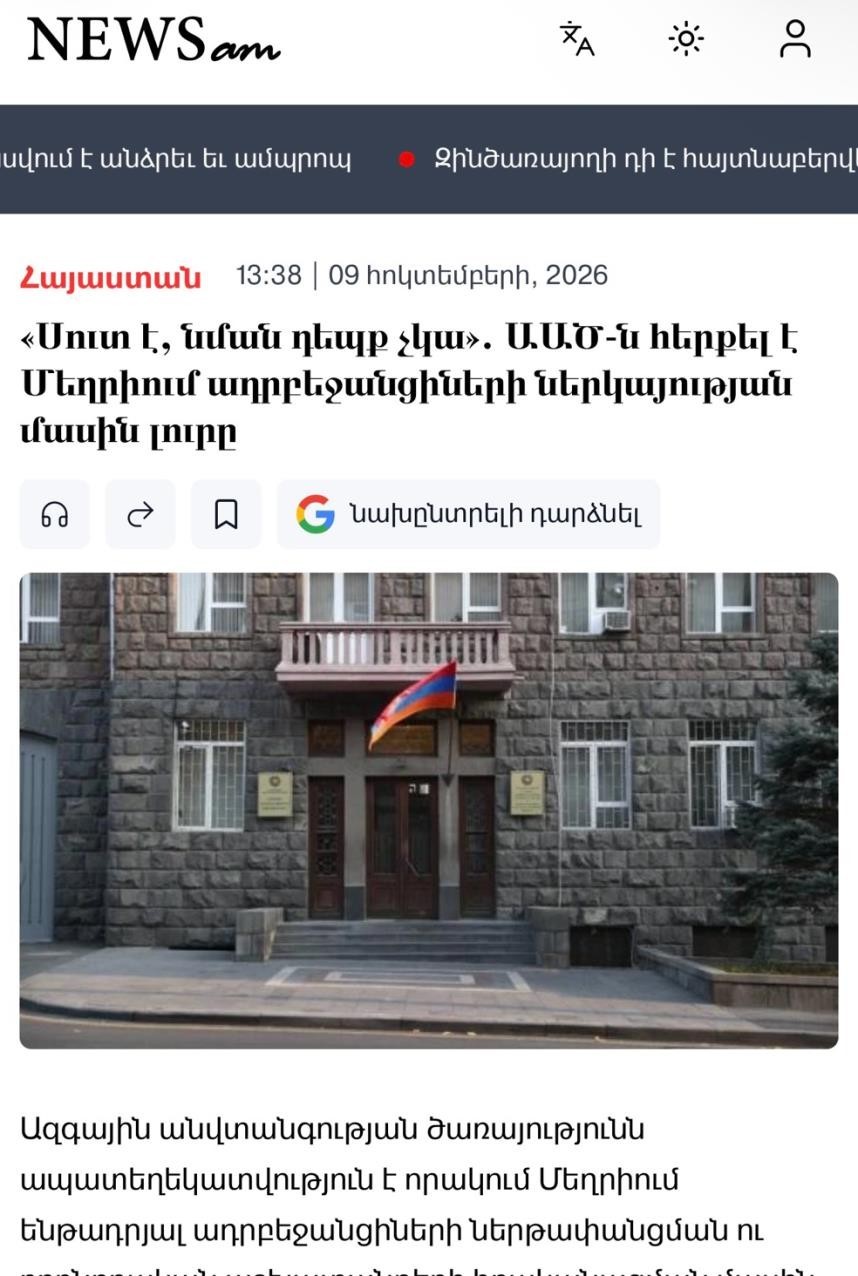
The NSS press center told the media outlet:
“It’s disinformation. In general, all that information is a lie. There is no such case in Meghri.”
This was already a clear denial by an official body, not a response to not confirm the information or to request additional investigation. However, from a journalistic point of view, it is important to note that a public denial should be presented as the official position of the NSS, while clarifying whether the service has provided additional facts that explain the grounds for the denial.
24News response: 13:31
In light of the NSS denial, 24News also published a separate article. The media outlet noted that in its previous publication it did not write that Azerbaijanis had infiltrated Armenia, but used the wording “alleged Azerbaijanis.”
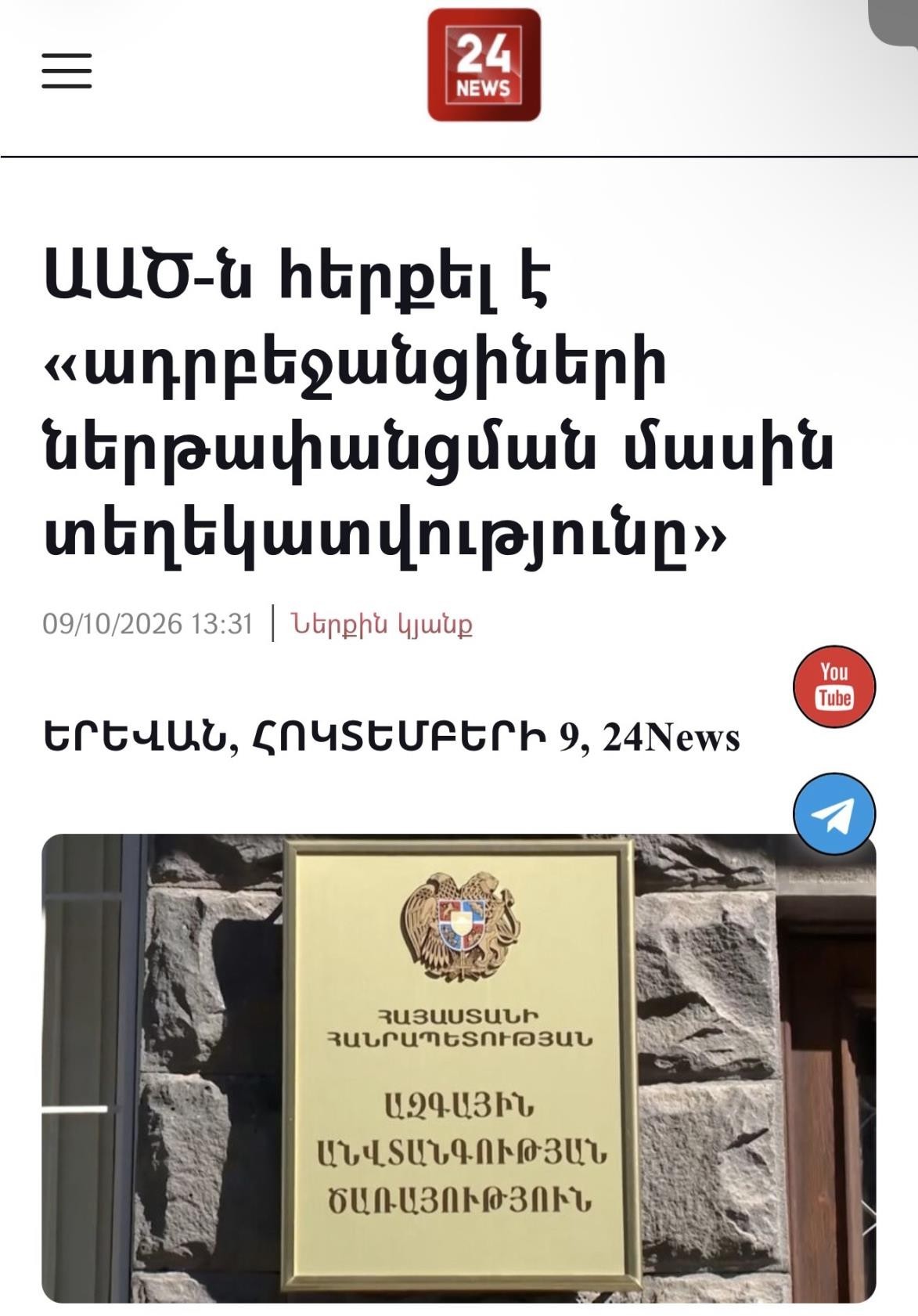
This clarification is important because it shows the editorial
position on the wording of its publication. However, it
does not in itself answer the question of how far all the claims in the original message were verified.
Fourth stage: the denial spreads to a wider information field. Armenpress publication: 17:17
During the day, the NSS’s denial was also disseminated through the state news agency Armenpress.
The agency reported that the National Security Service denies information about the appearance of three Azerbaijanis in a village in the Syunik region, adding that the initial report was published by 24News.
At this stage, the information chain already had two clear components: first, an unconfirmed report was spread, and then the official body publicly denied its content.
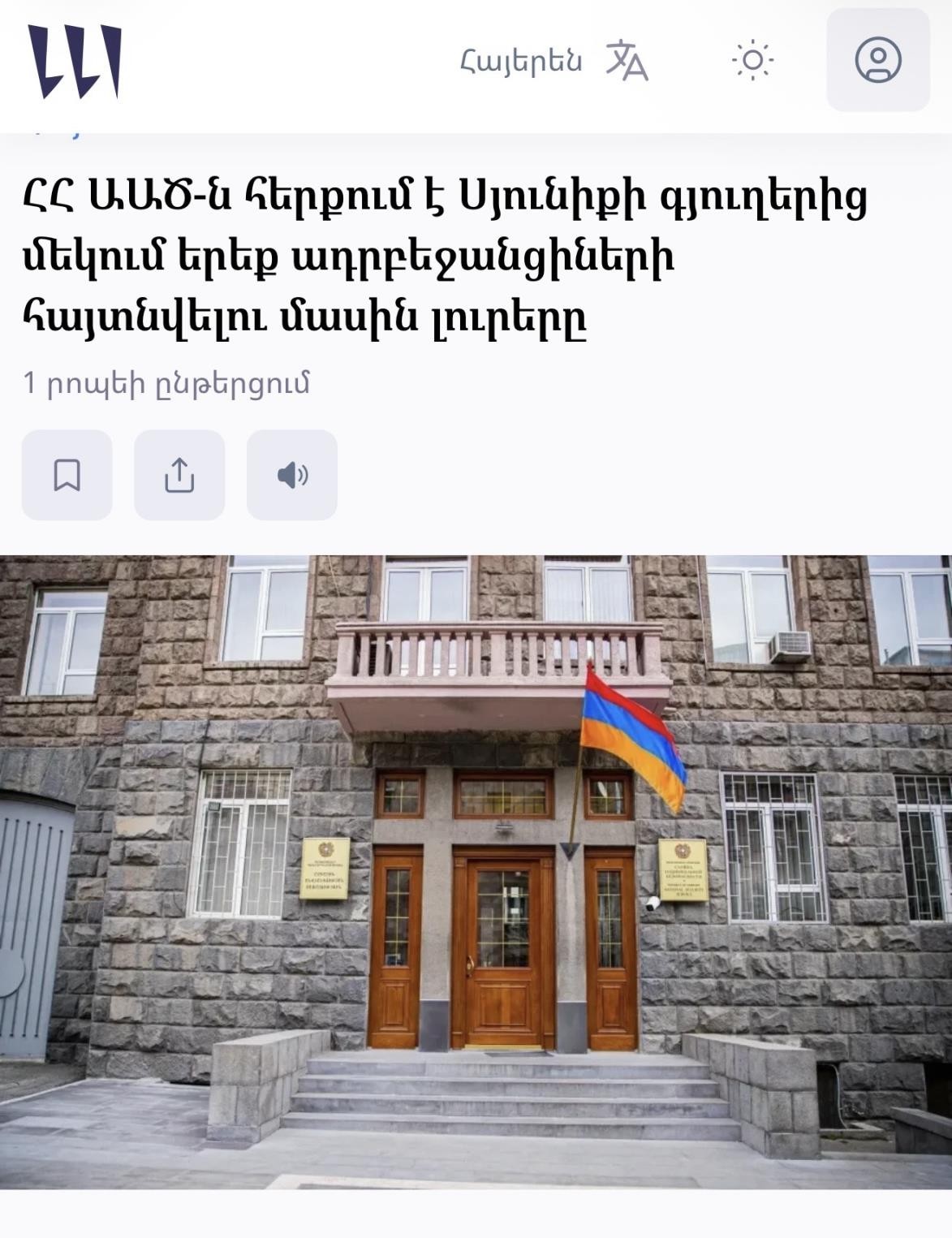
A comparison of the publications also shows that the media presented the case differently, emphasizing the alleged infiltration in one case, the initial response of the NSS in another, and later the official denial.
What does the comparison of publications show?
Three issues can be identified from the public materials regarding this case.
First, the issue of source verification. In the original publication, key information was attributed to residents. It is not entirely clear from the public material whether all details of the report were independently verified.
Second, the impact of the headline. The wording “NSS does not deny” can create a stronger impression than it actually contains.
The official answer. Not denying the information is not proof of its truth.
Third, the responsibility for correction and updating. When an official body denies sensitive information, it is important for the media not only to publish the denial, but also to clearly link it to the original material and help the reader understand which claims have been denied.
These observations are matters of journalistic quality, not automatic evidence of deliberate disinformation.
Who will answer the questions that have not yet been answered?
In order for the case to become a complete investigation, and not just a comparison of publications, answers to several key questions are needed.
- From 24News: Who was the original source, did the editorial staff personally verify the information about the search operations, and what evidence was there to support the assumption that the individuals were Azerbaijani?
- From Pastinfo and am. Why was the wording “NSS does not deny” chosen, and did the editorial staff take into account that the information was not officially confirmed?
- From the NSS. At what time did the service receive the first requests, what
Is it possible to refute the information based on verifications, and is it possible to provide additional clarification?
- From the administrative leadership of Kuris. Is there an official report?
was received, and do local authorities confirm that such individuals were observed?
Without these answers, it is impossible to confidently determine not only the origin of the original news, but also whether there were any intentional manipulations during its dissemination.
So:
The case of the information spread about Meghri on October 9 shows how information received from a local source, initially intended as
The alleged report appeared in several media outlets in a short time and became the subject of widespread discussion about public safety.
24News article with chronology of available publications
The earliest publication found was at 12:46 p.m. This was followed by publications in other media outlets, and later the NSS officially denied the information.
However, this chronology is not yet a complete answer to the
The question of who first disseminated the original information or whether any media outlet intentionally disseminated false information is being addressed. To do this, it is necessary to identify the original source, verify the basis of the reported facts, and obtain answers from the media outlets.
The main question of the investigation remains open: when it comes to border security, did the media sufficiently verify the information before publishing it and formulating it in the headlines? The answer to that question must be based on documents,
based on the responses of sources and editorial staff, not just assumptions.
Sargis Asatryan
The material was prepared within the framework of the Disinformation Flows Monitoring Project.

#CivilSocietyCooperation #ishrarmenia #ishrfactcheck
The project is implemented with the financial support of the Federal Foreign Office of the German Republic.