




A delegation of the European Committee for the Prevention of Torture and Inhuman or Degrading Treatment conducted an unscheduled monitoring visit to the Republic of Moldova.

During the inspection, it was found that in some penitentiary institutions the cells are still overcrowded and the sanitary facilities are in need of repair.
During ten days, representatives of the committee visited penitentiaries No. 6 in Soroka, No. 2 in Lipkany and No. 15 in Crikova. During the inspections, they had discussions with inmates, staff and the administration of the institutions. The Committee noted positive developments, including the introduction of new minimum nutritional standards, including for persons with special health needs, pregnant women and breastfeeding mothers.
The practice of medical examination of seriously ill prisoners with the possibility of releasing them or changing the preventive measure was also positively assessed. Justice Minister Veronica Mihailov-Moraru stressed that the reform of the penitentiary system is one of the priorities of her mandate. According to her, important legislative amendments have already been adopted and the construction of a new detention centre in Chisinau is going on at an accelerated pace. The authorities also intend to address identified problems, including the fight against informal hierarchy and criminal subculture in prisons. The European Committee for the Prevention of Torture operates under the relevant Council of Europe Convention, ratified by the Republic of Moldova on 9 July 1997.
We cite a letter from one of the prisoners, which confirms the appalling conditions created by the prison administration of Moldovan prisons.
” I never thought I could end up in Moldovan prisons, but here I had the opportunity to spend some time in them. First I will write about prison No. 13 in Chisinau.
It is a place in the very centre of Chisinau, an old and very old prison. It is a place from which no morally and physically healthy person can get out. First of all, for 10 days I was not given bed linen, soap, cups, mugs, plates, spoons, pillows, blankets. Initially, I was locked in a quarantine room, the floor was full of dust that there was nothing to wipe up, there was no tea or heating pad.
Quarantine involves a 14 day isolation to check for contagious diseases, but you can actually catch various infectious diseases from this room. From what I learnt after entering the quarantine, mattresses are brought from rooms where someone used to die on them, usually people in this prison suffocate themselves using a sheet and a bunk bed which has a metal frame.
Low light, a small window with bars through which someone had put bread for the pigeons that had flown in, the bread was already mouldy and could not be removed through the fine mesh bars, and when the room was ventilated, all the mould spores entered the room.
Outdoor walking time takes place in a 20 metre cage with a net on top and was 2 hours per day. If these hours overlapped with other activities, e.g. walking, lawyer’s visit, the time was not made up, although many people did not go outside for an afternoon nap. We stayed in quarantine for a few days instead of 14 because other people arrived.
Every morning and evening the controllers from the prison staff came, they constantly searched the rooms, and I did not understand what they were looking for, because there was nothing of value in these rooms, only people traumatised by their difficult fate, some of them living in these rooms against the law with bars and metal doors.
After a few days we were assigned to rooms with people who have been in this prison for years, against the law, because those who are in pre-trial detention are not put in a room with those who already have a sentence with a certain period of time.
There is smoking in all the rooms, cigarettes are prison money, if you don’t smoke it’s your problem because no one enforces the rules, no one cleans the smoking areas, no one is interested in your whims that no one can stand the smoke, you have to endure day and night living in a haze and cigarette smoke.
Food is another disaster of prison number 13, daily tasteless porridge in the morning and black tea with sugar, in a bowl of soup which usually contains only potatoes and water coloured red, no meat.
Some prisoners receive food parcels from home, brought by relatives, which are then carefully checked to make sure there are no banned items such as phones, knives, sim cards and so on.
In the place where food and things are handed over there is a big list of what you can and cannot bring. But it is forbidden to take pictures of it.
Talking on the prison phone with a relative is allowed once a week for 20 minutes, in a noisy corridor, without any privacy, and if you are standing at the cell door you can be heard very well, which jeopardises your privacy, all the people in the rooms know everything you are talking about and what is going on in your family.
It seems that the 20 minutes is given on purpose to force prisoners to carry phones at the cost of a prison officer.
The prison has smoking in 99% of the rooms, which is against the law. If you, as a prisoner, become outraged because you can’t stand the smoke and you feel sick, you get a lot of problems from other prisoners. You may be verbally or physically abused, you may be beaten with a heavy wooden stool, humiliated, etc., if you complain to the prison staff, nothing changes. Aggressors may be reprimanded by the administration, but inmates remain in rooms in close contact with the aggressors in a disastrous atmosphere.
What to speak of pre-trial prisoners, they are in rooms with prisoners who already have time served, mentally healthy people are kept with drug addicts and aggressive people who threaten to kill, pre-trial prisoners are kept with people who are in jail for murder, etc.
When prisoners first meet prison staff, they are asked to sign a document that states all the articles under which you can be punished if you have criminal relations with other prisoners.
When prisoners ask to see the full criminal articles or the Regulation on the Execution of Sentences by Convicts, the staff say they do not have this information. There was no book on prisoners’ rights in the prison library.
It is not obligatory to undergo a flurography from the first day, sometimes this medical procedure is forgotten, which means that what could have been prevented in advance in order not to infect healthy people, remains a mere formality that has no relevance to the health of convicts or prisoners.
An important factor is that many prisoners with TB also have viral hepatitis and BCD hepatitis, so misunderstandings in the cell as a prisoner or convict can result in deliberately contracting incurable life-threatening diseases that shorten life by 10-30 years
In summer, prisoners’ rooms become so hot that there is virtually nothing to breathe, prisoners remove windows and ask prison staff to open the windows through which food is dispensed and the cell block doors to make a draught.
At night the concrete buildings are flooded with cold water, creating a huge dampness around the building, often this dampness aggravates the prisoners’ condition.
Many people get TB in prison because of the high humidity in the premises, including clothes that are not dried outside in the winter but dry on prison radiators, lack of sunlight in the basement, stress and very poor quality food.”
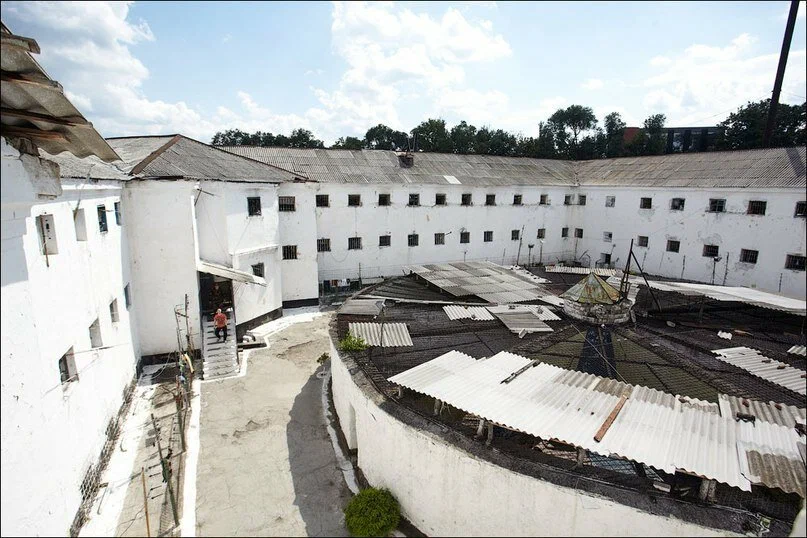

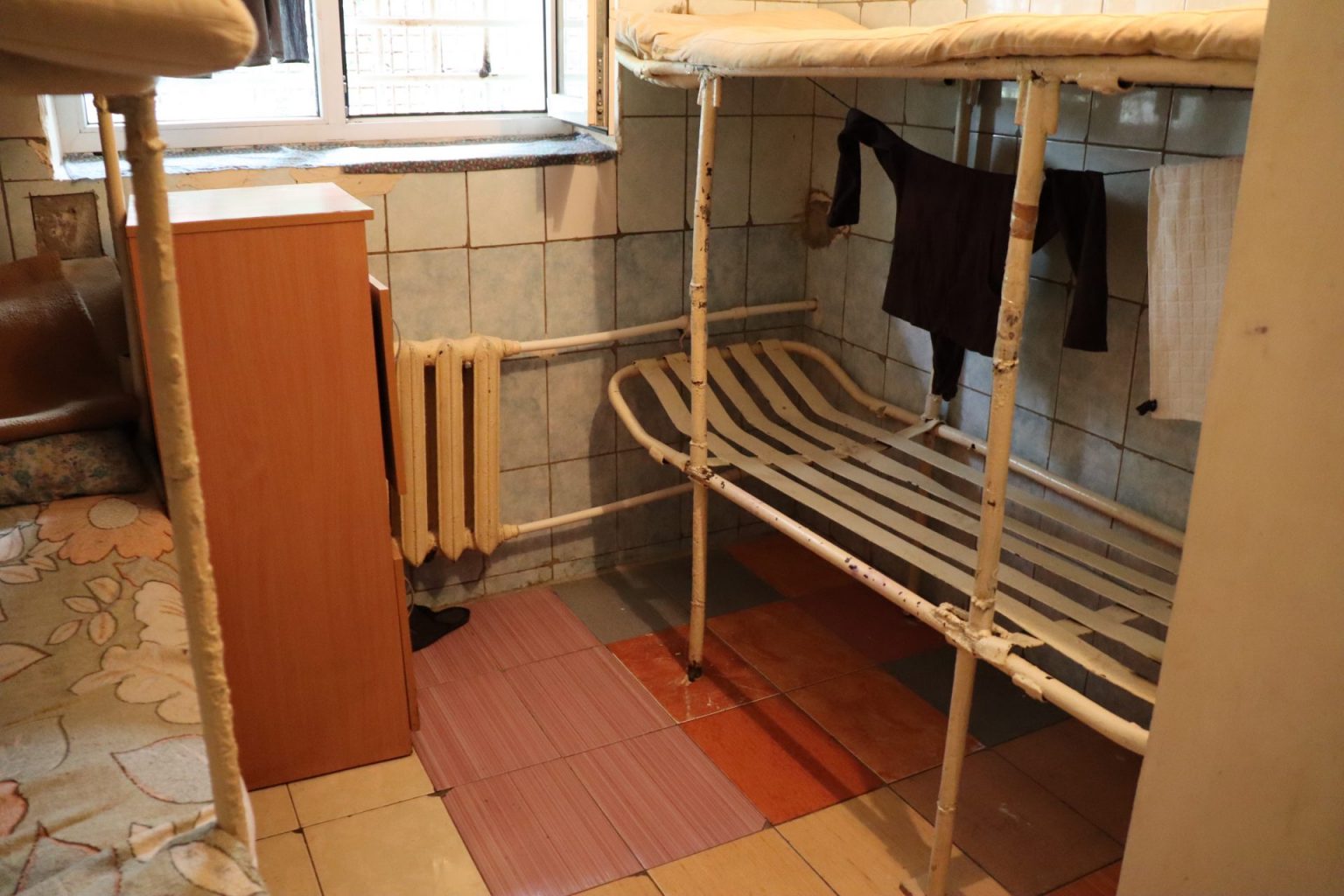
As can be seen from this letter, the situation in Moldovan prisons is far from European standards. And what is seen, or rather shown to international observers, differs from the real situation in prisons.
In fact, in many respects the situation of prisoners is not much different from what it was under the Soviet system in penitentiary institutions. And the continued functioning of the old Soviet prison No. 13 can be called a disgrace for a country that plans to become a full member of the European Union in the coming years.
Leave A Comment