




Do Russia’s 2026 election results show support for war?
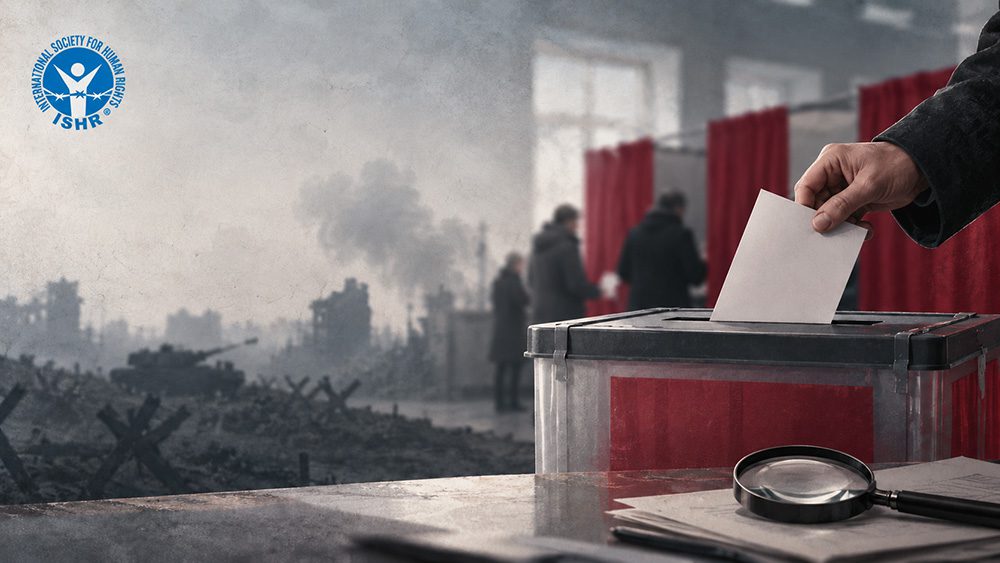
Claim: The victory of the pro-government United Russia party in the Russian State Duma elections and the high voter turnout show that citizens approved of the country’s foreign policy and the war against Ukraine.
Conclusion: Not confirmed. Official results show how many votes the electoral authorities attributed to parties and candidates. They do not reliably measure public attitudes toward the war. The elections were held under conditions of limited political competition, independent observers reported violations, and an OSCE observation mission was not invited.
What happened?
The Russian State Duma elections were held on September 18–20, 2026. They were the first parliamentary elections since Russia’s large-scale invasion of Ukraine in 2022.
According to the results published on September 21, United Russia had received 57.83% of the votes cast on party lists and was expected to occupy 355 of the 450 seats in the State Duma. The turnout reported by the Central Election Commission was 59.3%. These are officially reported results, but they do not automatically imply that all voters agree with the war or the policies pursued by the government.
What is known about the electoral environment?
The elections were held under restrictions on the participation of opposition political forces and anti-war candidates. According to a study by Russian Election Monitor, Yabloko’s federal electoral list was removed from the elections on August 10. At the same time, it is important not to say that the party was completely excluded from all elections: it participated in regional elections and received a mandate in the Novgorod regional parliament.
The OSCE Office for Democratic Institutions and Human Rights reported back in August that Russia had not invited its observers to the State Duma elections. Therefore, there is no comprehensive assessment of the OSCE observation mission regarding these elections.
What violations did the observers report?
Russian Election Monitor reported on isolated documented cases of pressure on employees of state and other institutions to participate in the vote, obstruction of the work of observers, as well as ballot stuffing.
For example, according to the organization, at polling station No. 967 in the city of Kudrovo, Leningrad Region, observers found large bundles of neatly arranged ballots in mobile home voting boxes. The organization also described cases recorded in Komi and Mari El. These are data published by the observation organization; the final legal assessment of each case should be distinguished from the observers’ reports.
The European Platform for Democratic Elections, for its part, has examined the activities of foreign “observers” invited by the authorities and assessed some of them as biased observers. This assessment is not a substitute for an independent international observation mission.
What does the queue at the Yerevan embassy show?
On September 20, it was reported that a long line had formed outside the Russian embassy polling station in Yerevan. The line shows that people had come to vote, but it does not reveal who they voted for or their attitude towards the war . For the same reason, it cannot be assumed that all voters living abroad were against the war. Separate, verifiable data would be needed for both interpretations.
Conclusion
The official victory of United Russia is a fact, but presenting it as evidence of public consent to the war is not justified. The election results must be read in the context of restrictions on political competition, violations reported by observers, and the lack of independent international monitoring. The queue at the Yerevan polling station also does not prove the political preference of voters.
Kolya Mkrtchyan
The material was prepared within the framework of the Disinformation Flows Monitoring Project.

#CivilSocietyCooperation #ishrarmenia #ishrfactcheck
The project is implemented with the financial support of the Federal Foreign Office of the Federal Republic of Germany.
Leave A Comment