



Armenia’s Ministerial Decree on School Enrollment for Children: A Critical Review
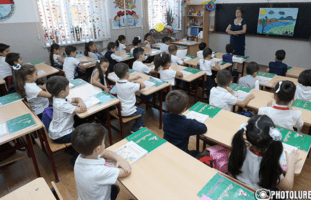
According to the 2024 order of the Minister of Education, Science, Culture and Sports of the Republic of Armenia, starting from the 2025-2026 academic year and ending on December 31 of the given calendar year, children who have not attended school will be admitted to the class corresponding to their age group, i.e. 2nd and 8th respectively. 3rd grades on a general basis, and in the 2024-2025 school year, 1st grade can also attend up to and including December 31 of the given calendar year, children turning 7 and 8 who did not attend school within the specified period.
According to the Ministry, the new legislation will not harm children in any way, and teachers will take care of filling the gap in the knowledge of children enrolled in grades 2 and 3. According to the deputy minister, an individual approach will be shown to children aged 7 and 8, and they will do it the teacher, if necessary, the pedagogic support specialists. “is an idealistic thought floating in the air.”
According to the data of the “National Center of Educational Technologies” of the National Educational Technology Center of the Republic of Armenia, 7-year-old children still make up 10% of those entering the 1st grade, and the cases of 8-year-old children attending the 1st grade are unique.
From here a logical question arises. What is the difference between admitting 7- and 8-year-old children to the 2nd and 3rd grades at once, burdening them with a double and triple curriculum and the principles guaranteed by the state in the field of general education, such as the humanitarian nature of general education, human life and health, the priority of free and comprehensive development of the individual.
According to the RA Law “On Public Education”, the state is obliged to ensure the compliance of public education with the level of development, characteristics and level of preparation of students. In this sense, the state seems to deviate from its guidelines.
Perhaps it would be more reasonable not to admit children turning 7 and 8 all at once to 2nd and 3rd grade and press them with two-year, three-year educational programs, but to count them early, intermediately, in preparation for entering the grade corresponding to their age group. , taking cooperative steps with parents and other legal representatives.
The “Administrative Offenses” Code imposes an administrative fine of 30,000 drams for a parent or other legal representative who does not fulfill the duty of educating a child , KGMS and the Ministries of Labor and Social Affairs do not exclude many families surviving on social support in the welfare state to deprive their 6-year-old children of these supports. In cases of not accompanying children to school, it is even discussed to deprive parents who do not accompany children to school or to limit their parental rights.
A huge machine of responsibility, the whole point of which is age equalization in the field of public education. It is necessary for the state to weigh its ambitions to use brute force and to use soft skills in legal relations with parents and other legal representatives of children living in a country that is “inferior to developed countries” in terms of social and legal awareness.
“Training of Media Actors” project team
Funded by the Federal Foreign Office

Leave A Comment