



International observers have noted a possible breach by the Supreme Administrative Court of the principles of adversarial proceedings and judicial impartiality in the ‘Rotterdam+’ case
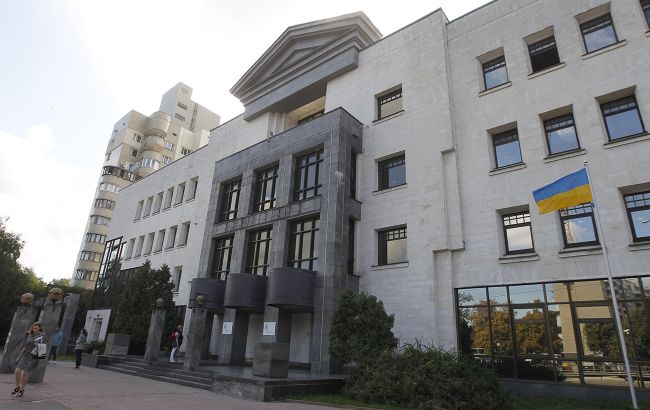 The actions of the Supreme Anti-Corruption Court in its consideration of the ‘Rotterdam+’ case may indicate a breach of the principles of adversarial proceedings, equality of the parties and judicial impartiality.
This was stated by the IAC ISHR monitoring mission following a meeting at the High Anti-Corruption Court on 23 July.
Observers noted that, whilst examining the documentary evidence, the presiding judge, in response to the defence’s objections, independently expressed her own interpretation of the content of the evidence and the logic of the prosecution’s case. In the mission’s view, such actions could be perceived as an attempt to remedy the shortcomings in the prosecution’s case, that is, effectively to assume the role of the prosecution.
“Any actions by the court that could objectively be perceived as aimed at remedying shortcomings in the prosecution’s case are liable to create the impression of a breach of the principles of adversarial proceedings, equality of the parties and the impartiality of the court,” the report states. The mission emphasises that it is the prosecution’s duty to prove guilt beyond a reasonable doubt, and that any doubts must be interpreted in favour of the accused.
The ECHR emphasises that Article 6(1) of the Convention guarantees every party the right to be placed in circumstances which do not create a significant procedural imbalance in relation to the other party and which ensure a genuine opportunity to present their case effectively (UAB Ambercore DC and UAB Arcus Novus v. Lithuania, para. 107).
At the hearing, the defence pointed out inconsistencies in the prosecution’s case. In particular, the minutes of the meeting provided by the prosecutor did not contain the necessary identifying details, and the value of the coal had been calculated using incomparable criteria. The defence also noted that the prosecutor’s statements at this hearing contradicted what he had said previously.
As is well known, the investigation into the ‘Rotterdam+’ case has been ongoing since March 2017. During this time, the prosecution service has closed the case five times on the grounds that no offence had been committed, only to reopen the investigation each time.
In October 2023, the Supreme Anti-Corruption Court ruled to close the ‘Rotterdam+’ case. However, in December of the same year, the Appeals Chamber of the Supreme Anti-Corruption Court overturned the decision to close the case.
Lawyers had previously pointed out that the investigation into the ‘Rotterdam+’ case continues to be marred by a number of irregularities, raising doubts about the impartiality and transparency of the inquiry.
Source: ishr-monitoring.org




Leave A Comment