




Founded during the Cold War, the International Society for Human Rights is still active worldwide today.
In the interview, its chairman talks about religious freedom, political prisoners and the Cuban secret service.
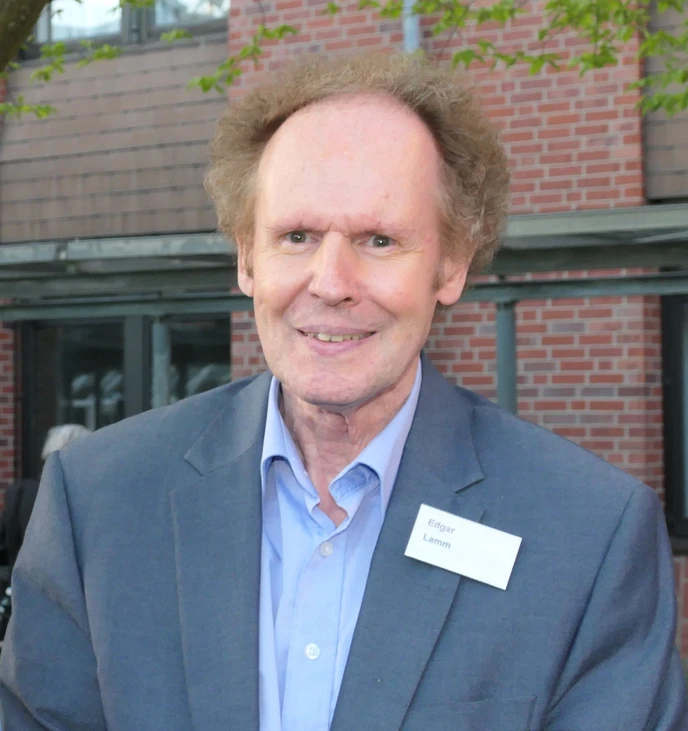
Edgar Lamm IGFM
Mr Lamm, many people are familiar with Amnesty International, but the IGFM is less well known. What kind of organisation is it?
The IGFM was founded in 1972 in response to the trivialisation of human rights violations in the GDR and Eastern Europe. Today, it is represented in 38 countries, has around 3,000 members in Germany alone and has observer status with the Council of Europe and the United Nations Economic and Social Council. We see ourselves as an independent, grassroots human rights organisation – supported by volunteers and donors who campaign for persecuted people through appeals, aid campaigns and public relations work.
How does the IGFM differ from other human rights organisations?
General human rights work, i.e. appeals, petition drives and sponsorship projects, is relatively similar across the various human rights organisations. However, we also provide humanitarian aid, for example by transporting relief supplies and providing medical support. We bring food, medicine and clothing to places where people are in acute danger. We want to be where others do not go – in China, Cuba, northern Iraq or Pakistan. This practical assistance is what sets us apart.
How does the IGFM differ from other human rights organisations?
General human rights work, i.e. appeals, petition drives and sponsorship projects, is relatively similar across the various human rights organisations. However, we also provide humanitarian aid – for example, by transporting relief supplies and providing medical support. We bring food, medicine and clothing to places where people are in acute danger. We want to be where others do not go – in China, Cuba, northern Iraq or Pakistan. This practical assistance is what sets us apart.
The IGFM was founded during the Cold War. The accusation that it focuses primarily on communist states persists to this day. Is there any truth to this?
That used to be the case. In the 1970s and 1980s, our focus was on the Soviet Union, the GDR, Romania and Poland. After the fall of the Berlin Wall, the world changed – and so did we. Of course, we remain active in Eastern Europe, partly because of our experience and proximity. We have local staff who know the languages and cultures, which creates trust. In Lithuania, for example, we have our own section with which we have been working closely for decades. Many other organisations have long since ceased to be present there.
Where is the IGFM currently involved in specific projects?
We continue to provide assistance in the former Eastern Bloc countries, including aid transports, where poverty and the aftermath of the communist era are still felt today. Projects often arise through local contacts – we cannot be active everywhere, but where we have partners, we remain reliable. At the same time, we are active in Latin America, Africa and Asia, especially where people are persecuted for their faith. Since the beginning of Russia’s war of aggression, our focus has been on Ukraine: our office in Kyiv coordinates aid transports and works with local hospitals. We have already reached around 100,000 people there with relief supplies.
Religion plays a major role in your work. Why is that?
Because religious freedom is a fundamental right – and yet one of the most threatened. In Nigeria, Christians are regularly kidnapped; in Pakistan, they make up only around two per cent of the population and are often discriminated against. In Syria, we have been supporting the Blue Marists, a Catholic order that helps war victims, for more than ten years. For us, it is not about denomination, but about freedom of conscience. Religious freedom is our central theme, and geographically, the focus – historically grown – is on Eastern Europe.
How is your organisation financed?
Around 90 per cent comes from donations, five per cent from membership fees and another five per cent from public funding. This independence is important to us. At the same time, we work together with state institutions, such as the Federal Ministry for Economic Cooperation and Development and the Federal Foundation for the Reappraisal of the SED Dictatorship, in order to be able to undertake larger projects – for example, exhibitions, conferences and publications.
How do you balance humanitarian aid and political work?
Human rights are indivisible. Where prisoners suffer, public attention is needed; where there is hardship, help is needed. Our aid transports – which have provided hundreds of thousands of people with food, clothing and medicine – are practical human rights work. We also promote sponsorships for political prisoners. This enables direct involvement and sends a signal that no one will be forgotten.
Many NGOs complain that their work in authoritarian states is becoming increasingly difficult. How do you experience this?
In some countries, such as Russia or Cuba, we can hardly operate officially anymore. In Cuba, when we flew there with a small team, we were regularly discovered and observed by the local secret police, who hindered our work and forced us to leave the country temporarily. Russian partners risk ending up on the “agent list”. Nevertheless, we maintain contact – via third countries, cautiously and patiently, but unwaveringly.
How has the perception of human rights changed?
Awareness has grown, but the situation for many people has not improved. We are active in places where dictatorships rule or where dictatorships have been replaced by other regimes. The longer ago a dictatorship was, the more likely it is to be trivialised. We avoid controversial domestic political issues, with one exception: when the city of Trier accepted a Karl Marx monument from China a few years ago, we criticised it. You cannot accept a gift from a regime that itself violates human rights on a massive scale.
What gives you hope?
Every single person who is given a voice through our work. Human rights lawyer Nasrin Sotoudeh, for example, who is repeatedly arrested in Iran, embodies this courage. As long as there are people like her, our work is worthwhile.
What does human rights work mean in a digital world?
Social media such as Instagram and X are both a blessing and a curse. They help draw attention to injustices, but they also give rise to new forms of hatred. We use them specifically for educational purposes, for example in our reports on religious freedom or political prisoners. But in the end, it’s not the clicks that count, but the action.
What drives you personally?
A strong sense of justice – and the desire to help other people. This has accompanied me throughout my life and gives me new motivation every day.
Source: faz.net
Leave A Comment