




The first regional seminar on media literacy and disinformation recognition was held in Artik
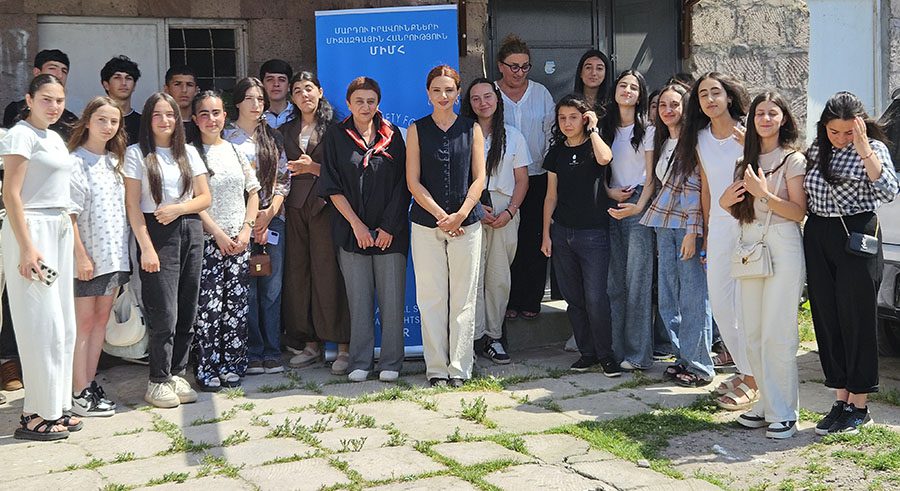
Continuing its regional awareness and educational initiatives within the framework of the “Monitoring Disinformation Flows” project, the International Society for Human Rights (ISHR) NGO held the first regional seminar in the city of Artik, dedicated to media literacy, disinformation recognition, and basic fact-checking tools .
The seminar was attended by about 25 young people , representing youth groups, student and public circles from Artik and neighboring communities.
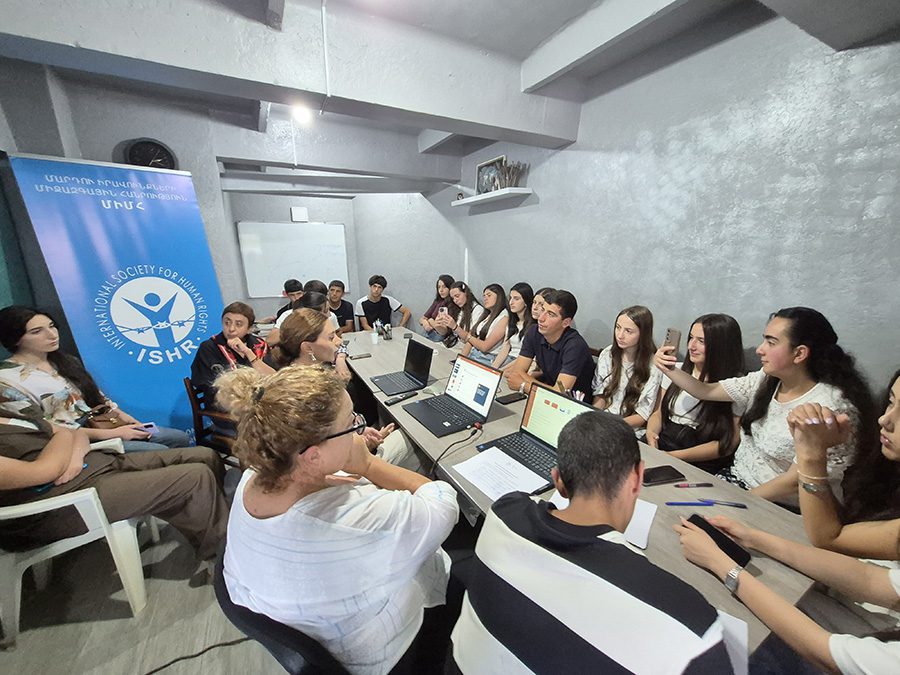
The meeting aimed to provide young people with the knowledge and practical skills necessary to navigate the modern information environment, distinguish false information, and form safe information behavior.
Challenges of the modern information environment
The first part of the seminar was dedicated to the peculiarities of the information environment . It was discussed how social networks, online media, and messenger platforms have become the main sources of information dissemination, and what dangers can arise in conditions of rapid and unchecked dissemination of information.
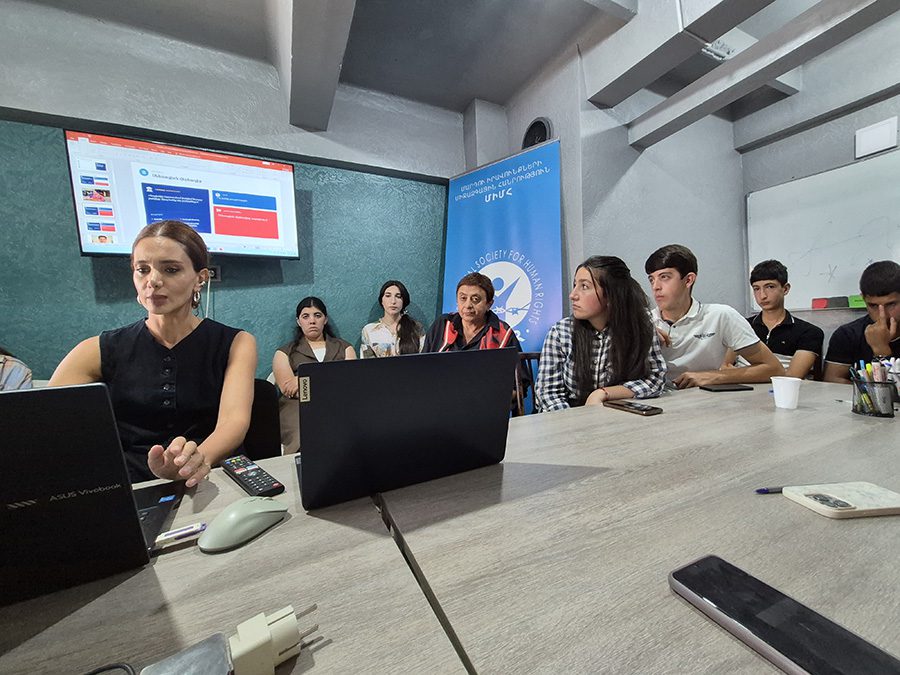
The following questions were discussed with the participants:
- how the information flow is formed,
- why people often trust emotional or sensational publications,
- how algorithms influence the content we see,
- What role does critical thinking play in the process of evaluating information?
The young people actively shared their experiences, presenting examples of suspicious publications they had encountered on social networks and discussing why such materials often spread widely.
Types of disinformation
One of the important parts of the seminar was about the types of misinformation . The concepts of misinformation, disinformation, and malinformation were presented with simple and understandable examples.
The most common manipulative methods were discussed.
- fake headlines,
- photos taken out of context,
- presenting old photos as a new event,
- edited videos,
- fake quotes,
- Images created or modified by artificial intelligence.
-
Special attention was paid to the fact that disinformation is often based on partial use of real facts, which is why it may seem credible at first glance.
How to protect yourself from misinformation
The next section presented the basic steps of self-defense .
- Check the source to find out who the author of the publication is and whether it is a reliable media outlet or organization.
- Compare information with other sources.
- Pay attention to the date and context of publication.
- Do not share material immediately if it evokes a strong emotional response.
- Try to find the original source : an official statement, document, or original publication.
The participants found the idea that “if information makes you immediately angry, afraid, or hastily spread, you should first stop and check” to be particularly useful.
A practical introduction to fact-checking tools
The most interesting and lively part of the seminar was about fact-checking tools . Through a practical demonstration, a number of available and free tools were presented that can be used not only by journalists, but also by any user.
The following tools and methods were presented:
- Google Reverse Image Search – to find the original source of photos,
- TinEye – to check the history of image distribution,
- InVID – for video footage analysis and verification,
- Google Maps and Street View – to compare the location of photos,
- Basic principles of examining metadata and publication details .
During the practical exercises, the young people tried to independently verify several sample publications, find the real sources of the photos, and assess their reliability. This part turned into an active discussion, where participants asked questions, offered their own options, and together tried to identify signs of manipulation.
Active participation and an interested atmosphere
The seminar was distinguished by high participation .
The young people not only listened to the presentations, but also engaged in discussions, expressed their views, and provided real examples from their daily information experiences.
It was noteworthy that most of the participants were particularly interested in:
- with image recognition created by artificial intelligence,
- By checking fake content spreading on TikTok and Instagram platforms,
- with quick fact-checking methods,
- by developing safe information behavior.
This interest showed that there is a great demand for educational programs on media literacy and information security among regional youth.
The launch of the regional initiative
The Artik seminar was the first meeting of a regional educational series . The goal of the initiative is to form a network of media-literate youth in different regions of Armenia who will be able to spread the culture of critical thinking, responsible information behavior, and fact-checking in their communities.
The International Human Rights Community NGO emphasizes the participation of young people, especially in the regions, in the process of building information resilience, as the impact of disinformation is often more noticeable in environments where quality information resources and media literacy opportunities are limited.
Next steps
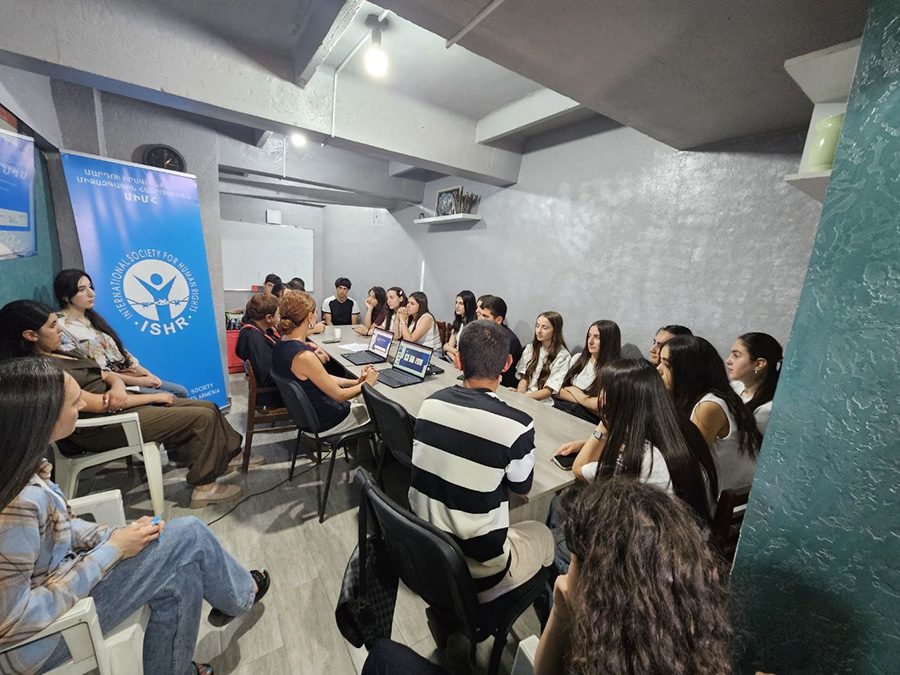
The program includes new regional seminars, practical workshops, and ongoing cooperation with youth groups. The first meeting in Artik showed that such a format is not only an effective educational tool, but also an important platform for the exchange of experience, cooperation, and the formation of a culture of public responsibility among young people.
The organization thanks all participants of the seminar for their active participation, interesting questions, and constructive discussions, and reaffirms its commitment to supporting the development of media literacy in Armenia, increasing resistance to disinformation, and strengthening the culture of fact-based public communication .
Ani Sukiasyan ISHR Armenia
#CivilSocietyCooperation #ishrarmenia #ishrfactcheck
The project is implemented with the financial support of the Federal Foreign Office of the Federal Republic of Germany.

Leave A Comment