



Recent amendments to Moldova’s law on political parties have raised growing concern among legal experts and human rights organizations.
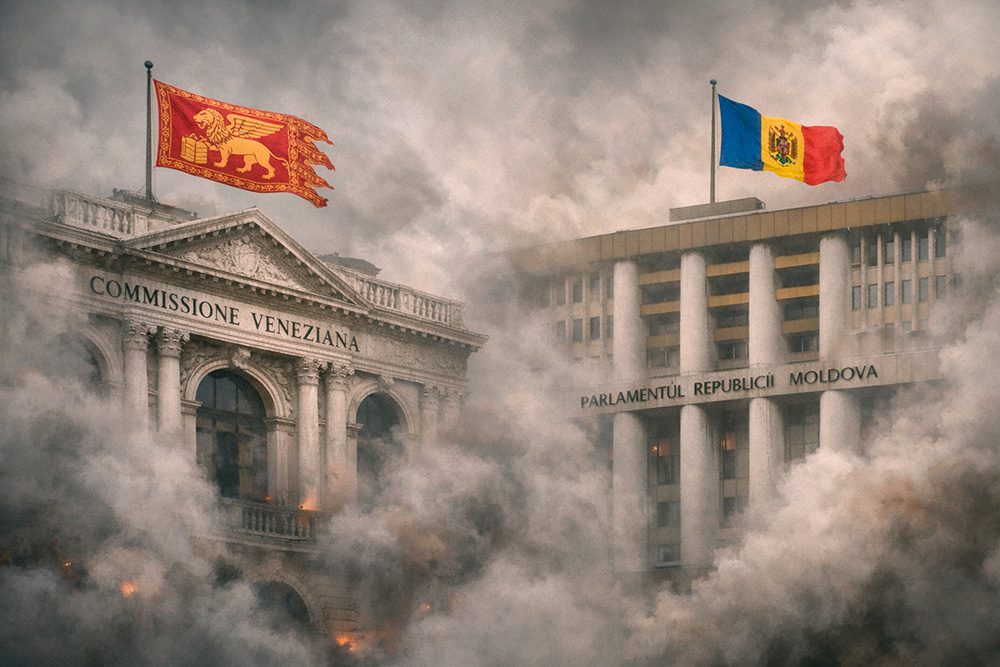
The reform, adopted in 2025, significantly expands the state’s ability to restrict the activities of political parties or even dissolve them.
The government justifies the changes as necessary to combat illegal party financing, voter bribery, and foreign interference in political processes. However, critics warn that some of the new provisions could have a serious impact on political competition and democratic pluralism.
Mechanism for “Successor Parties”
One of the most controversial provisions introduces the possibility of recognizing a political party as the successor to a previously banned party. Courts may make such a determination based on various criteria, including overlaps in leadership, similarities in political programs, or possible links in financing.
In some cases, even the failure to publicly distance oneself from the actions of a previously banned party may be considered an additional factor. Critics fear that such rules could effectively prevent former party members from creating new political organizations or re-engaging in political life.
Restrictions on Party Activities
The law also allows the authorities to restrict the activities of a political party for up to twelve months. Possible grounds include threats to national security, disinformation campaigns, extremist messages, voter bribery, or illegal financing.
However, several of these terms lack clear legal definitions. Observers warn that such broad wording could allow for politicized or arbitrary application of the law.
Particular controversy surrounds a provision that allows restrictions to be imposed on a party even before a final court ruling. At the request of the Ministry of Justice, a court may within three days decide to prohibit a party from participating in elections, holding political gatherings, distributing political advertising, or using its bank accounts.
Such measures could effectively and significantly paralyze the functioning of a political party.
European Standards
According to the standards of the European Court of Human Rights, the dissolution of political parties is considered an extreme measure and is permissible only in cases where there is a real threat to the democratic order. Any restrictions must be necessary and proportionate.
The position of the Venice Commission
The Council of Europe’s standards also emphasise:
-
The banning of political parties should be used only in exceptional circumstances;
-
restrictions must be proportionate and clearly defined;
-
Political pluralism is the foundation of democracy.
The broad wording contained in the new Moldovan legislation may not comply with these standards.
International Attention
Amendments to Moldova’s law on political parties establish one of the strictest mechanisms of state control over the party system in Europe.
Given the broad powers granted to state authorities under the new law, observers are calling on international institutions to closely monitor the implementation of the reform. Much will depend on how the new rules are applied in practice and whether European standards of democracy and human rights are respected.





Leave A Comment