



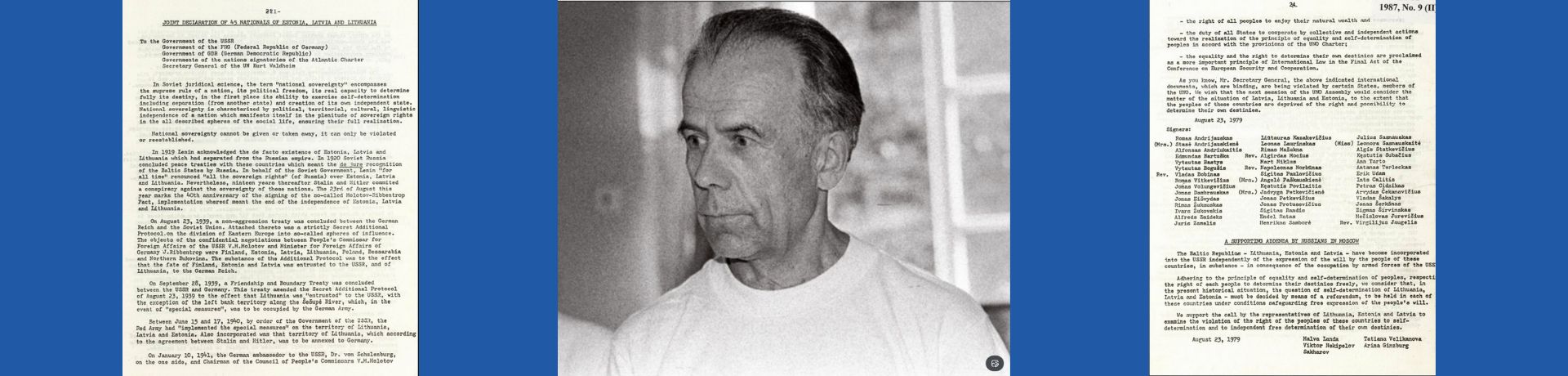
Estonian independence fighter Mart-Olav Niklus passed away on 25 December 2025 at the age of 91. The ISHR remembers him and his legacy.
Obituary for Mart-Olav Niklus
Hero of the Estonian independence movement
Mart-Olav Niklus was a political prisoner in the former Soviet Union from 1959 to 1966 and from 1981 to 1988. After Estonia gained independence in 1991, he was a member of the Estonian Parliament from 1992 to 1995. The ISHR repeatedly campaigned for him in the 1980s and demanded his release. Mart-Olav Niklus is a member of our Board of Trustees.
We have kept in touch with him over the past few years. Mart-Olav Niklus passed away on Christmas Sunday at the age of 91.
We are very saddened and will not forget him.
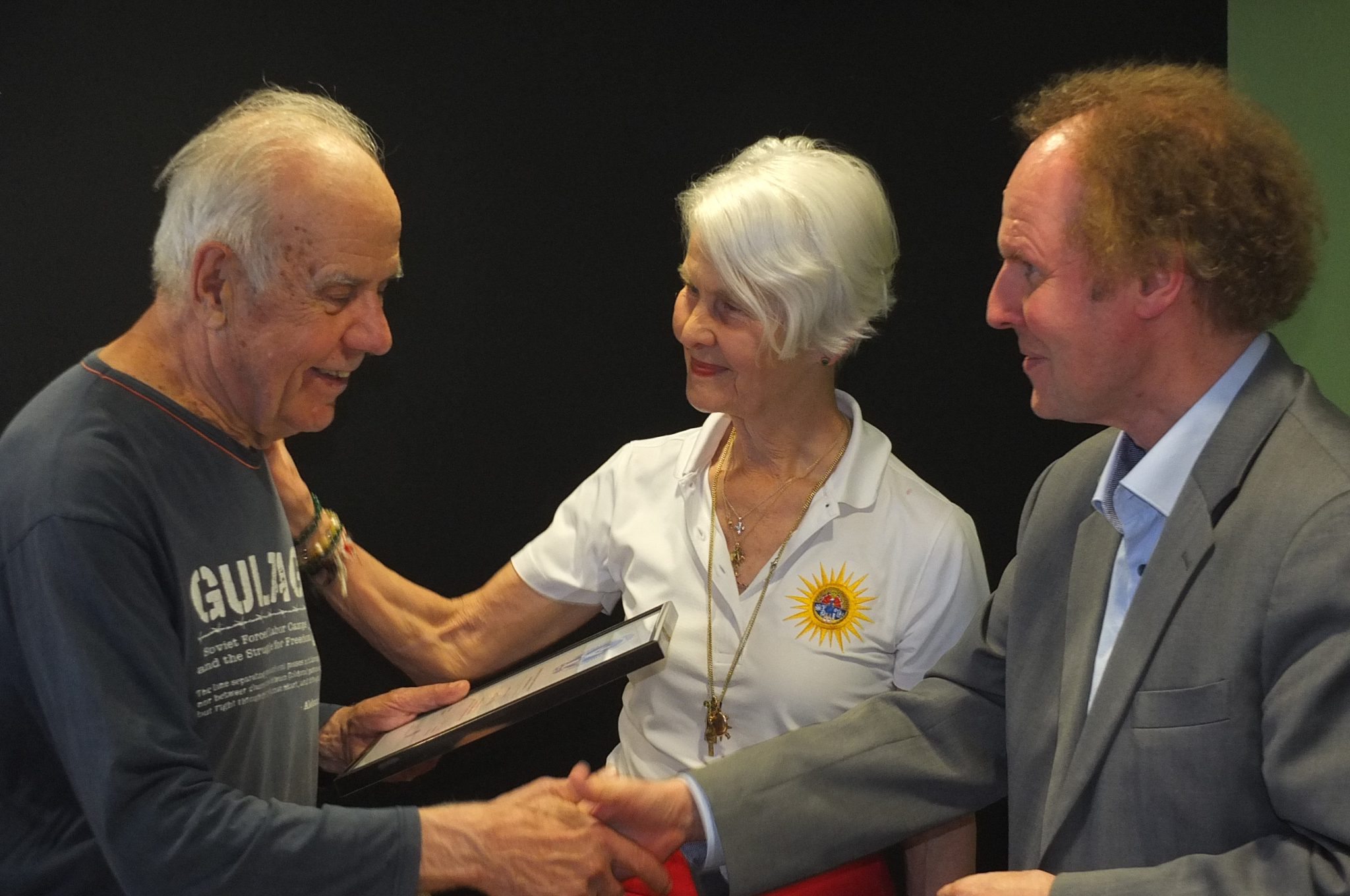
During a visit to the Estonian capital Tallinn in 2017, ISHR Honorary Chair Katrin Bornmüller and ISHR Chair Edgar Lamm presented Mart-Olav Niklus with a certificate of appreciation in recognition of his great commitment to Estonia’s freedom and independence and his long-standing fight for human rights.
Short biography:
Mart Niklus was born in Tartu, Estonia, in 1934 and graduated from the University of Tartu with a degree in biology in 1957. While still a student, he organised a secret group that resisted the Soviet occupation, primarily by sending reports to the West about the poor living conditions in Estonia and the pressure exerted by the Soviet armed forces. In 1958, he was arrested by the KGB and sentenced to 10 years’ imprisonment for “anti-Soviet activities”. He served his sentence in labour camps in Mordovia, including Potma.
After his release in 1966, Niklus returned to Tartu and immediately resumed his political activities. He was no longer allowed to work as a scientist and had to earn his living as a driver and organist in a Lutheran church. During this time, he maintained extensive contacts with Lithuanian, Ukrainian and Russian dissident circles and financed his livelihood by giving private lessons in French, German and English.
In 1979, the text of the Baltic Appeal was drafted in his apartment in Tartu together with Lithuanian and Latvian freedom fighters. It was sent to the United Nations, Moscow and Bonn and was the first joint political manifesto of the Baltic states calling for an end to Soviet occupation and the restoration of independence. It reached the Western media, for example in the New York Times on 25 August 1979.
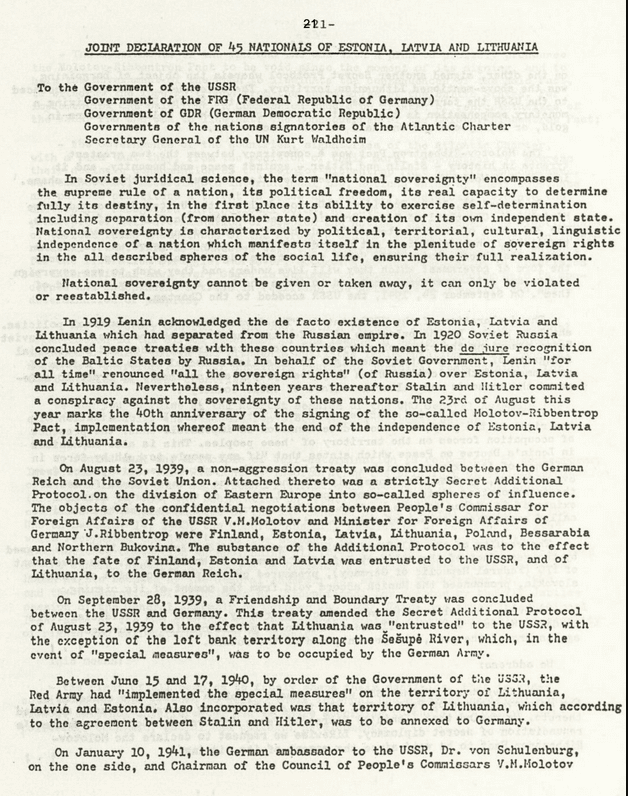
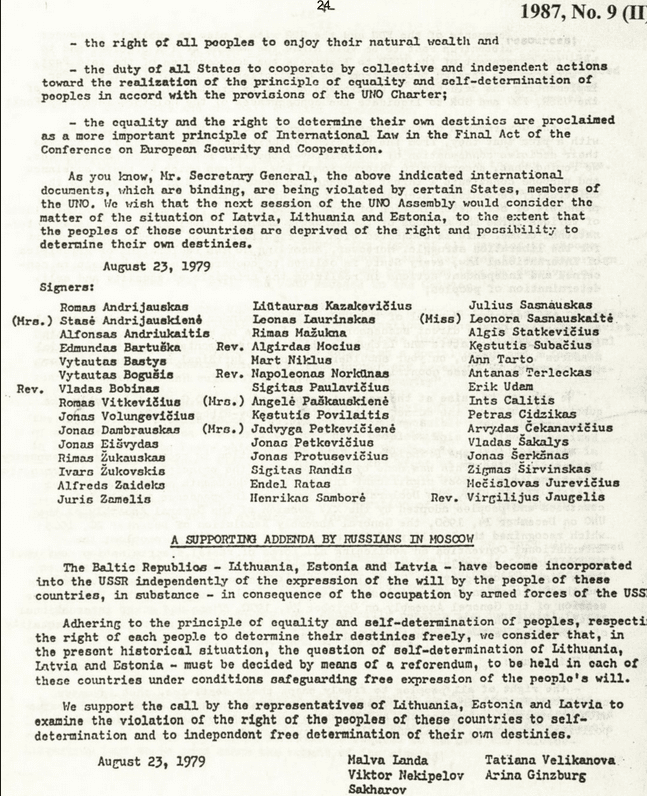
Mart-Olav Niklus was one of the signatories of the Baltic Appeal. The Baltic Appeal was a public letter to the Secretary-General of the United Nations, the Soviet Union, East and West Germany, and the signatories of the Atlantic Charter from 45 Estonian, Latvian, and Lithuanian citizens. Among other things, it called for the restoration of independence to the Baltic states, which were occupied by the Soviet Union at the time.
In 1980, Niklus was arrested again and sentenced to 10 years’ imprisonment and five years’ internal exile. He was held in several camps, including the notorious Perm-36. He spent one year in solitary confinement and three years in punishment cells and was declared a “particularly dangerous repeat offender”. From 1987 onwards, the Estonian independence movement organised a continuous public vigil in front of the Supreme Court building in Tallinn, demanding the release of Mart Niklus and Enn Tarto.
Niklus was finally released in August 1988 and returned to Estonia as a national hero. He was elected to the Estonian Congress in 1990 and served as a member of the Estonian Parliament from 1992 to 1995. From 1990 to 1992, he was also president of the Estonian Nature Conservation Fund. Mart Niklus received numerous awards, including the Baltic American Freedom League Award (1988), the Order of the Coat of Arms of Estonia, II Class (1996), the Order of Grand Duke Gediminas of Lithuania, III Class (1999), and, by decree of the President of Ukraine on 8 November 2006, the Order “For Bravery”, First Class.
In his later years, he translated the works of Charles Darwin into Estonian and was awarded the Estonian Academy of Sciences Prize for his scientific contributions.
Text: Eerik N Kross, translated from English, to the original article on Platform X




Leave A Comment