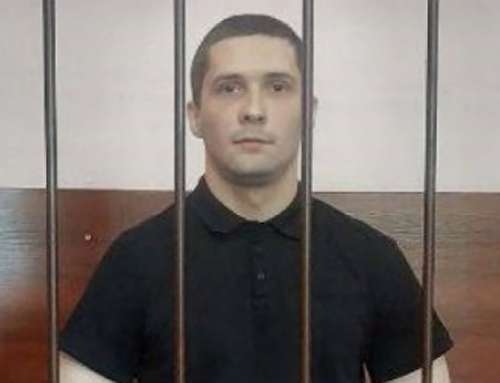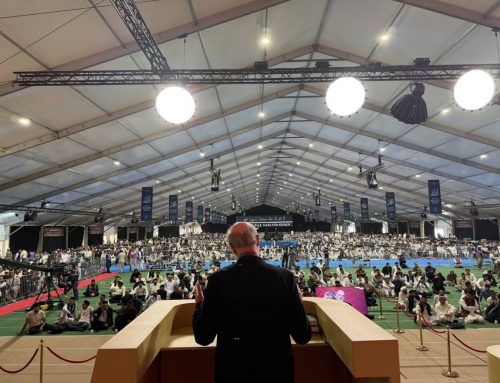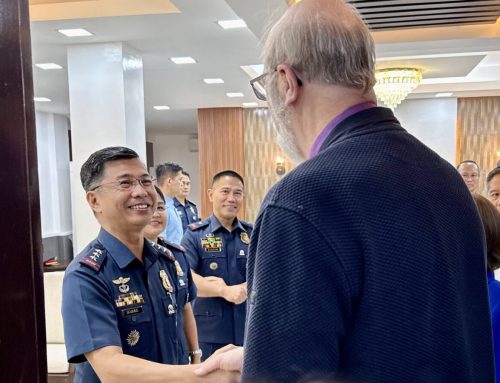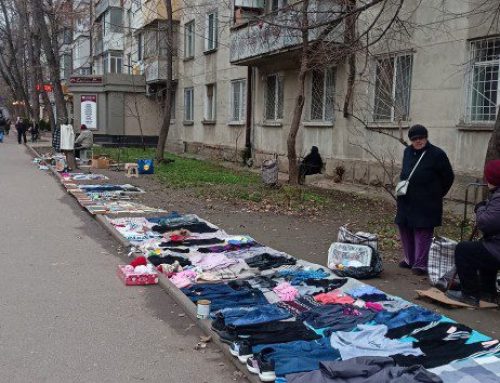
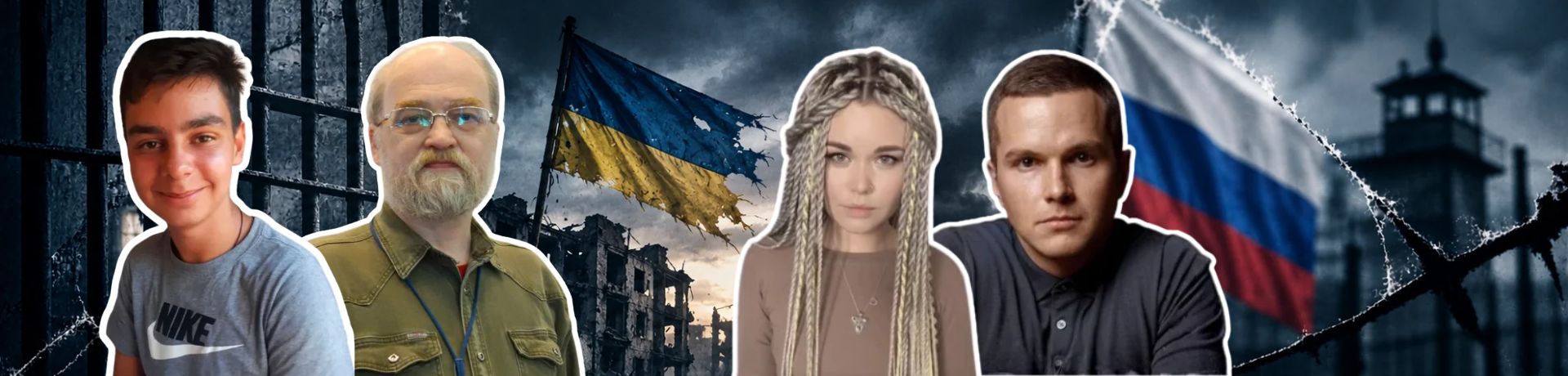
From left to right: Arseniy Turbin, Aleksander Skobov, Nadezhda Rossinskaya and Alexei Liptser. Photos: private. Background: AI-generated.
30. Oktober: Gedenktag für die Opfer politischer Unterdrückung in Russland
Russia: Putin, a “Humanitarian”? – The ISHR draws attention to thousands of politically persecuted people
The ISHR calls for human rights and the release of those arbitrarily detained to be made an integral part of diplomatic talks
Frankfurt am Main, 29 October 2026 – Ahead of tomorrow’s Political Prisoners Day in Russia, the International Society for Human Rights (ISHR) warns of the extent of political persecution under Vladimir Putin and criticizes the statement by U.S. Special Envoy Steve Witkoff, who described the Russian president as a “humanitarian”. While Russia’s war of aggression against Ukraine claims lives every day, critics within Russia itself are also being persecuted, sentenced to long prison terms and deprived of their freedom. The International Society for Human Rights (ISHR) calls for their release and the protection of their rights to be made concrete conditions for any negotiations with the Putin regime.
“Anyone negotiating with Vladimir Putin cannot forget the people who are imprisoned, persecuted and deprived of their freedom under his rule. Nor can the victims of Russia’s war of aggression against Ukraine be overlooked. Human rights must play a central role in every diplomatic initiative,” comments Edgar Lamm, chairman of the ISHR German Section.
Thousands of Political Prisoners – A System of Repression
The database of the Russian human rights organization OVD-Info lists a total of 6,808 people who have faced politically motivated criminal proceedings. 2,366 of them are currently in custody; more than 10 people have died in prison. Cases of inadequate medical care, unhealthy detention conditions and mistreatment during incarceration have been documented.
In Russia, the persecution of political opponents extends far beyond prominent opposition figures. It also targets people who are branded as “extremists” or “foreign agents” under Russian law. This brandmark serves to intimidate independent organizations, human rights defenders, scholars, journalists and government critics and to hinder them in their work.
Behind every number is a person
The scale of the persecution becomes particularly tangible through the individual stories. Arsenij Turbin, who was only 14 years old at the time of his arrest, was sentenced in 2024 to five years’ imprisonment for distributing homemade leaflets opposing Russia’s war of aggression; his imprisonment has caused significant harm to his physical development and mental health.
Alexander Skobov, a 66-year-old historian who was a well-known and persecuted dissident already during the Soviet era, was sentenced last year to 16 years’ imprisonment for his criticism of the war and of Putin; he is regularly subjected to solitary confinement.
In 2025, Nadezhda Rossinskaya was sentenced to 22 years in prison and a heavy fine for providing humanitarian aid to Ukrainian war victims; on 26 October 2026, she was transferred to a hospital in Barnaul after having been denied adequate medical care for a long time, despite repeated complaints and her deteriorating health.
Lawyers who have had the courage to defend political prisoners in today’s Russia are also being persecuted by the authorities. In this context, the ISHR reminds of Alexei Liptser, a lawyer for the late Russian opposition politician Alexei Navalny, who was sentenced to five years in prison in January 2025 and, one year later, was transferred to a penal colony in Abakan, Southern Siberia – more than 4,300 kilometers away from his family. Liptser suffers from a severe herniated disc but is still forced to perform hard physical labor and must carry 40 buckets, each containing ten liters, twice a day*.
*Shortly after the publication of this press release, the ISHR learnt from reliable sources that Alexei had been exempted from heavy physical labor one month ago and is no longer obliged to carry out such duties – a development which the ISHR warmly welcomes.
Mehr als 16.000 ukrainische Zivilisten in russischer Haft
Neben politischen Gefangenen in Russland sind auch Tausende ukrainische Zivilisten betroffen: Nach Schätzungen der Vereinten Nationen wurden mehr als 16.000 ukrainische Zivilisten von Russland festgehalten beziehungsweise verschleppt. Berichte befreiter Gefangener dokumentieren Folter, Misshandlungen und unzureichende medizinische Versorgung in russischen Gefängnissen.
More than 16,000 Ukrainian civilians in Russian custody
In addition to political prisoners in Russia, thousands of Ukrainian civilians are also affected: According to United Nations estimates, more than 16,000 Ukrainian civilians have been detained or abducted by Russia. Reports from freed prisoners document torture, abuse and inadequate medical care in Russian prisons.
No peace at the expense of human rights
The ISHR warns that political rapprochement between Russia and the U.S. risks overshadowing the victims of Russian repression. The human rights organization calls on the US government to consistently raise the current human rights situation in Russia in talks with Moscow and to demand the release of political prisoners and abducted Ukrainians. The ISHR makes it clear: Human rights must not be used as a bargaining chip.