



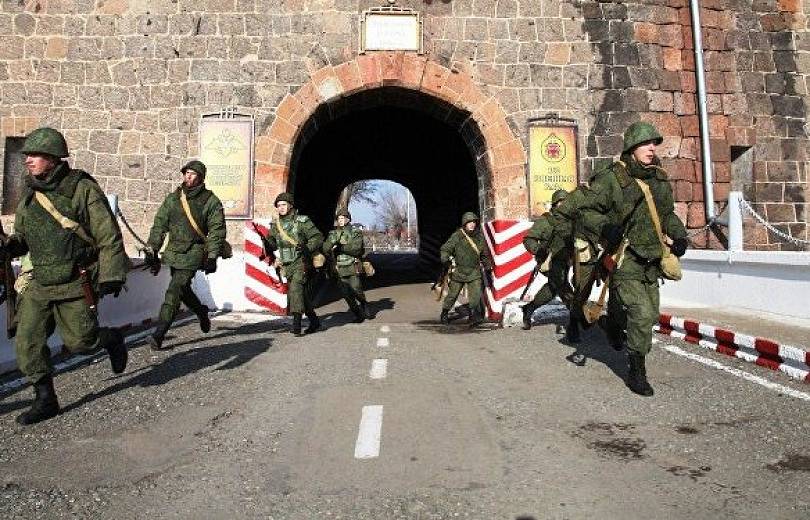
The presence of the Russian 102nd military base in Armenia has been presented for decades as a crucial component of Armenia’s security system. At the same time, in recent years, opposing claims have been heard more frequently: that the base has not fulfilled its primary mission, is no longer useful to Armenia, and should be withdrawn.
Russian 102nd Military Base in Armenia: A Security Guarantee, Fact-Check Research, or a Non-Working Mechanism?
 Between these two extreme approaches, the reality is much more complex.
The Russian military base in Armenia does indeed have specific functions of military presence, air defense, and bilateral military cooperation. However, it is equally a fact that the actions of Russia and Russian security systems during the military operations against Armenia in 2021 and 2022, as well as the events in Artsakh in 2023, did not meet the expectations that had been formed in Armenia around Russian allied relations.
In this article, we examine the main claims: what the legal document stipulates, what actually happened, and where the political manipulations begin .
1. Myth: “The Russian military base is simply a Russian military facility over which Armenia has no legal control”
Fact: The presence of the military base is based on a bilateral agreement
The presence of the 102nd military base in Armenia is based on an agreement signed between Armenia and Russia on March 16, 1995.
Protocol No. 5, signed in 2010, extended the term of the agreement from 25 years to 49 years . The Constitutional Court of the Republic of Armenia has recorded that this amendment extends the term of the military base until 2044.
This same document is also important for another reason.
The 2010 amendment expanded the formulation of the military base’s tasks. The previous formulation focused on the external borders of the former USSR, namely Turkey and Iran, while the new formulation stated that the military base, together with the Armenian Armed Forces, ensures the security of the Republic of Armenia .
So:
The claim that the base is simply “Russia’s own military facility” is misleading.
It operates on the territory of Armenia, based on legal agreements signed between the two states.
2. Myth: “Armenia cannot give up the military base until 2044”
Fact: 2044 is the term of the agreement, not Armenia’s eternal obligation
The 2010 protocol extended the term of the military base’s presence until 2044. However, the same legal framework stipulates that the provisions of the agreement may be revised at the initiative of one of the parties and by mutual consent.
Therefore, the formulation “Armenia cannot change anything until 2044” is overly simplified.
At the same time, the opposite extreme should also be emphasized: withdrawal from a contractual relationship is not automatically achieved by a unilateral political statement . For this, appropriate legal and political procedures are necessary.
That is,
2044 is the contractual term of the base’s presence, not the term of limitation of Armenia’s sovereignty.
3. What is the military base actually committed to doing?
This is one of the most important questions in the entire debate.
The summary of the 2010 protocol published by the Constitutional Court of the Republic of Armenia states that while the Russian military base is on the territory of Armenia, in addition to its functions of protecting Russia’s interests, it ensures the security of the Republic of Armenia jointly with the Armenian Armed Forces .
The same document also stipulates that the Russian side will assist Armenia in providing it with modern and compatible weapons and military equipment. The use of military formations at the military base should be carried out on the basis of mutual agreements between the parties and relevant contracts.
In other words, the mission of the military base is not only “protecting Russia’s interests.”
It also has a contractual function related to Armenia’s security.
4. Myth: “The Russian military base means that Russia will automatically go to war on Armenia’s behalf”
Fact: This is an oversimplified legal view.
There are several different military and security documents between Russia and Armenia.
One of them is the 1997 Treaty of Friendship, Cooperation and Mutual Assistance. Its Article 3 stipulates that the parties shall take joint measures in the event of a threat to peace or aggression and shall provide each other with necessary assistance, including military assistance, within the framework of Article 51 of the UN Charter.
However, the issue of the use of a military base is also regulated by separate agreements and the agreement of the parties.
That is,
“There is a military base” ≠ “Russia will automatically go to war on Armenia’s behalf in any situation.”
A real security mechanism should be assessed not only by the existence of the treaty, but also by how it works during real crises.
And here the most important problem arises.
5. 2021–2022: What happened when the territory of Armenia was attacked?
The Armenian-Azerbaijani border military clashes of 2021 and especially 2022 became one of the most important tests of the security relations between Armenia and Russia.
After the September 2022 military operations, Armenia turned to the CSTO in the hope of military assistance and an assessment of external aggression against Armenia.
The CSTO did not carry out military intervention.
In 2024, Nikol Pashinyan announced that Armenia had effectively frozen its participation in the CSTO, as the organization, in his assessment, had not fulfilled its goals, particularly during the crises of 2021 and 2022. This statement was also confirmed by international news sources.
It is important to distinguish here:
The CSTO and the 102nd Military Base are not legally the same structure.
Therefore, the CSTO’s inaction does not in itself prove that the 102nd military base did not carry out any operations.
But it is also important because the security systems of Russia and Armenia have long been presented as an interconnected whole.
6. Myth: “The Russian military base defended Armenia in 2022”
Fact: Such a broad claim is not supported by facts.
During the September 2022 military operations, intense fighting took place on the territory of Armenia, and Armenia turned to the CSTO.
There is no public, independent evidence that the 102nd Military Base responded militarily to Azerbaijani actions against Armenia during that war in a manner that could be viewed as a direct exercise of defense of Armenia.
This is an important difference.
The fact of Russian military presence does not mean that that presence was used to militarily stop a specific attack on Armenia’s territorial integrity.
Therefore:
“The Russian base exists, therefore Russia protected Armenia in 2022” — an unverified claim.
7. And the opposite claim: “The Russian base does nothing at all”
Fact is also misleading.
The 102nd Military Base is an active military facility.
It is related to military cooperation between Russia and Armenia, joint air defense, and other military mechanisms.
The 2000 Armenian-Russian agreement provided for joint combat duty between the Armenian Armed Forces and the air defense forces and aviation of the Russian military base located in Armenia . Among the goals of the agreement were the protection of Armenian airspace and the protection of facilities located on Armenian territory from air strikes.
Therefore, the claim that “the base is completely idle” is factually incorrect.
The more precise question is:
Has the military base performed the security functions for which its presence in Armenia was politically justified?
The answer to this question is different for different periods and requires the study of individual cases.
8. 2020: The military base and the Artsakh war
The 2020 war is also important for understanding what the 102nd Military Base could and could not do.
The war was taking place mainly around Nagorno-Karabakh and adjacent territories, and the contractual function of the 102nd military base was related to the security of the Republic of Armenia.
That distinction is often lost in political statements.
The Russian side did not enter the conflict as a belligerent in the 2020 war, but with Russia’s mediation, a trilateral statement was reached on November 10, after which a Russian peacekeeping contingent was deployed in Artsakh.
Thus, it is wrong to identify the roles of the 102nd military base and the Russian peacekeeping contingent .
They were different military formations, with different legal bases and different functions.
9. 2023: The test of Russian peacekeepers
The mass displacement of the Armenian population of Nagorno-Karabakh following Azerbaijan’s military operation in September 2023 became one of the deepest crises in relations between Armenia and Russia.
Here again, two things need to be distinguished.
The 102nd military base was in Armenia.
The Russian peacekeeping contingent was in Artsakh.
In May 2024, Russian peacekeepers withdrew from Artsakh. Reuters reported that about 1,960 Russian peacekeepers had completed their withdrawal. The same source also noted significantly different assessments by the sides: Russia insisted that the peacekeepers had fulfilled their mission, while Armenia accused Russia of failing to prevent what happened in Artsakh.
This contradiction is important for fact-checking.
Russia’s statement that the peacekeepers have fulfilled their mission documents Russia’s position, but does not in itself prove the effectiveness of the mission.
Effectiveness should be assessed according to the mandate, the events that occurred, and the results achieved.
10. Myth: “The withdrawal of Russian border guards is the same as the withdrawal of the 102nd military base”
The fact is, they are different structures.
The Russian military presence in Armenia consisted of various components.
The 102nd Military Base is a military unit of the Russian Armed Forces.
The Russian border troops are a different structure and operated on certain sections of the Armenian state border under a separate legal basis.
In recent years, Armenia has increased its own border controls.
Since 2025, Armenian border guards have also been involved in guarding the Armenian-Iranian and Armenian-Turkish borders, and later the number of checkpoints controlled by Armenia continued to increase.
In 2026, the Armenian side announced that control at the existing checkpoints is fully carried out by Armenian border guards.
So:
The removal of Russian border guards ≠ the removal of the 102nd military base.
However, it is an important indicator from the perspective of another process: the gradual nationalization of Armenia’s border security .
11. The main narrative of the Russian side: “Without Russia, Armenia will lose its security”
This claim is often presented not as an opinion, but as an inescapable fact.
It, however, must be divided into two parts.
Fact 1: Russia’s military presence really matters
Russia has been a key external partner of Armenia’s security system for many years. The 102nd military base is a real military infrastructure, with troops, weapons, and functions related to air defense systems.
Therefore, to say that its withdrawal will have no effect is also not true.
Fact 2: But “Outside Russia = Armenia without security” is also not a fact
The security system may change.
In recent years, Armenia has been developing relations with France, the US, the EU, and other partners, expanding the capabilities of its own armed forces and border guard system.
Therefore, the consequences of the possible withdrawal of the military base should be assessed as a matter of strategic transformation , and not as an automatic “elimination of security.”
12. 2024–2026: Why did Armenia’s attitude change?
Not one event, but several successive processes, became a turning point in relations between Armenia and Russia.
Among them are:
- The war of 2020,
- Armenia’s border military clashes of 2021 and 2022,
- Armenia’s dissatisfaction with the CSTO,
- The events of Artsakh in 2023,
- the withdrawal of Russian peacekeepers,
- Armenia’s diversification of external security partners,
- The reduction of the roles of Russian border guards in some parts of Armenia’s borders.
In 2024, Pashinyan openly announced that Armenia had frozen its participation in the CSTO due to the organization’s failure to meet Armenia’s security needs. Reuters linked this position specifically to the crises of 2021 and 2022.
This means that the debate over the military base cannot be separated from Armenia’s overall security policy.
13. Myth: “Armenia has long decided to remove the Russian military base”
Fact: Public statements show a more complex picture
In 2024, Pashinyan announced that at that time there was no discussion of closing the 102nd military base.
In 2025, official Armenian and Russian statements did not present a confirmed decision on the immediate withdrawal of the military base.
At the beginning of 2026, the Armenian side denied similar allegations circulating in the Russian media.
In other words, the claim that “Armenia has long decided to withdraw the base” has not corresponded to officially declared policy for a long time .
But in September 2026, the situation changed.
14. 2026: Putin: “We could even leave tomorrow”
On September 2, 2026, Vladimir Putin announced that if Armenia considers that it does not need the 102nd military base, Russia is ready to withdraw, even “tomorrow.”
The next day, Nikol Pashinyan announced that the presence of the military base was not a vital necessity for Armenia .
These two statements are important not only for their content, but also because they change the logic of the previous conversation.
Until recently, the main question was:
“Will Armenia protect the Russian military base?”
Since September 2026, the question has become:
“If the base is no longer a vital necessity, what security system is Armenia planning to replace its functions with?”
This is already a transition from a political statement to a practical issue of security policy .
15. The mechanism of Russian manipulation: “We can leave, and you will be left defenseless”
The power of this narrative is based on a part of reality.
Yes, reducing Russia’s military presence could have certain military and strategic consequences.
But it does not follow from this that Armenia will necessarily become defenseless.
There is a logical leap here.
The Russian presence is important → therefore, Armenia cannot defend itself without Russia.
The first sentence may be factually based.
The second is already a political prediction that requires proof.
16. Manipulation by the other side: “The base doesn’t matter”
This is the opposite extreme.
The Russian military base is a real military structure and has been involved in joint military mechanisms between Armenia and Russia for years, including in the field of air defense.
Therefore, its withdrawal cannot be presented as simply “the removal of a few thousand soldiers.”
It means:
- change in military infrastructure,
- Redesign of air defense and air security systems,
- Creating new conditions for military cooperation with Russia,
- the need for new weapons and partners,
- Greater independence of Armenia’s defense system.
For this reason, “the database does not provide anything” is also not a fact .
17. What does 30 years of experience show?
Perhaps the most important lesson of the debate over the 102nd military base is this:
Military presence and security guarantees are not the same concepts.
A military base may have real military capability, but its political and military effectiveness depends on the circumstances, mandate, and decision under which that capability is used.
Armenia’s experience in recent years has shown that:
Russia’s military presence exists.
Russia has been an important military partner of Armenia.
The base has real military functions.
But also:
The crises of 2021–2022 did not lead to the Russian military intervention that Armenia expected.
The CSTO has not provided the military protection Armenia expected.
The Russian peacekeeping mission did not prevent the 2023 events in Nagorno-Karabakh.
These facts do not mean that Russia’s military presence is “pointless.”
They mean that the formula “military base = automatic security guarantee” is not confirmed by real experience .
18. What is fact and what is manipulation?
| Circulating claim | Fact checking |
|---|---|
| Russia has an operational military base in Armenia. | ✅ Fact |
| The base’s presence is based on a bilateral agreement. | ✅ Fact |
| The base’s contractual term has been extended until 2044. | ✅ Fact |
| Armenia cannot change anything until 2044 | ❌ Misleading |
| The base has a contractual function related to Armenia’s security. | ✅ Fact |
| The base automatically means that Russia will defend Armenia in any war. | ❌ Misleading |
| The base does nothing at all. | ❌ Exaggerated |
| The base has air defense and other military functions. | ✅ Fact |
| In 2022, Russia defended Armenia militarily. | ❌ Not confirmed |
| CSTO provided military assistance to Armenia in 2022 | ❌ Doesn’t match what happened |
| The 102nd Military Base and Russian Peacekeepers in Artsakh are the Same Structure | ❌ Fake |
| Russian peacekeepers prevented the 2023 military operation | ❌ Not confirmed by result |
| Withdrawal of Russian border guards means withdrawal of the 102nd base | ❌ Fake |
| Removing the base will have no effect. | ❌ Exaggerated |
| Without Russia, Armenia automatically becomes defenseless. | ❌ Unproven political claim |
| In 2026, Putin announced that Russia could withdraw if Armenia wanted it. | ✅ Fact |
| Armenia has declared that the base is no longer a vital necessity. | ✅ Fact |
Conclusion:
The public discussion about the 102nd Russian military base is often built on two contrasting, but equally simplified, images.
The first one says:
“The Russian military base is the only guarantee of Armenia’s security.”
Second:
“The military base has no role and is completely inactive.”
The facts do not support these two extremes.
The military base is a real military structure operating on the territory of Armenia, with functions defined by bilateral agreements. Its presence has been an important component of Armenia’s security system for many years, including in the field of air defense.
At the same time, the crises of recent years have shown that the fact of military presence in itself does not provide the automatic protection that was often presented in public perception .
This is where the most important fact-check on the topic lies.
The effectiveness of a military base should be measured not by its existence, but by the results it provides for the security of the Republic of Armenia.
In September 2026, official statements from Russia and Armenia indicate that the issue has entered a new phase. Russia states that it is ready to withdraw if Armenia considers that it no longer needs the base, while the Armenian Prime Minister states that the presence of the base is not a vital necessity for Armenia.
Under these circumstances, the main question is no longer just “Will Russia leave or stay?”
The main question is:
What security system will Armenia build, regardless of whether the 102nd military base remains or leaves?
If the military base remains, it is necessary to clarify its functions, boundaries of responsibility, and its real value to Armenia’s security.
If it does, Armenia must have replacement military, technological, and diplomatic capabilities.
In both cases, the basis of security should not be the presence of a single external force , but Armenia’s own defense capabilities, multilateral partnerships, and clear agreements.
Basic source package
Legal Information System of the Republic of Armenia (ARLIS) — Decision of the Constitutional Court of the Republic of Armenia on the 2010 Protocol and the legal status of the 102nd Military Base.
The 1997 Treaty of Friendship, Cooperation and Mutual Assistance between the Republic of Armenia and the Russian Federation — provisions on mutual assistance and military cooperation.
The 2000 Agreement on Joint Combat Duty of Air Defense between the Republic of Armenia and the Russian Federation — mechanisms for joint air defense and airspace defense.
Reuters — Reasons for Armenia’s freezing of CSTO participation and the security crises of 2021–2022.
Reuters — The withdrawal of Russian peacekeepers from Artsakh and the opposing assessments of Armenia and Russia.
Official/public statements of Armenia and Russia, September 2026 — Statements by Putin and Pashinyan regarding the possible future of the 102nd military base.
Changes to Armenia’s border control — reducing the role of Russian border guards and expanding the involvement of Armenian border guards.
Bela Shikaryan ISHR Armenia
The video was produced as part of the Disinformation Flows Monitoring Project.

#CivilSocietyCooperation #ishrarmenia #ishrfactcheck
The project is implemented with the financial support of the Federal Foreign Office of the Federal Republic of Germany.

Leave A Comment