




Over 39,000 cases of human trafficking have been reported in Europe over the past 20 years.
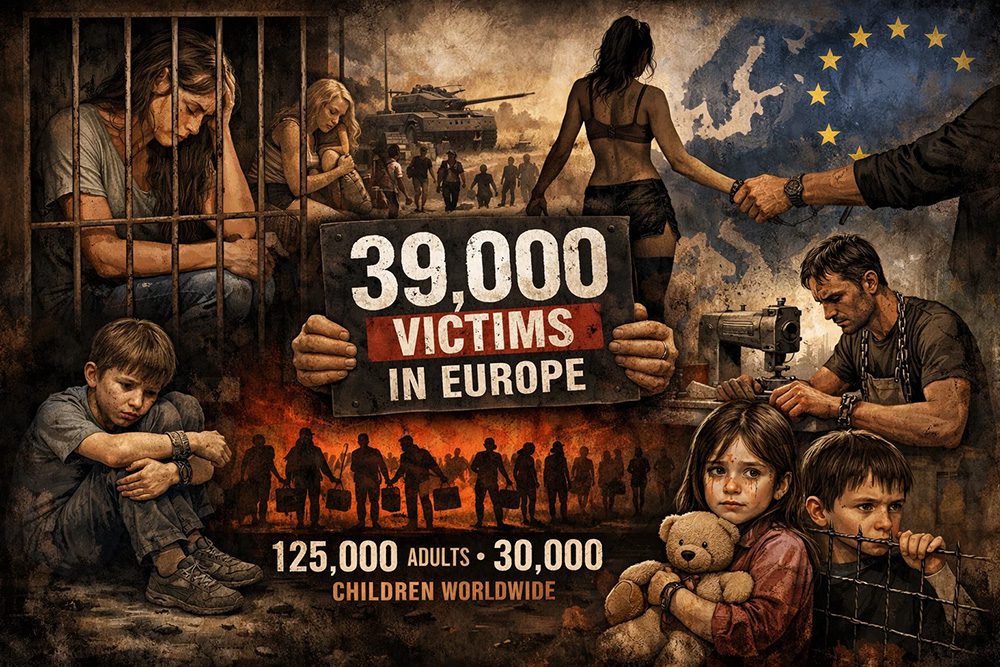
Image generated by AI
War and population displacement, particularly following the outbreak of the war in Ukraine, are intensifying the crisis, as victims face forced labor and sexual exploitation.
Over the past two decades, more than 39,000 cases of human trafficking have been recorded in Europe, according to the latest data from the International Organization for Migration (IOM), Euronews reports.
Between 2002 and 2022, 85% of victims of this form of trafficking were adults aged 30 to 38, while 15% were children.
Globally, the number of trafficking victims has risen to 125,000 adults and 30,000 children.
IOM experts believe the real number is significantly higher due to underreporting and gaps in victim identification.
In Europe, victims of this form of modern slavery were primarily citizens of nine countries: more than 19,000 people from Ukraine, 10,464 citizens of Moldova, and 4,286 citizens of Belarus.
“War always creates fertile ground for the expansion of crimes against humanity,” notes anti-trafficking and child protection expert Yulia Sachenko in a LinkedIn post following a Council of Europe meeting. “Recent data indicate that over the past four years at least 13 people in countries neighboring Ukraine have become victims of human trafficking.”
Women account for three-fifths of all victims, roughly twice the proportion of men. In addition, 27 transgender victims have been identified.
Victims of human trafficking have been identified in 69 European countries, with the highest numbers recorded in Ukraine (8,413) and Moldova (5,866).
Nearly half of the victims were held in conditions of exploitation for one year or less, while 35% were exploited for between one and two years.
Half of the victims were subjected to forced labor, particularly in construction (52%) and agriculture (29%). Another 48% experienced sexual exploitation, with the majority forced into prostitution. Victims were also coerced into the production of pornography.
Traffickers most commonly used psychological, physical, and sexual violence to control their victims.
Restricting victims’ access to money, limiting their freedom of movement, and denying necessary medical care were also widespread tactics used to maintain control.
Ten percent of perpetrators were friends of their victims, while the overwhelming majority had no close relationship with them. Intimate partners accounted for 1% of offenders, and family members for 2%.
According to IOM data, the largest share of perpetrators consists of labor brokers, contractors, formal employers, and smugglers.
These figures highlight a troubling pattern: during wars, crises, and mass displacement, the risks of exploitation and human trafficking increase dramatically. The vulnerability of refugees, economic instability, and the breakdown of social networks create conditions that criminal networks readily exploit.
Human rights organizations stress that effectively combating human trafficking requires coordinated action by governments, international institutions, and civil society. This involves not only prosecuting perpetrators but also ensuring the timely identification of victims, providing them with protection, access to medical and psychological assistance, and long-term rehabilitation and social reintegration programs.
Special attention must be given to women, children, and other vulnerable groups who are most often targeted for exploitation. Strengthening monitoring mechanisms, ensuring transparency in labor recruitment practices, and protecting the rights of migrant workers remain key elements of prevention.
Human rights advocates emphasize that behind every statistic is a human life. Preventing human trafficking and protecting survivors must remain a priority on the international agenda—especially in the context of ongoing conflicts and humanitarian crises.
Based on materials euronews.com
Leave A Comment