




At the 53rd annual conference of the ISHR in March 2025, Russian human rights defender Dr Lev Ponomaryov will address the global crises caused by the Russian war of aggression, geopolitical tensions and the devaluation of human rights and international law. He calls for a resolute European stance and the protection of humanitarian concerns in international negotiations.
“Lasting peace will not be built if the nature of the political regime in Russia does not change”
1. the world is in a state of global crisis characterised by:
a) the largest military conflict on the European continent since the Second World War – Russia’s aggression against Ukraine, which has already killed hundreds of thousands of people. The situation in the Middle East and Africa is deteriorating.
b) a return to resolving geopolitical issues between the world powers from a position of strength and negotiations between the strong, in particular the United States and Russia,
c) the devaluation of human rights and international law and the institutions created by the United States to uphold and protect them, which have long been one of the principal guarantors of the international legal order and a source of support for humanitarian and human rights initiatives around the world. Today, it is abandoning this role and forming a new world order based on force and profit.
The recording of Lev Ponomaryov’s speech
In particular, we see a situation in which US President Donald Trump has begun to put pressure on Ukraine to make concessions in the face of ongoing Russian aggression. He began by suspending military aid to Ukraine and intelligence sharing, which could have a decisive impact on Ukraine’s ability to defend its territory and citizens in the face of aggression.
2) In this situation, everything depends on Europe’s position, which today is a source of optimism.
We hope for a more decisive European involvement in the negotiation process and in the creation and consolidation of real security guarantees for Ukraine and effective control over the cessation of hostilities and the implementation of the peace terms.
We urge that no concessions be made to Trump if he continues to try to appease Putin and solve the ceasefire issue solely at the expense of Ukraine.
3. in these circumstances, the consolidated public position of human rights defenders at the international level is particularly important, both at the level of declarations and at the level of contacts with representatives of governments and international structures.n.
Our joint task is to ensure that humanitarian and legal issues do not take a back seat or are completely excluded from the negotiation process. Human rights defenders must be given the opportunity to be heard in the development of concrete solutions.

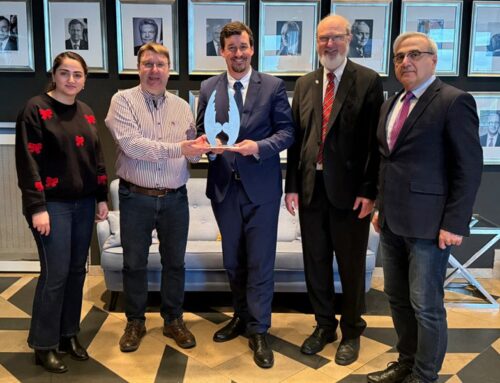
Dr Lew Ponomarjow in Bonn
On 4 February 2025, Ukrainian and Russian human rights activists launched the “People First” campaign and raised precisely this question in their address to the negotiators to end the war in Ukraine.
It is also worth noting the statement by the UN Group of Special Rapporteurs and Experts, which called for legal and humanitarian issues to be placed at the forefront of political negotiations and emphasised that the Russian state must be held accountable for both the aggression against Ukraine and the repressive policies in its country. In this appeal, they also emphasise that the aggression against Ukraine is a direct consequence of the system of maintaining power that has been established in Russia over the last two decades through repression.
4. repression and violation of human rights in Russia continue to be a central problem.
All of this has largely become both the cause of and support for the war against Ukraine and continues to intensify. The danger will not be averted, a lasting peace will not be built if the nature of the political regime in Russia does not change.
The first step, already in the negotiation phase, could be to demand the release of political prisoners, starting with those in a critical state of health.
But it is possible and necessary to go further and raise the question of the repeal of the repressive laws, especially the laws and amendments that have been enacted since the beginning of the war.
If this happens, civil society will have many more opportunities to influence the situation in the country. It would be appropriate to issue a joint declaration with these positions.
5) When talking about civil society, it is important to realise that it exists in Russia.
It consists of active human rights defenders, of whom there are dozens in different regions of Russia, as well as civil activists, social protest groups, including a protest against mobilisation, and the volunteer movement. And finally, through politicised structures: the Yabloko party (which has been advocating a ceasefire and repression since the first days of the war), the anti-war politicians Boris Nadezhdin and Ekaterina Duntsova, who have gathered many supporters in the regions.
All of this is the basis for an active political process in the future.
In the context of the aggravation of social problems, all these people are in demand, and their work can be carried out in the legal field if it does not touch on the most sensitive issues of war.
We must and can support these people as much as possible.
Leave A Comment